
Regional Sustainability ›› 2026, Vol. 7 ›› Issue (1): 100296.doi: 10.1016/j.regsus.2026.100296
• Full Length Article • Previous Articles Next Articles
XU Chunhaia,b, LI Zhongqina,*( ), HE Zhonghuaa,b, WANG Feitenga, MU Jianxina, CHEN Yaningc, Sheralizoda NAZRIALOd, Farhod NASRULLOEVc, Aminjon GULAHMADZODAe
Received:2025-08-27
Accepted:2025-12-31
Published:2026-02-28
Online:2026-01-21
Contact:
LI Zhongqin
E-mail:lizq@lzb.ac.cn
XU Chunhai, LI Zhongqin, HE Zhonghua, WANG Feiteng, MU Jianxin, CHEN Yaning, Sheralizoda NAZRIALO, Farhod NASRULLOEV, Aminjon GULAHMADZODA. Current status and recent changes of glaciers in Tajikistan[J]. Regional Sustainability, 2026, 7(1): 100296.
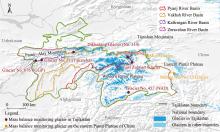
Fig. 1.
Distribution of glaciers in Tajikistan. The map also indicates the locations of mass balance monitoring glaciers in Tajikistan and on the eastern Pamir Plateau of China. Note that the figure is based on the standard map (GS(2016)1666) issued by the Ministry of Natural Resources of the People’s Republic of China, and the boundary of the standard map used in this study has not been modified."

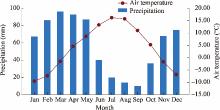
Fig. 2.
Average monthly air temperature and precipitation in Tajikistan during 1991-2020. Climatic data were derived from the long-term Climate Research Unit (CRU) gridded dataset available from the World Bank Group (https://climateknowledgeportal.worldbank.org/country/tajikistan/climate-data-historical)."
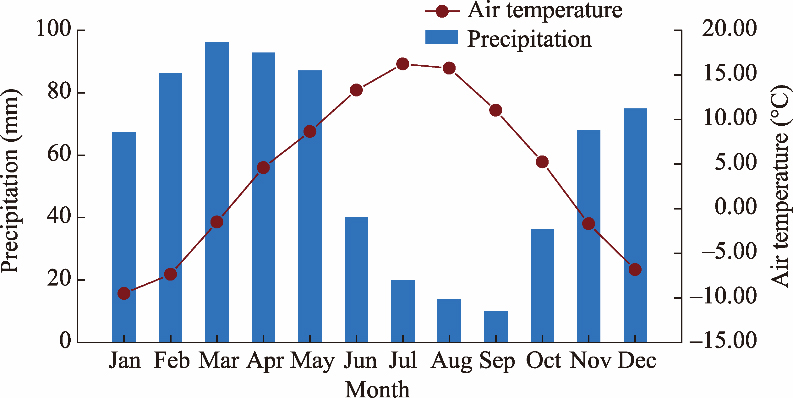
Table 1
Distribution of glaciers in the main river basins of Tajikistan."
| River basin | Number | Area (km2) |
|---|---|---|
| Zeravshan | 1181 | 530.91±21.35 |
| Kafirnigan | 562 | 104.62±4.21 |
| Vakhsh | 3182 | 3428.97±137.88 |
| Pyanj | 6603 | 3559.98±143.15 |
| Total | 11,528 | 7624.48±305.58 |
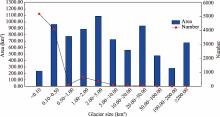
Fig. 3.
Distribution of glacier size in Tajikistan."
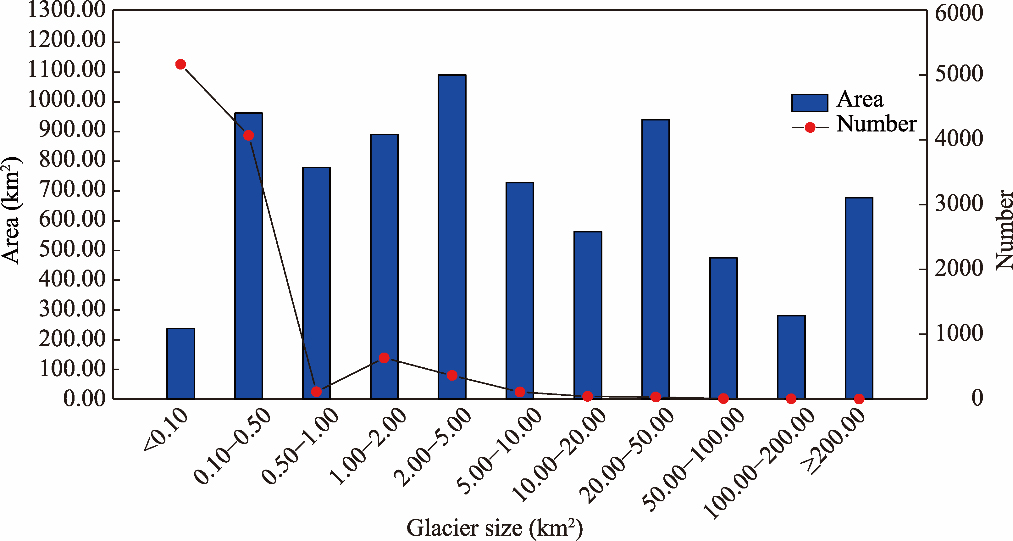
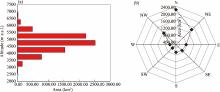
Fig. 4.
Area-altitude and orientation distribution of glaciers in Tajikistan. (a), histogram showing glacier area distribution by altitude; (b), proportion of glacier orientation by area. N, north; NE, northeast; E, east; SE, southeast; S, south; SW, southwest; W, west; NW, northwest."
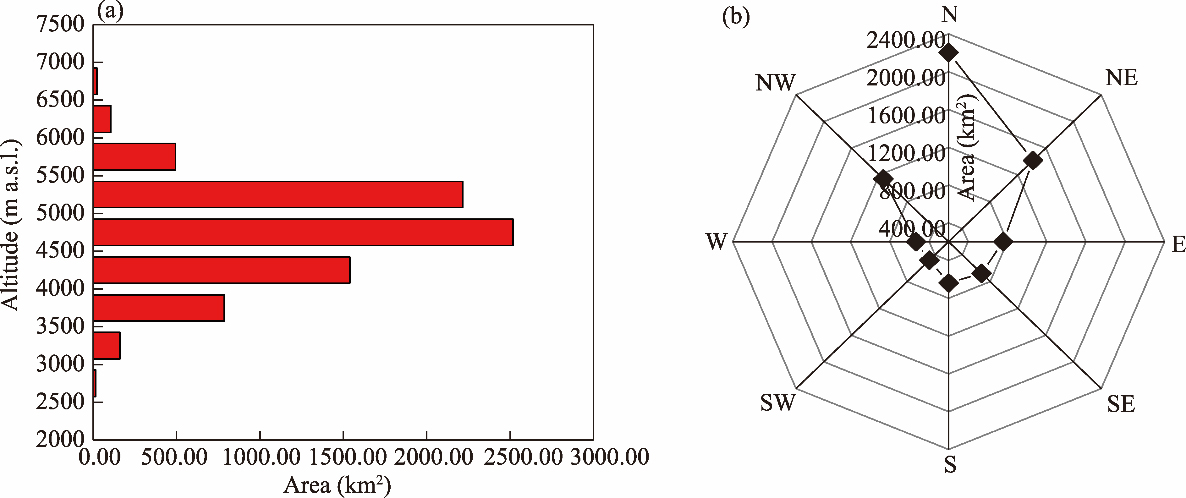
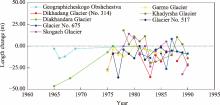
Fig. 5.
Length change of monitored glaciers in Tajikistan from 1965 to 1990."
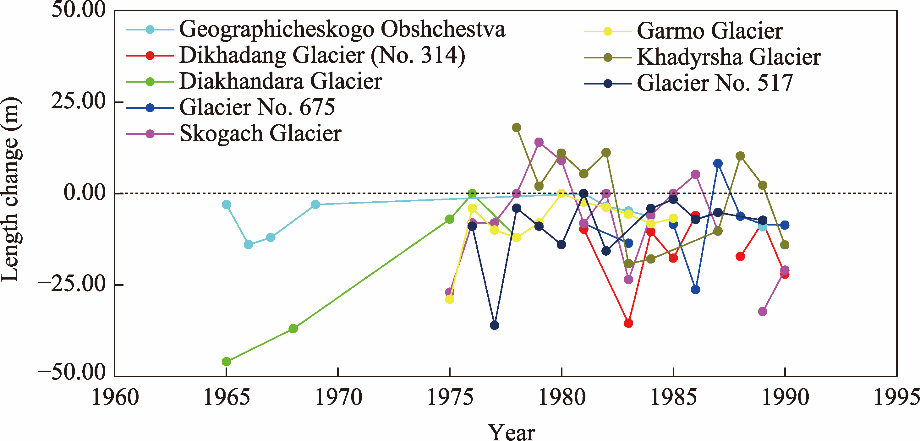
Table 2
Area change of monitored glaciers in Tajikistan."
| Glacier name | Latitude and longitude | Start year | Area (km2) | End year | Area (km2) | Change rate (%/a) |
|---|---|---|---|---|---|---|
| Akbaytal | 38°27′00″N, 73°33′00″E | 1970 | 5.50 | 2001 | 5.01 | -0.29 |
| East Zulmart | 38°51′36″N, 73°00′00″E | 2001 | 3.79 | 2018 | 3.66 | -0.20 |
| Oktyabr’sky | 39°10′48″N, 73°00′00″E | 1946 | 32.00 | 2000 | 9.67 | -1.29 |
| Medvezhiy | 38°39′36″N, 72°10′48″E | 1974 | 23.30 | 2000 | 23.48 | 0.03 |
| Mushketov | 39°00′00″N, 72°06′00″E | 1966 | 17.10 | 2000 | 4.56 | -2.16 |
| Skogach | 38°43′12″N, 71°30′00″E | 1971 | 12.60 | 2000 | 14.48 | 0.51 |
| Turo | 39°31′48″N, 70°07′48″E | 1968 | 4.10 | 2000 | 4.21 | 0.08 |
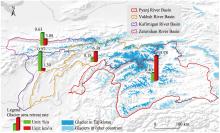
Fig. 6.
Spatial change of glaciers in Tajikistan during the past 20 a."

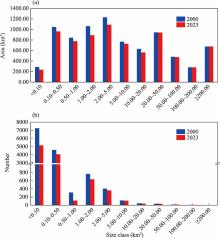
Fig. 7.
Glacier area (a) and number (b) changes by size class in Tajikistan from 2000 to 2023."
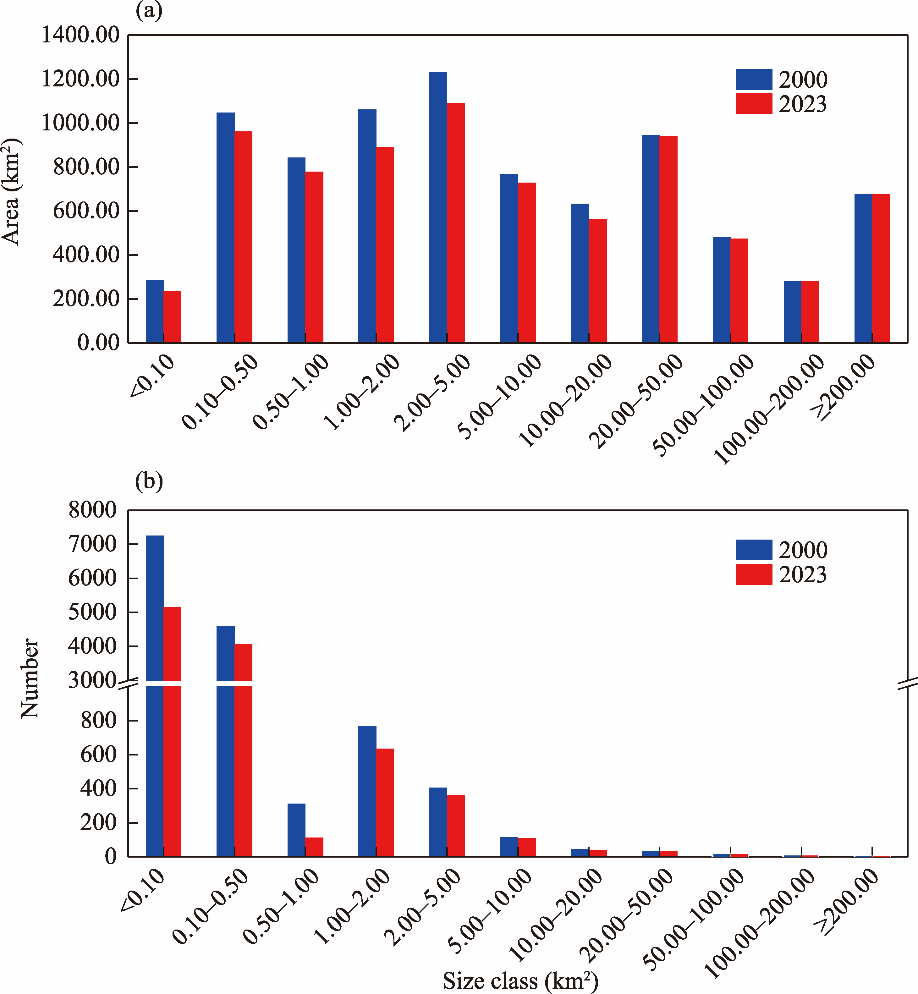
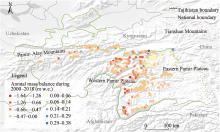
Fig. 8.
Spatial distribution of average annual mass balance for glaciers in Tajikistan during the past 20 a. Note that the figure is based on the standard map (GS(2016)1666) issued by the Ministry of Natural Resources of the People’s Republic of China, and the boundary of the standard map used in this study has not been modified."

Fig. 9.
Comparison of monitoring glacier mass balance. The short dotted lines represent glaciers in Tajikistan. The data of global annual average mass balance were derived from the World Glacier Monitoring Service (WGMS; https://wgms.ch/global-glacier-state/)."
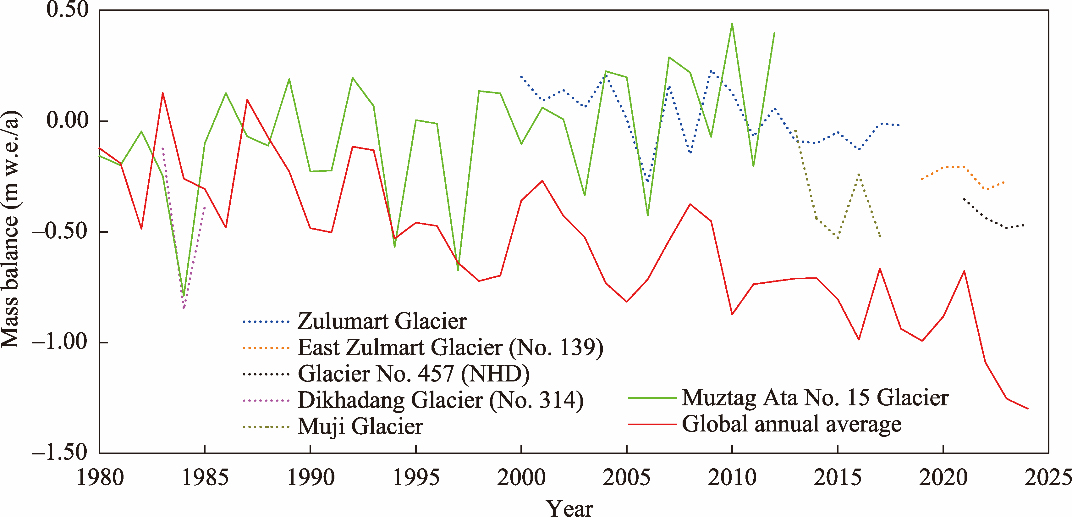
Fig. 10.
Observed annual average surface air temperature (a) and annual precipitation (b) in Tajikistan during 2000-2023. Climatic data were derived from the long-term CRU gridded dataset available from the World Bank Group (https://climateknowledgeportal.worldbank.org/country/tajikistan/climate-data-historical)."
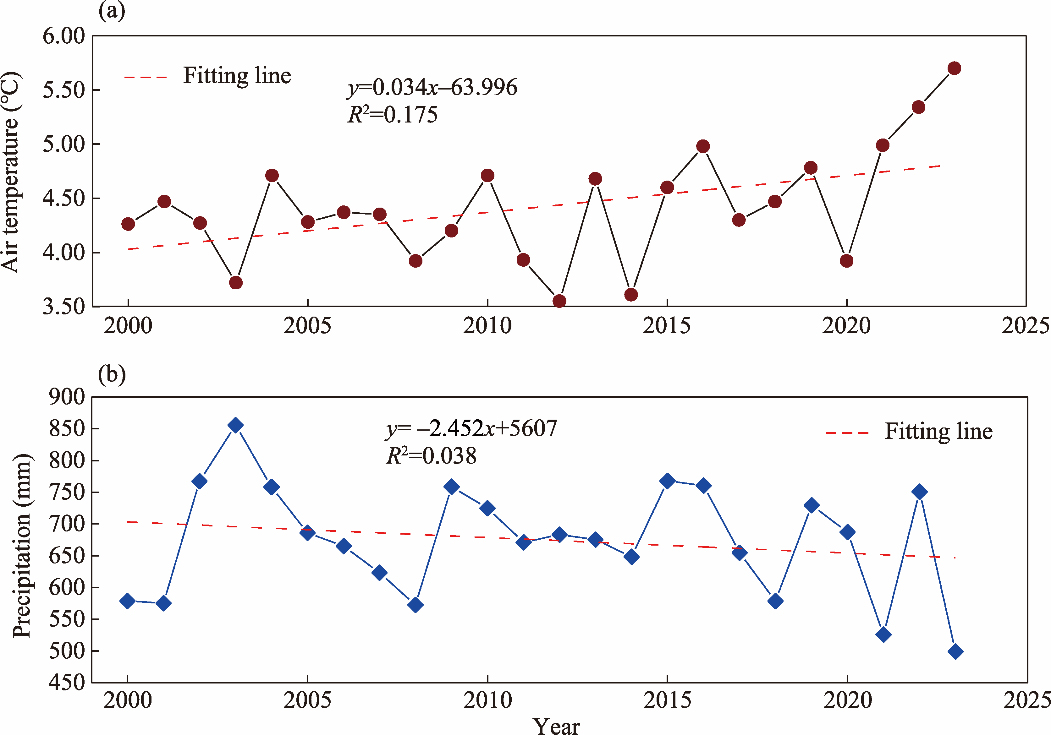
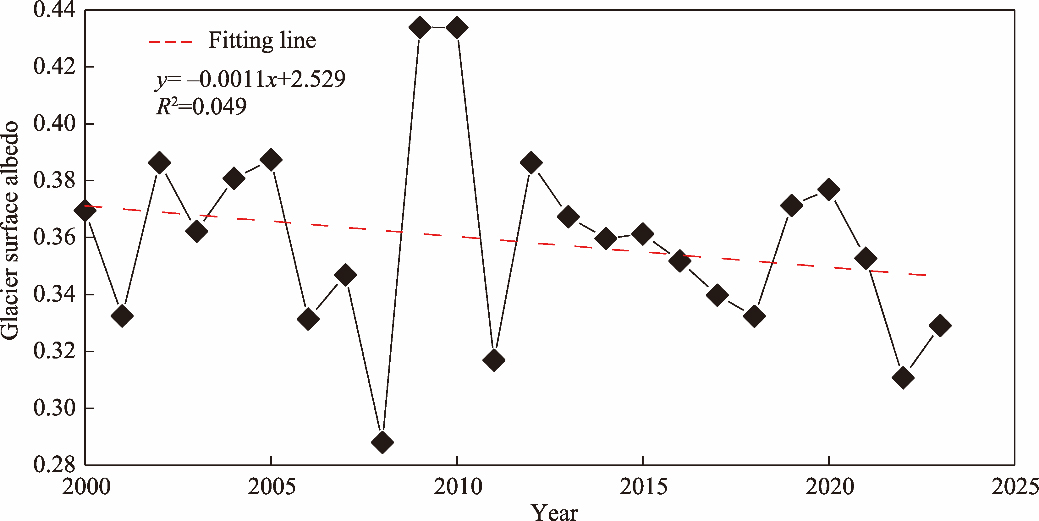
Fig. 11.
Mean summer (June-August) surface albedo for glaciers in Tajikistan during 2000-2023."
| [1] |
Ambinakudige S., Joshi K., 2015. Multi-decadal changes in glacial parameters of the Fedchenko Glacier in Tajikistan. International Journal of Advanced Remote Sensing and GIS. 4(1), 911-919.
doi: 10.23953/cloud.ijarsg |
| [2] | Barandun M., Pohl E., Naegeli K., et al., 2021. Hot spots of glacier mass balance variability in Central Asia. Geophysical Research Letter. 48(11), e2020GL092084, doi: 1029/2020GL092084. |
| [3] |
Beniston M., Farinotti D., Stoffel M., et al., 2018. The European mountain cryosphere: a review of its current state, trends, and future challenges. The Cryosphere. 12(2), 759-794.
doi: 10.5194/tc-12-759-2018 |
| [4] | Braun L.N., Hagg W., Severskiy I.V., et al., 2009. Assessment of snow, glacier and water resources in Asia. In: International Hydrological Programme - Hydrology and Water Resources Programme. Koblenz, Germany. |
| [5] |
Brun F., Berthier E., Wagnon P., et al., 2017. A spatially resolved estimate of High Mountain Asia glacier mass balances from 2000 to 2016. Nature Geoscience. 10(9), 668-673.
doi: 10.1038/ngeo2999 |
| [6] | Brun F., Lambrecht A., Mayer C., et al., 2025. Multi-temporal elevation changes of Fedchenko Glacier, Tajikistan, from 1928 to 2021. Journal of Glaciology. 71, e45, doi: 10.1029/2020GL092084. |
| [7] |
Chen Y.N., Li Y.P., Li Z., et al., 2022. Analysis of the impact of global climate change on dryland areas. Advances in Earth Science. 37(2), 111-119 (in Chinese).
doi: 10.11867/j.issn.1001-8166.2022.006 |
| [8] |
Christmann S., Aw-Hassan A.A., 2015. A participatory method to enhance the collective ability to adapt to rapid glacier loss: The case of mountain communities in Tajikistan. Climatic Change. 133(2), 267-282.
doi: 10.1007/s10584-015-1468-1 |
| [9] |
Cogley J.G., 2009. A more complete version of the World Glacier Inventory. Annals of Glaciology. 50(53), 32-38.
doi: 10.3189/172756410790595859 |
| [10] | Davaze L., Rabatel A., Dufour A., et al., 2020. Region-wide annual glacier surface mass balance for the European Alps from 2000 to 2016. Frontiers in Earth Science. 8, 149, doi: 10.3389/feart.2020.00149. |
| [11] | Deng M.J., 2013. Water resources in Tajikistan and prospect analysis on Sino-Tajikistan cooperative development of its hydropower. Water Power. 39(9), 1-4 (in Chinese). |
| [12] | Ding Y.J., Zhang S.Q., Chen R.S., et al., 2025. A review of the impacts of climate change on cryospheric hydrological processes. Climate Change Research. 21(1), 1-21 (in Chinese). |
| [13] |
Dussaillant I., Hugonnet R., Huss M., et al., 2025. Annual mass change of the world’s glaciers from 1976 to 2024 by temporal downscaling of satellite data with in situ observations. Earth System Science Data. 17(5), 1977-2006.
doi: 10.5194/essd-17-1977-2025 |
| [14] |
Fan Y.B., Ke C.Q., Zhou X.B., et al., 2023. Glacier mass-balance estimates over High Mountain Asia from 2000 to 2021 based on ICESat-2 and NASADEM. Journal of Glaciology. 69(275), 500-512.
doi: 10.1017/jog.2022.78 |
| [15] |
Fischer M., Huss M., Kummert M., et al., 2016. Application and validation of long-range terrestrial laser scanning to monitor the mass balance of very small glaciers in the Swiss Alps. The Cryosphere. 10(3), 1279-1295.
doi: 10.5194/tc-10-1279-2016 |
| [16] |
Gardelle J., Berthier E., Arnaud Y., et al., 2013. Region-wide glacier mass balances over the Pamir-Karakoram-Himalaya during 1999-2011. The Cryosphere. 7(4), 1263-1286.
doi: 10.5194/tc-7-1263-2013 |
| [17] | Guo Z.Y., Yao X.J., Chen Y.S., et al., 2024. A dataset of glacier inventory in four Central Asian countries during 2022-2023. China Scientific Data. 9(4), 384-395 (in Chinese). |
| [18] |
Hock R., Jensen H., 1999. Application of Kriging interpolation for glacier mass balance computations. Geografiska Annaler: Series A, Physical Geography. 81(4), 611-619.
doi: 10.1111/geoa.1999.81.issue-4 |
| [19] |
Hoelzle M., Azisov E., Barandun M., et al., 2017. Re-establishing glacier monitoring in Kyrgyzstan and Uzbekistan, Central Asia. Geoscientific Instrumentation, Methods and Data Systems. 6(2), 397-418.
doi: 10.5194/gi-6-397-2017 |
| [20] |
Hugonnet R., McNabb R., Berthier E., et al., 2021. Accelerated global glacier mass loss in the early twenty-first century. Nature. 592(7856), 726-731.
doi: 10.1038/s41586-021-03436-z |
| [21] |
Huss M., Bauder A., Funk M., 2009. Homogenization of long-term mass-balance time series. Annals of Glaciology. 50(50), 198-206.
doi: 10.3189/172756409787769627 |
| [22] |
Huss M., Hock R., 2018. Global-scale hydrological response to future glacier mass loss. Nature Climate Change. 8(2), 135-140.
doi: 10.1038/s41558-017-0049-x |
| [23] |
Iwata S., 2009. Mapping features of Fedchenko Glacier, the Pamirs, Central Asia from space. Geographical Studies. 84(1), 33-43.
doi: 10.7886/hgs.84.33 |
| [24] | Kaser G., Cogley J.G., Dyurgerov M.B., et al., 2006. Mass balance of glaciers and ice caps: consensus estimates for 1961-2004. Geophysical Research Letters. 33(19), L19501, doi: 10.1029/2006GL027511. |
| [25] | Khusrav K., Hofiz N., Aziz H., 2023. The impact of glacial degradation on the state of the agricultural sector in the high-mountain territories of Tajikistan. International Journal of Trend in Scientific Research and Development. 7(3), 1-8. |
| [26] |
Lambrecht A., Mayer C., Aizen V., et al., 2014. The evolution of Fedchenko glacier in the Pamir, Tajikistan, during the past eight decades. Journal of Glaciology. 60(220), 233-244.
doi: 10.3189/2014JoG13J110 |
| [27] | Li Z.J., 2021. Research on glacier changes in the Pamir from 2000 to 2017 based on remote sensing and GIS. MSc Thesis. Xi’an: Northwest University (in Chinese). |
| [28] |
Li Z.J., Wang N.L., Chen A.A., et al., 2022. Slight change of glaciers in the Pamir over the period 2000-2017. Arctic, Antarctic, and Alpine Research. 54(1), 13-24.
doi: 10.1080/15230430.2022.2028475 |
| [29] | Li Z.Q., Li K.M., Wang L., 2010. Study on recent glacier changes and their impact on water resources in Xinjiang, North Western China. Quaternary Sciences. 30(1), 96-106 (in Chinese). |
| [30] |
Li Z.Q., Li H.L., Chen Y.N., 2011. Mechanisms and simulation of accelerated shrinkage of continental glaciers: a case study of Urumqi Glacier No. 1 in eastern Tianshan, Central Asia. Journal of Earth Science. 22(4), 423-430.
doi: 10.1007/s12583-011-0194-5 |
| [31] | Liu S.Y., 2012. Field Observations in Glaciological Research. Beijing: Science Press, 99-115 (in Chinese). |
| [32] |
Liu S.Y., Yao X.J., Guo W.Q., et al., 2015. The contemporary glaciers in China based on the Second Chinese Glacier Inventory. Acta Geographica Sinica. 70(1), 3-16 (in Chinese).
doi: 10.11821/dlxb201501001 |
| [33] | Muccione V., Cassara M., 2019. The climate-cryosphere-water nexus in central Asia. In: Swiss Agency for Development and Cooperation (SDC) Climate& Environment Network. Bern, Switzerland. |
| [34] | Mukhabbatov H.М., Zhiltsov S.S., Markova E.A., 2020. Tajikistan water resources and water management issues.In: Zonn, I.S., Zhiltsov, S.S., Kostianoy, A.G., et al., (eds.). Water Resources Management in Ventral Asia. Cham: Springer International Publishing, 111-124. |
| [35] |
Oerlemans J., 2005. Extracting a climate signal from 169 glacier records. Science. 308(5722), 675-677.
pmid: 15746388 |
| [36] |
Paul F., Rastner P., Azzoni R.S., et al., 2019. Glacier shrinkage in the Alps continues unabated as revealed by a new glacier inventory from Sentinel-2. Earth System Science Data. 12(3), 1805-1821.
doi: 10.5194/essd-12-1805-2020 |
| [37] | RGI (Randolph Glacier Inventory) 7.0 Consortium, 2023. Randolph Glacier Inventory-Dataset of Global Glacier Outlines: Version 7.0. Boulder, Colorado USA. NSIDC: National Snow and Ice Data Center. [2025-07-20]. https://doi.org/10.5067/f6jmovy5navz. |
| [38] |
Shiklomanov N.I., 2005. From exploration to systematic investigation: development of geocryology in 19th-and Early—20th-Century Russia. Physical Geography. 26(4), 249-263.
doi: 10.2747/0272-3646.26.4.249 |
| [39] | Shokirov Q., Abdykadyrova A., Dear C., et al., 2014. Mountain tourism and sustainability in Kyrgyzstan and Tajikistan: a research review. Mountain Societies Research Institute (MSRI) Background Paper. Bishkek, Kyrgyz Republic. |
| [40] |
Siegfried T., Bernauer T., Guiennet R., et al., 2012. Will climate change exacerbate water stress in Central Asia? Climatic Change. 112(3), 881-899.
doi: 10.1007/s10584-011-0253-z |
| [41] | Su B., Xiao C.D., Chen D.L., et al., 2022. Glacier change in China over past decades: Spatiotemporal patterns and influencing factors. Earth-Science Reviews. 226, 103926, doi: 10.1016/j.scib.2022.12.004. |
| [42] | Tielidze L.G., Jomelli V., Nosenko G.A., 2022. Analysis of regional changes in geodetic mass balance for all Caucasus glaciers over the past two decades. Atmosphere. 13(2), 256, doi: 10.3390/atmos13020256. |
| [43] | Wang S.J., Chen F., Chen Y.P., et al., 2025. Greening of Eurasia’s center driven by low-latitude climate warming. Forest Ecosystems. 13, 100330, doi: 10.1016/j.fecs.2025.100330. |
| [44] | WBG(World Bank Group) CCKP (Climate Change Knowledge Portal), 2021. Climate Data: Historical. [2025-07-30]. https://climateknowledgeportal.worldbank.org/country/tajikistan/climate-data-historical. |
| [45] | WGMS(World Glacier Monitoring Service), 2025. Fluctuations of Glaciers (FoG) Database. Zurich, Switzerland. [2025-07-30]. https://doi.org/10.5904/wgms-fog-2025-02. |
| [46] | Wu W.H., 2013. The water resources of Tajikistan and runoff response to climate change. MSc Thesis. Urumqi: Xinjiang Agricultural University (in Chinese). |
| [47] | Wu X.F., Tang W.H., Chen F., et al., 2025. Attribution and risk projections of hydrological drought over water-scarce Central Asia. Earth’s Future. 13(1), e2024EF005243, doi: 10.1029/2024EF005243. |
| [48] | Xie Z.C., Liu C.H., 2010. Introduction to Glaciology. Shanghai: Shanghai Popular Science Press, 66-98 (in Chinese). |
| [49] | Xiao Y., 2025. Monthly glacier albedo dataset worldwide (2000-2023). National Tibetan Plateau/Third Pole Environment Data Center. [2025-07-10]. https://doi.org/10.11888/Cryos.tpdc.302665. |
| [50] | Xiaoai X., 2013. A feasibility study on sustainable mountain tourism development in the Republic of Tajikistan. In: Asia Pacific Conference 2013. Oita, Japan. |
| [51] | Xu C.H., Li H.L., Wang F.T, et al., 2024. Heatwaves in summer 2022 forces substantial mass loss for Urumqi Glacier No. 1, China. Journal of Glaciology. 70, e77, doi: 10.1017/jog.2024.4. |
| [52] | Zemp M., Huss M., Thibert E., et al., 2019. Global glacier mass changes and their contributions to sea-level rise from 1961 to 2016. Nature. 568(7752), 382-386. |
| [53] |
Zemp M., Jakob L., Dussaillant I., et al., 2025. Community estimate of global glacier mass changes from 2000 to 2023. Nature. 639(8054), 382-388.
doi: 10.1038/s41586-024-08545-z |
| [54] |
Zhou Y., Li Z., Li J., et al., 2019. Geodetic glacier mass balance (1975-1999) in the central Pamir using the SRTM DEM and KH-9 imagery. Journal of Glaciology. 65(250), 309-320.
doi: 10.1017/jog.2019.8 |
| [55] |
Zhu M.L., Yao T.D., Yang W., et al., 2018. Reconstruction of the mass balance of Muztag Ata No. 15 glacier, eastern Pamir, and its climatic drivers. Journal of Glaciology. 64(244), 259-274.
doi: 10.1017/jog.2018.16 |
| [56] |
Zhuang L.C., Ke C.Q., Cai Y., et al., 2023. Measuring glacier changes in the Tianshan Mountains over the past 20 years using Google Earth Engine and machine learning. Journal of Geographical Sciences. 33(9). 1939-1964.
doi: 10.1007/s11442-023-2160-4 |
| [1] | CHEN Yaning, FANG Gonghuan, LI Zhi, ZHANG Xueqi, LI Weihong, Nekruz GULAHMADOV, Farhod NASRULLOEV, Aminjon GULAKHMADOV. Water resources and sustainable management in Tajikistan under global change [J]. Regional Sustainability, 2026, 7(1): 100291-. |
| [2] | Kobiljon Khushvakht KHUSHVAKHTZODA, Ilkhom Burkhonovich MAKHSUMOV, Muzaffar Boynazarovich KHOLNAZAROV, Irina Mikhailovna KIRPICHNIKOVA. Impact of green energy development on climate change mitigation [J]. Regional Sustainability, 2026, 7(1): 100292-. |
| [3] | Hikmat HISORIEV, LI Yaoming, HUANG Wenjun, FAN Lianlian, Mekhrovar OKHONNIYOZOV, MA Xuexi. Grassland ecosystems of Tajikistan: Plant species diversity, ecological restoration, and sustainable management [J]. Regional Sustainability, 2026, 7(1): 100293-. |
| [4] | ZHOU Yixin, MA Suliya, LI Wenjun, Parvina KURBONOVA, Mariyo BOBOEV, LI Yufan, Hikmat HISORIEV, MA Keping, YANG Weikang, ZHANG Yuanming. Vascular plant diversity and distribution pattern in Tajikistan: A global hotspot of diversity [J]. Regional Sustainability, 2026, 7(1): 100294-. |
| [5] | Ranna HAZIHAN, DU Hongru, HE Chuanchuan, Kobiljon Khushvakht KHUSHVAKHTZODA, Bobozoda KOMIL. Coupling dynamics of SDGs in Tajikistan from 2001 to 2023 [J]. Regional Sustainability, 2026, 7(1): 100295-. |
| [6] | LI Chunlan, YU Yang, SUN Lingxiao, HE Jing, LU Yuanbo, GUO Zengkun, FANG Gonghuan, Alexandr ULMAN, Vitaliy SALNIKOV, Ireneusz MALIK, Małgorzata WISTUBA. Spatiotemporal heterogeneity of runoff in Tajikistan and its driving mechanisms under climate change [J]. Regional Sustainability, 2026, 7(1): 100297-. |
| [7] | LI Yupeng, CHEN Yaning, WANG Fei, ZHANG Xiang, ZHANG Qifei, SUN Fan, FANG Gonghuan, Safarkhon SHAROFIDDINOV, Jafar NIYAZOV. Risks of snow drought and impacts on streamflow in Tajikistan [J]. Regional Sustainability, 2026, 7(1): 100298-. |
| [8] | Nasrulloev FARHOD, CHEN Yaning, Sheralizoda NAZRIALO, Gulahmadov NEKRUZ, Shobairi SEYED OMID REZA, Murodov MURODKHUJA. Hydrological change trends of the Surkhob and Khingov river basins in the Vakhsh River of Tajikistan under climate change [J]. Regional Sustainability, 2026, 7(1): 100300-. |
| [9] | Mahalingam Santhosh KUMAR, Narasimabhrathi Venkatesa PALANICHAMY, K. M. SHIVAKUMAR, Mani CHANDRAKUMAR, Muthuswamy KALPANA, Dhandapani MURUGANANTHI. Impact of climate change on global economy: A comprehensive review [J]. Regional Sustainability, 2025, 6(6): 100274-. |
| [10] | Yadeta BEDASA, Adeba GEMECHU, Amsalu BEDEMO. Combined adoption decisions of climate-smart agriculture and their impacts on maize yield in western Ethiopia [J]. Regional Sustainability, 2025, 6(6): 100280-. |
| [11] | Md Tauhid Ur RAHMAN, Adnan KHAIRULLAH. Integrating farmers’ perceptions and empirical climate data to assess agricultural productivity and food security in coastal Bangladesh [J]. Regional Sustainability, 2025, 6(5): 100259-. |
| [12] | Piyali KUMAR. Examining the effects of climatic and non-climatic factors on sectoral growth: Evidence from different country income groups [J]. Regional Sustainability, 2025, 6(5): 100261-. |
| [13] | Saira SHAFIQ, Muhammad ZIA UL HAQ, Syed Abbas RAZA NAQVI, Wardha SARFARAZ, Hina ALI, Muhammad Majid ISLAM, Gul Zaib HASSAN, Muhammad NAWAZ, Tasawer ABBAS. Integrating neglected and underutilized crops (NUCs) in South Asian cropping systems and diets: Challenges and prospects [J]. Regional Sustainability, 2025, 6(4): 100242-. |
| [14] | Md Maruf BILLAH, Mohammad Mahmudur RAHMAN, Santiago MAHIMAIRAJA, Alvin LAL, Asadi SRINIVASULU, Ravi NAIDU. Enhancing climate-smart coastal farming system through agriculture extension and advisory services towards the avenues of farm sustainability [J]. Regional Sustainability, 2025, 6(4): 100243-. |
| [15] | Syed Masiur RAHMAN, Asif RAIHAN, Md Shafiul ALAM, Shakhawat CHOWDHURY. Greenhouse gas emission dynamics and climate change mitigation efforts toward sustainability in the Middle East and North Africa (MENA) region [J]. Regional Sustainability, 2025, 6(4): 100246-. |
| Viewed | ||||||
|
Full text |
|
|||||
|
Abstract |
|
|||||
 REGSUS Wechat
 新公网安备 65010402001202号