
Regional Sustainability ›› 2026, Vol. 7 ›› Issue (5): 100391.doi: 10.1016/j.regsus.2026.100391
• Research article • Previous Articles Next Articles
SHI Hana,b,c, PENG Xia,d,e, GUO Jingjinga,d,e, ZHAO Ruxiaa,c,d,e, HAO Guangyoua,d,e,*( )
)
Received:2025-07-07
Revised:2026-03-05
Accepted:2026-09-20
Published:2026-09-30
Online:2026-10-12
Contact:
HAO Guangyou
E-mail:haogy@iae.ac.cn
SHI Han, PENG Xi, GUO Jingjing, ZHAO Ruxia, HAO Guangyou. Insights into climatic adaptability of Acer truncatum and Quercus mongolica in typical sandy lands of China using the Maximum Entropy (MaxEnt) model[J]. Regional Sustainability, 2026, 7(5): 100391.
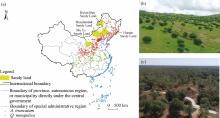
Fig. 1.
Study region and occurrence records of Acer truncatum Bunge and Quercus mongolica Fisch. ex Ledeb. in China (a) and photos of Acer-Quercus sparse forest grassland in sandy regions (b and c). The boundaries of the four major sandy lands were delineated using the 1:100,000 desert (sand) distribution dataset in China (https://data.tpdc.ac.cn/en/data/122c9ac2-53ee-4b9a-ae87-1a980b131c9b; Wang et al., 2013) and land cover data from the Resource and Environmental Science Data Center Platform of the Chinese Academy of Sciences (http://www.resdc.cn/), following the methods described by Yu et al. (2018). Species occurrence records were compiled from the Global Biodiversity Information Facility (GBIF), the Chinese Virtual Herbarium (CVH), published literature (e.g., Wang et al., 2022; Tang et al., 2023; Shi et al., 2024; Tian et al., 2024), and field surveys. Note that the figure is based on the standard map (GS(2024)0650) from the National Platform for Common Geospatial Information Services (https://cloudcenter.tianditu.gov.cn/administrativeDivision) issued by the Ministry of Natural Resources of the People’s Republic of China, and the boundary of the standard map has not been modified."

Table 1
Percentage contributions of the environmental variables used to predict the potential geographic distribution included in the Maximum Entropy (MaxEnt) model for Acer truncatum Bunge and Quercus mongolica Fisch. ex Ledeb."
| A. truncatum | Q. mongolica | ||||
|---|---|---|---|---|---|
| Variable | Description | Contribution (%) | Variable | Description | Contribution (%) |
| bio3 | Isothermality | 2.00 | bio1 | Annual mean temperature | 23.30 |
| bio4 | Temperature seasonality | 23.50 | bio2 | Mean diurnal range | 7.70 |
| bio5 | Max temperature of warmest month | 4.00 | bio3 | Isothermality | 6.30 |
| bio13 | Precipitation of wettest month | 28.50 | bio7 | Temperature annual range | 2.90 |
| bio14 | Precipitation of driest month | 2.10 | bio8 | Mean temperature of wettest quarter | 1.30 |
| bio15 | Precipitation seasonality | 13.50 | bio13 | Precipitation of wettest month | 34.20 |
| elev | Elevation | 25.90 | bio14 | Precipitation of driest month | 18.60 |
| t_texture | Topsoil texture (0-30 cm) | 0.60 | bio15 | Precipitation seasonality | 1.80 |
| elev | Elevation | 2.10 | |||
| t_texture | Topsoil texture (0-30 cm) | 1.90 | |||
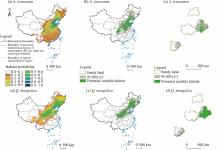
Fig. 2.
Current (1970-2000) habitat probability in China (a and d), current potential suitable habitats in China (b and e), and current potential suitable habitats in the four major sandy lands (c and f) for A. truncatum and Q. mongolica. CI, confidence interval. Note that these figures are based on the standard map (GS(2024)0650) from the National Platform for Common Geospatial Information Services (https://cloudcenter.tianditu.gov.cn/administrativeDivision) issued by the Ministry of Natural Resources of the People’s Republic of China, and the boundary of the standard map has not been modified."
Fig. 3.
Future potential suitable habitats of A. truncatum (a-f) and Q. mongolica (g-l) in China under the Shared Socioeconomic Pathway (SSP)126, SSP245, and SSP585 scenarios in 2050 (2041-2060) and 2090 (2081-2100). Note that these figures are based on the standard map (GS(2024)0650) from the National Platform for Common Geospatial Information Services (https://cloudcenter.tianditu.gov.cn/ administrativeDivision) issued by the Ministry of Natural Resources of the People’s Republic of China, and the boundary of the standard map has not been modified."
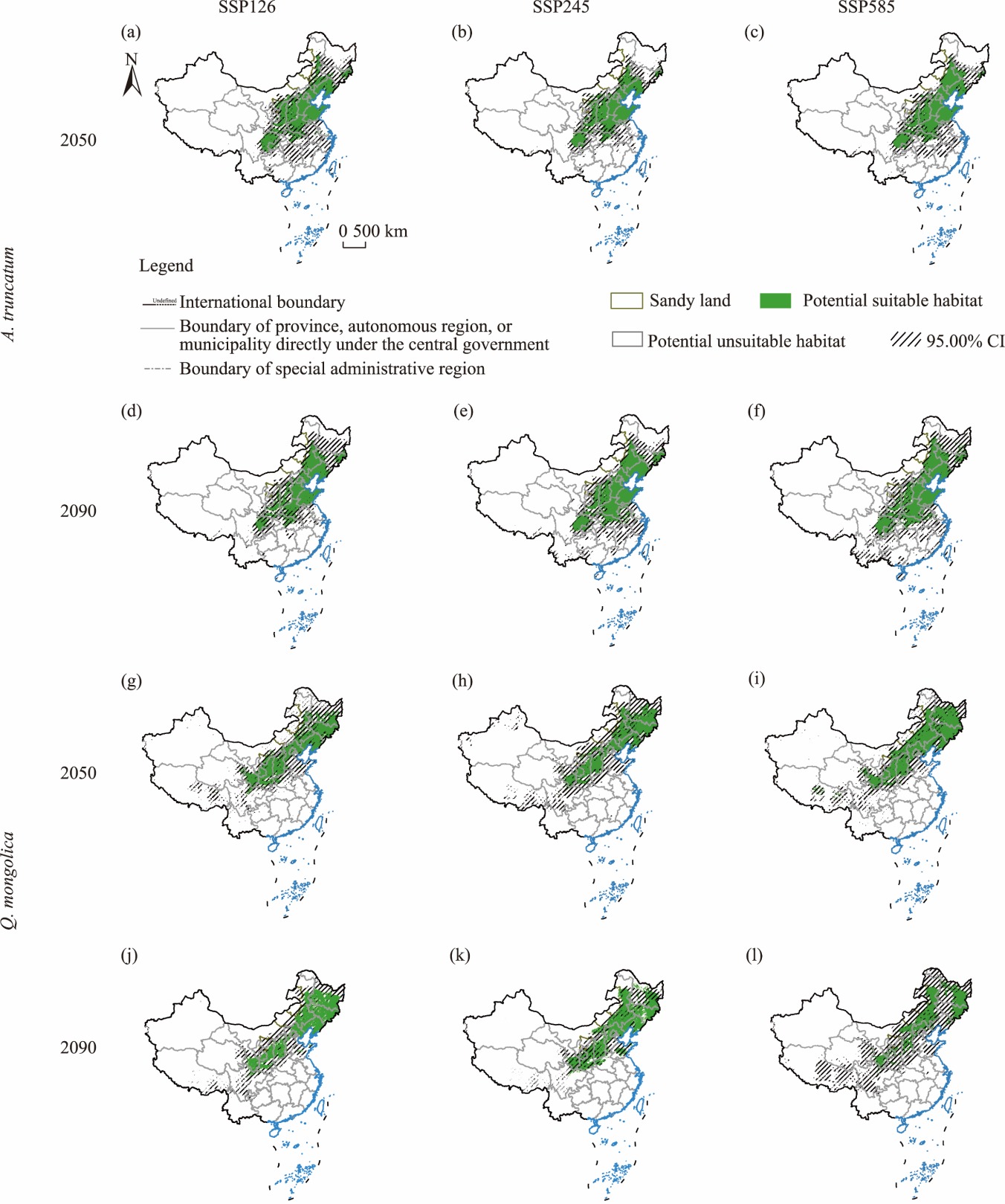
Fig. 4.
Changes in the potential suitable habitats of A. truncatum (a-f) and Q. mongolica (g-l) in China under the SSP126, SSP245, and SSP585 scenarios in 2050 and 2090. Note that these figures are based on the standard map (GS(2024)0650) from the National Platform for Common Geospatial Information Services (https://cloudcenter.tianditu.gov.cn/administrativeDivision) issued by the Ministry of Natural Resources of the People’s Republic of China, and the boundary of the standard map has not been modified."
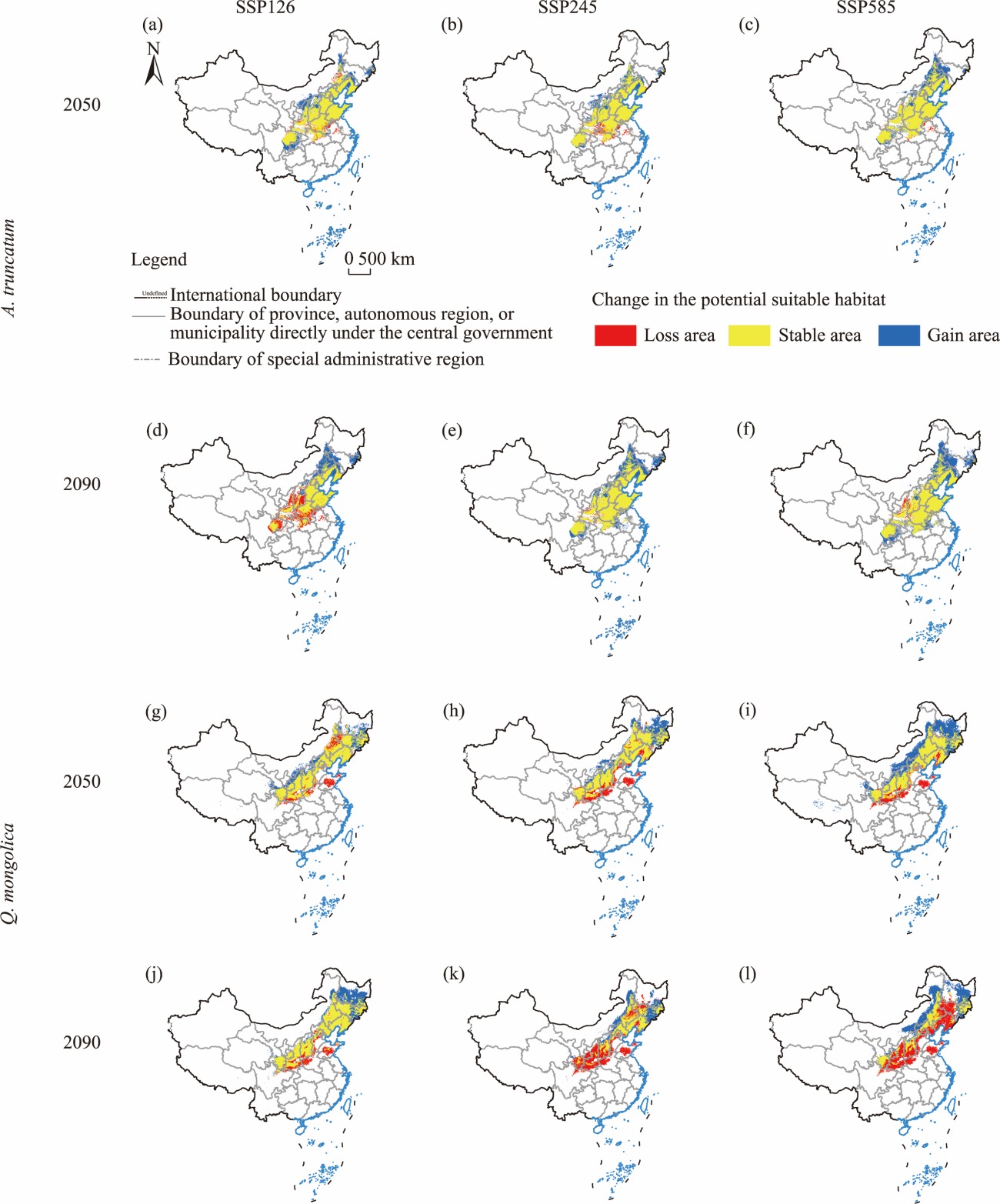
Table 2
Changes in potential suitable habitat areas for A. truncatum and Q. mongolica in China and the four major sandy lands under the Shared Socioeconomic Pathway (SSP)126, SSP245, and SSP585 scenarios."
| Climate scenario | Year | Potential suitable habitat area of A. truncatum (×105 km2) | |||||
|---|---|---|---|---|---|---|---|
| In China | In the four major sandy lands | ||||||
| Gain area | Loss area | Stable area | Gain area | Loss area | Stable area | ||
| SSP126 | 2050 | 2.99 | 0.82 | 8.45 | 0.57 | 0.09 | 0.36 |
| 2090 | 2.49 | 1.67 | 7.59 | 0.67 | 0.01 | 0.44 | |
| SSP245 | 2050 | 2.25 | 0.79 | 8.47 | 0.58 | 0.01 | 0.44 |
| 2090 | 4.28 | 0.26 | 9.01 | 0.81 | 0.00 | 0.45 | |
| SSP585 | 2050 | 3.07 | 0.31 | 8.95 | 0.79 | 0.00 | 0.45 |
| 2090 | 4.50 | 0.45 | 8.82 | 0.71 | 0.01 | 0.44 | |
| SSP126 | 2050 | 2.78 | 2.01 | 7.90 | 0.40 | 0.47 | 0.64 |
| 2090 | 3.52 | 1.75 | 8.15 | 0.13 | 0.04 | 1.07 | |
| SSP245 | 2050 | 2.97 | 2.64 | 7.26 | 0.18 | 0.16 | 0.95 |
| 2090 | 2.16 | 4.10 | 5.80 | 0.37 | 0.25 | 0.85 | |
| SSP585 | 2050 | 5.84 | 2.29 | 7.61 | 0.91 | 0.00 | 1.11 |
| 2090 | 4.23 | 6.48 | 3.42 | 0.77 | 0.49 | 0.62 | |
Fig. 5.
Future potential suitable habitats of A. truncatum (a-f) and Q. mongolica (g-l) in the four major sandy lands of China under the SSP126, SSP245, and SSP585 climate scenarios in 2050 and 2090."
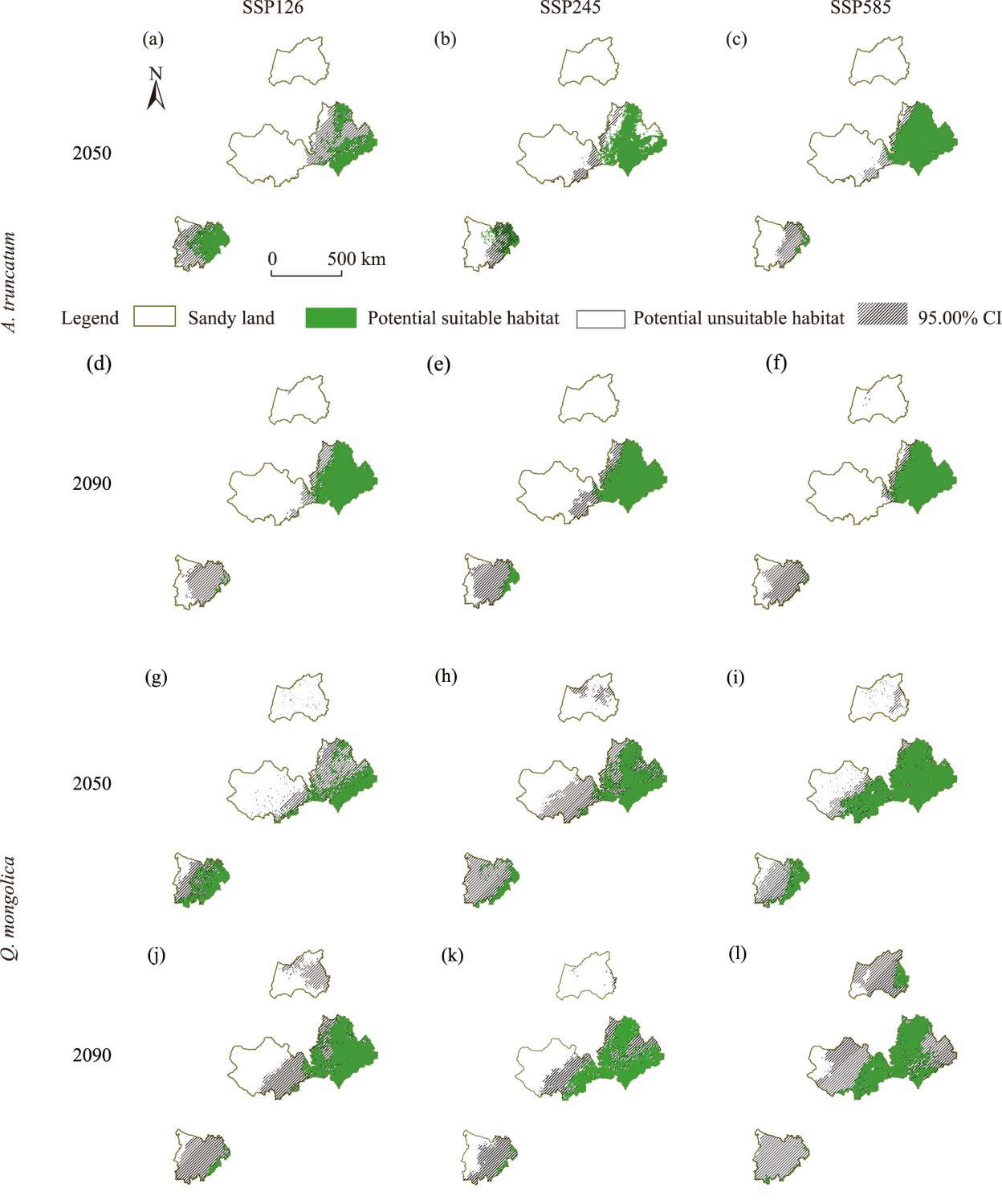
Fig. 6.
Changes in the potential suitable habitats of A. truncatum (a-f) and Q. mongolica (g-l) in the four major sandy lands of China under the SSP126, SSP245, and SSP585 climate scenarios in 2050 and 2090."
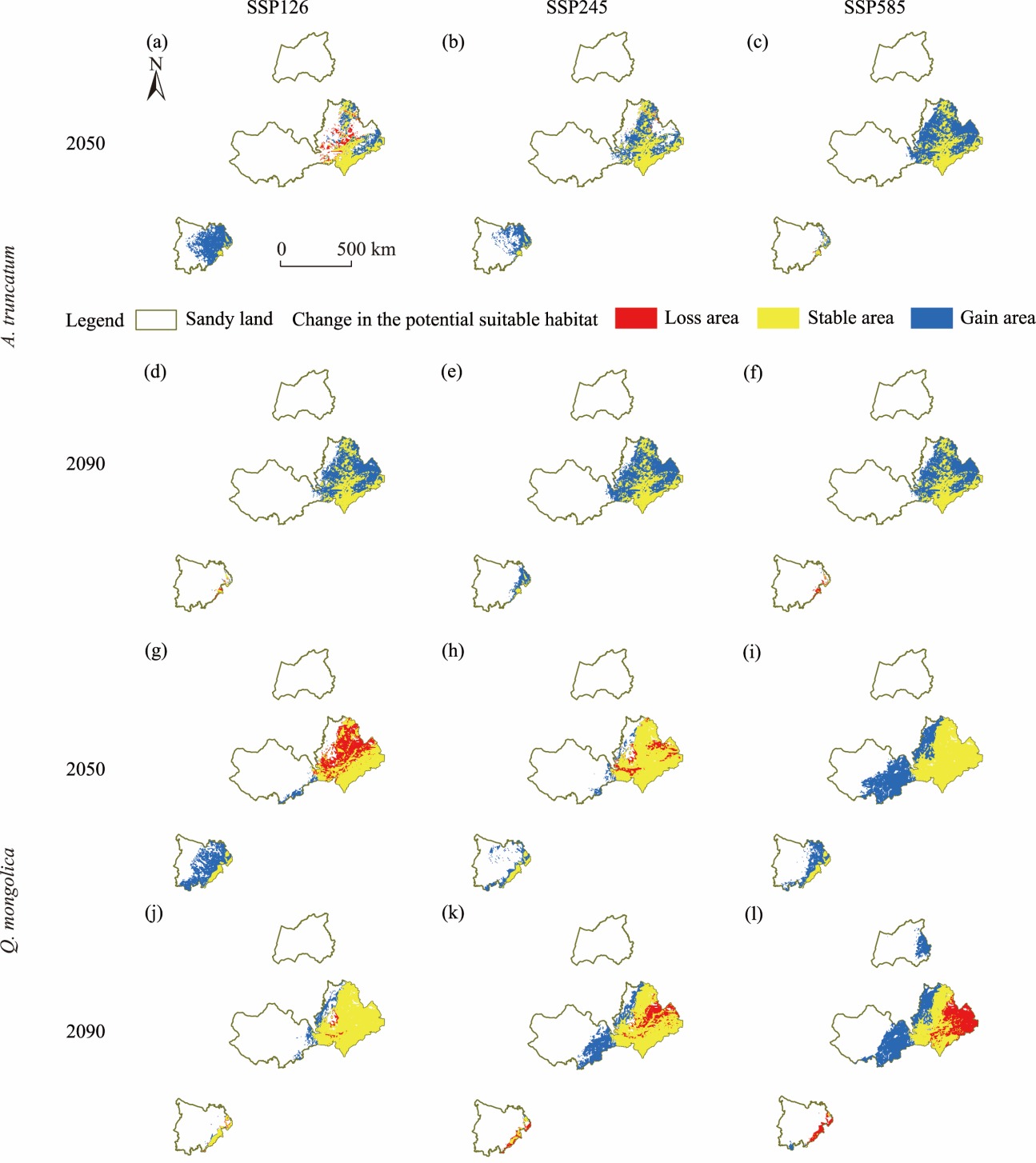
Fig. S1.
Current (1970-2000) habitat suitability probability for Acer truncatum Bunge (a and b) and Quercus mongolica Fisch. ex Ledeb. (c and d) in China based on occurrence records thinned at a 20-km spatial resolution. CI, confidence interval. Note that these figures are based on the standard map (GS(2024)0650) from the National Platform for Common Geospatial Information Services (https://cloudcenter.tianditu.gov.cn/administrativeDivision) issued by the Ministry of Natural Resources of the People’s Republic of China, and the boundary of the standard map has not been modified."
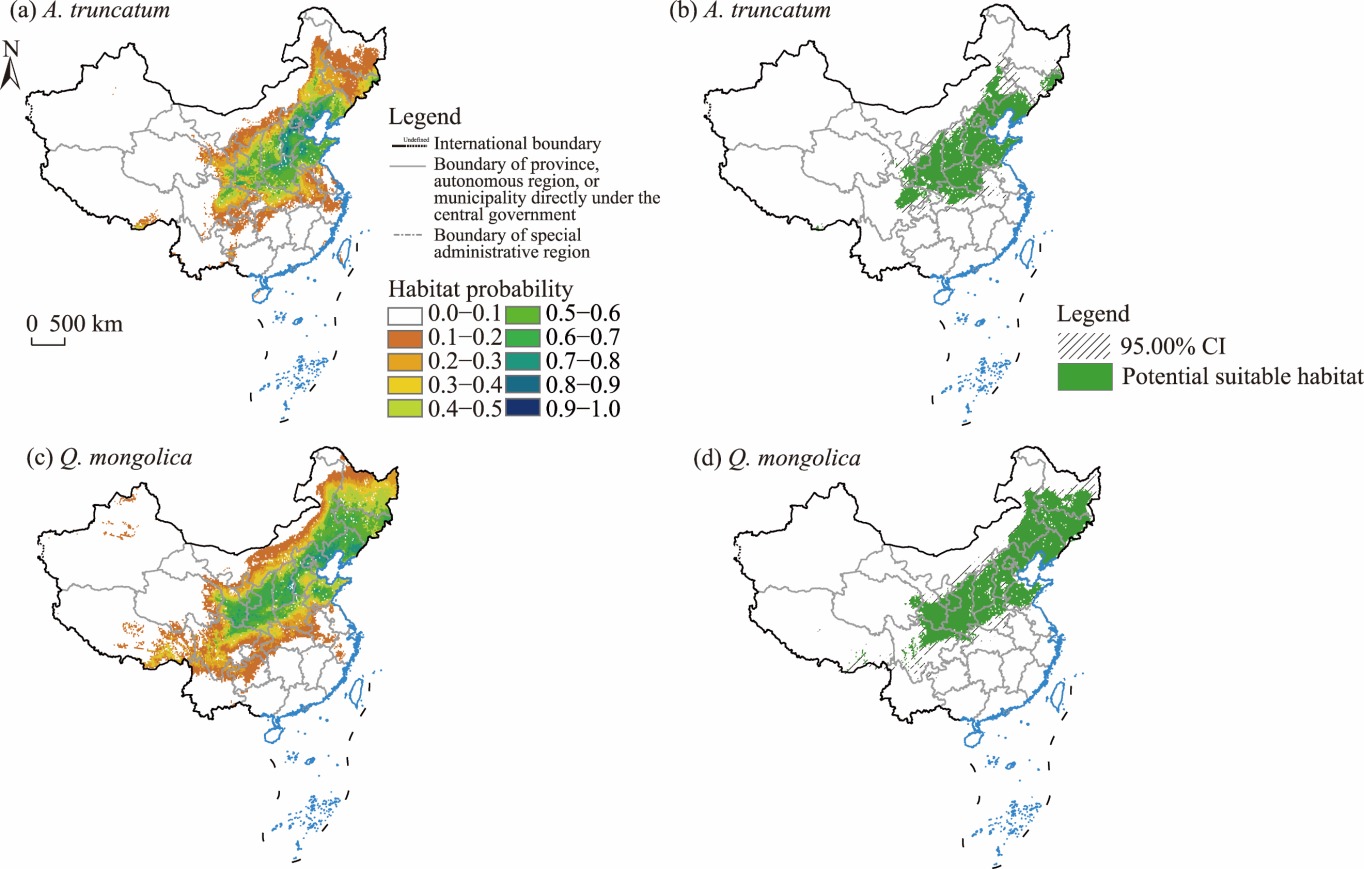
Fig. S2.
Spearman’s correlation coefficients for 19 bioclimatic variables in the distribution of A. truncatum (a) and Q. mongolica (b). bio1, annual mean temperature; bio2, mean diurnal range; bio3, isothermality; bio4, temperature seasonality; bio5, max temperature of warmest month; bio6, min temperature of coldest month; bio7, temperature annual range; bio8, mean temperature of wettest quarter; bio9, mean temperature of driest quarter; bio10, mean temperature of warmest quarter; bio11, mean temperature of coldest quarter; bio12, annual precipitation; bio13, precipitation of wettest month; bio14, precipitation of driest month; bio15, precipitation seasonality; bio16, precipitation of wettest quarter; bio17, precipitation of driest quarter; bio18, precipitation of warmest quarter; bio19, precipitation of coldest quarter."
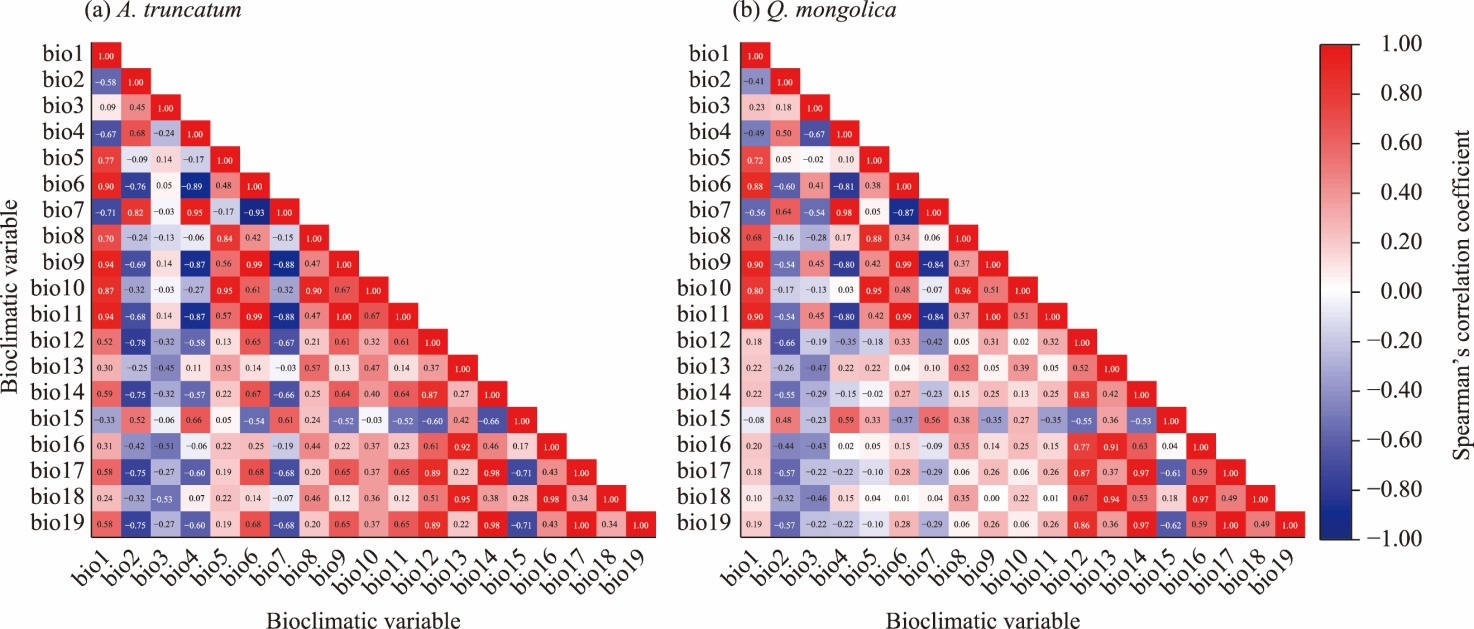
Fig. S3.
Optimization results of the Maximum Entropy (MaxEnt) model for A. truncatum (a) and Q. mongolica (b) using different feature constraints and regularization multipliers (RMs). L, linear features; Q, quadratic features; P, product features; T, threshold features; H, Hinge features. The delta Akaike Information Criterion (AIC) values were used to test the MaxEnt model complexity under different feature constraints and RMs, with delta AIC=0 indicating the most accurate model predictions."
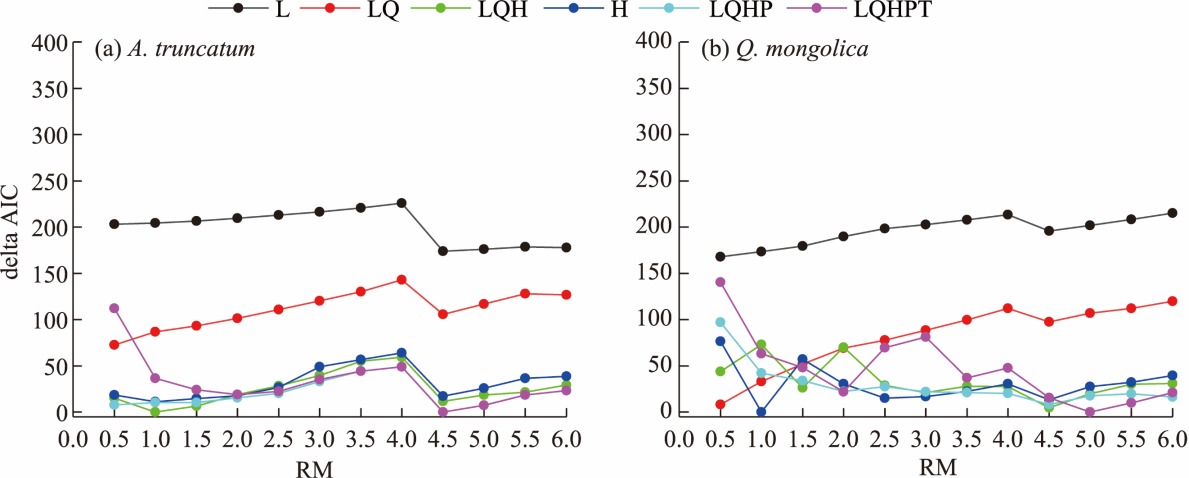
Fig. S4.
Predicted suitable habitats of A. truncatum (a-c) and Q. mongolica (d-f) in China under different threshold criteria using the MaxEnt model. Panels a and d represent predictions based on the minimum training presence logistic threshold, panels b and e on the 10.00% training presence logistic threshold, and panels c and f on the equal training sensitivity and specificity logistic threshold. Grey shading denotes the current provincial distribution of species documented in iPlant of China (http://www.iplant.cn/). Note that these figures are based on the standard map (GS(2024)0650) from the National Platform for Common Geospatial Information Services (https://cloudcenter.tianditu.gov.cn/administrativeDivision) issued by the Ministry of Natural Resources of the People’s Republic of China, and the boundary of the standard map has not been modified."
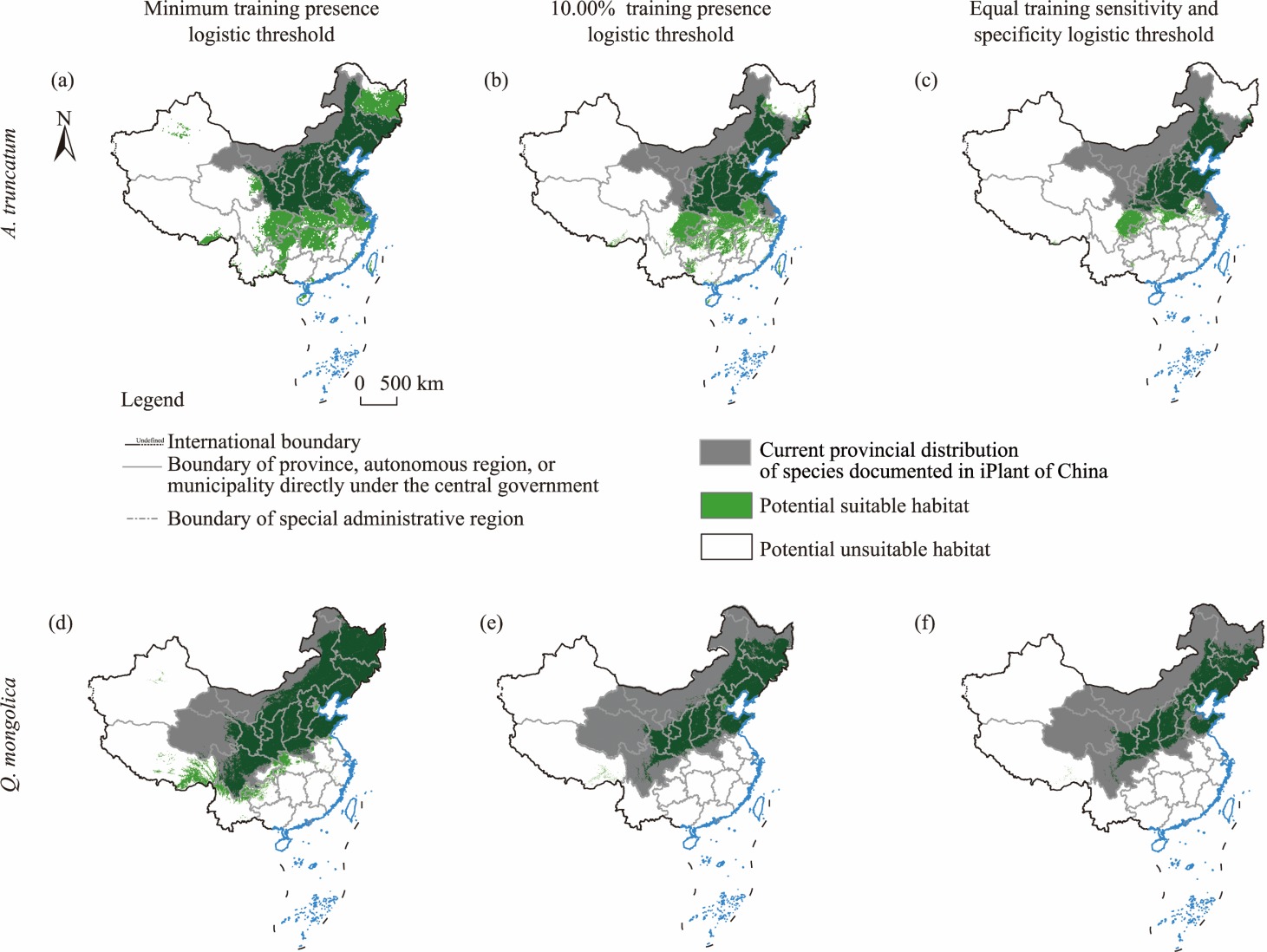
Fig. S5.
Response curves of A. truncatum (a-c) and Q. mongolica (d-f) to different environmental variables."
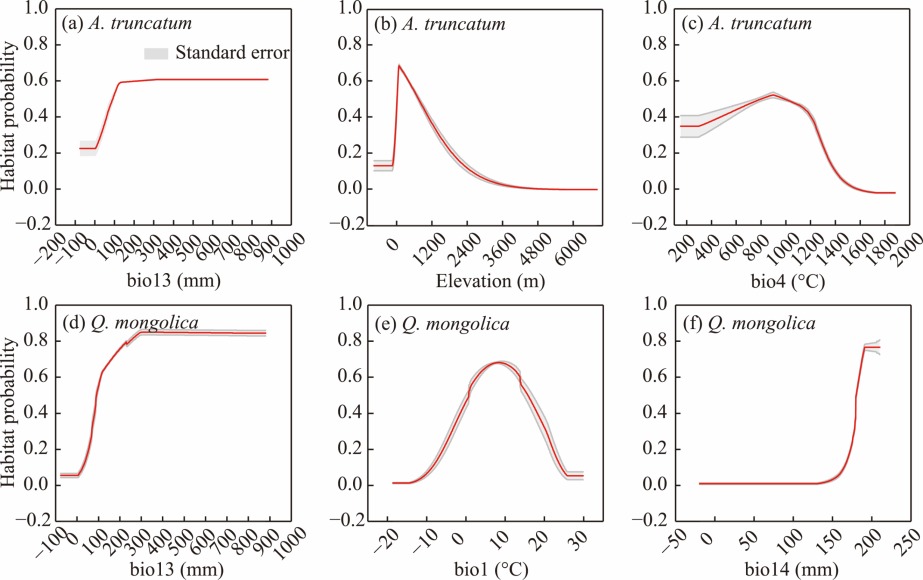
Fig. S6.
Future habitat probability distributions for A. truncatum (a-f) and Q. mongolica (g-l) in China under the Shared Socioeconomic Pathway (SSP)126, SSP245, and SSP585 scenarios in 2050 (2041-2060) and 2090 (2081-2100). Note that these figures are based on the standard map (GS(2024)0650) from the National Platform for Common Geospatial Information Services (https://cloudcenter.tianditu. gov.cn/administrativeDivision) issued by the Ministry of Natural Resources of the People’s Republic of China, and the boundary of the standard map has not been modified."
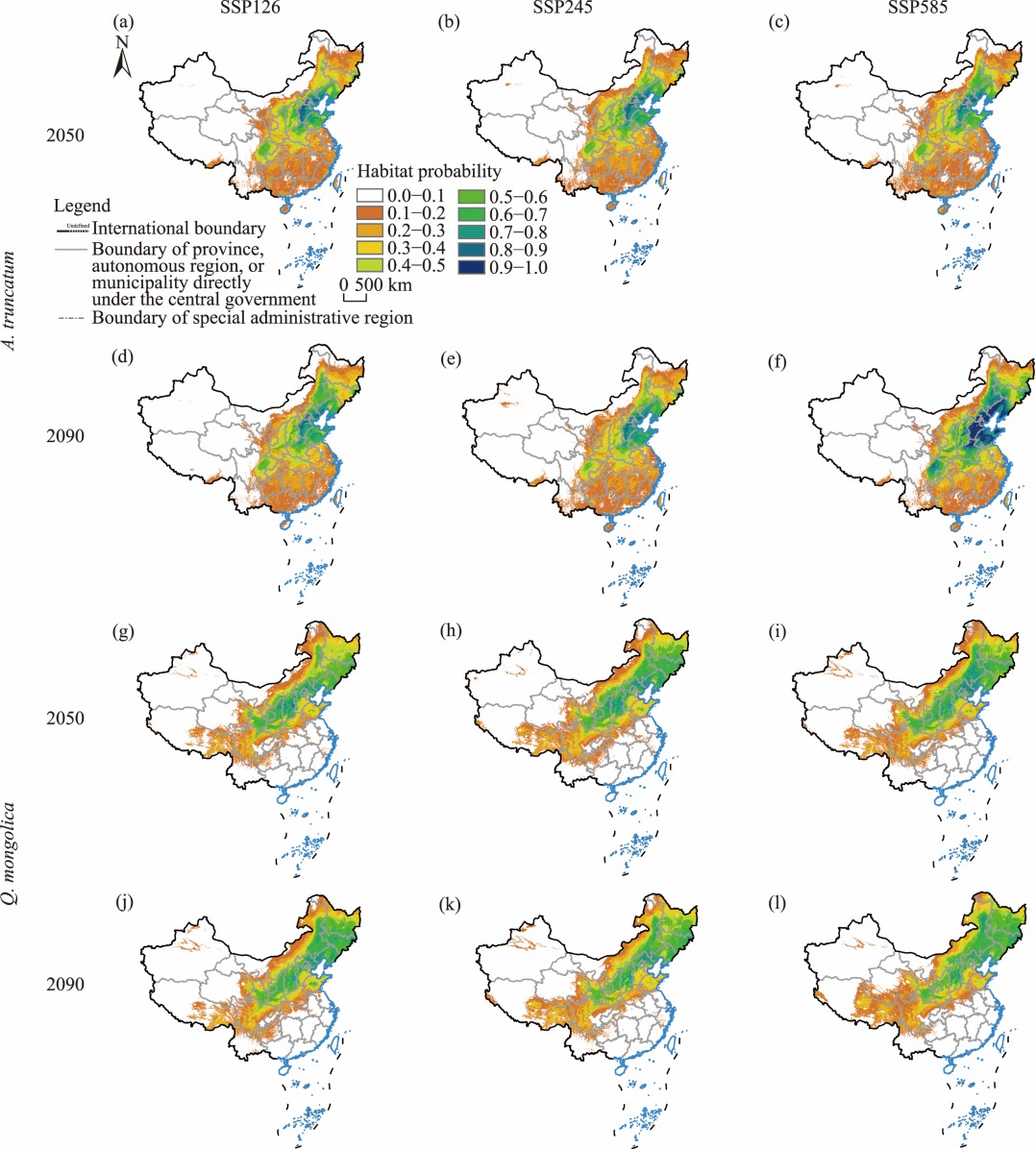
Table S1
Environmental predictors used for the Maximum Entropy (MaxEnt) model to predict the suitable habitats of species distribution under current and future climate scenarios."
| Variable | Description | Unit |
|---|---|---|
| bio1 | Annual mean temperature | °C |
| bio2 | Mean diurnal range | °C |
| bio3 | Isothermality | - |
| bio4 | Temperature seasonality | °C |
| bio5 | Max temperature of warmest month | °C |
| bio6 | Min temperature of coldest month | °C |
| bio7 | Temperature annual range | °C |
| bio8 | Mean temperature of wettest quarter | °C |
| bio9 | Mean temperature of driest quarter | °C |
| bio10 | Mean temperature of warmest quarter | °C |
| bio11 | Mean temperature of coldest quarter | °C |
| bio12 | Annual precipitation | mm |
| bio13 | Precipitation of wettest month | mm |
| bio14 | Precipitation of driest month | mm |
| bio15 | Precipitation seasonality | - |
| bio16 | Precipitation of wettest quarter | mm |
| bio17 | Precipitation of driest quarter | mm |
| bio18 | Precipitation of warmest quarter | mm |
| bio19 | Precipitation of coldest quarter | mm |
| elev | Elevation | m |
| t_texture | Topsoil texture (0-30 cm) | - |
Table S2
Variance inflation factor (VIF) among the retained bioclimatic variables for Acer truncatum Bunge and Quercus mongolica Fisch. ex Ledeb."
| A. truncatum | Q. mongolica | ||
|---|---|---|---|
| Variable | VIF | Variable | VIF |
| bio3 | 1.76 | bio1 | 9.55 |
| bio4 | 1.98 | bio2 | 9.98 |
| bio5 | 1.54 | bio3 | 8.36 |
| bio13 | 2.94 | bio7 | 3.31 |
| bio14 | 4.50 | bio8 | 8.89 |
| bio15 | 5.18 | bio13 | 4.22 |
| bio14 | 4.52 | ||
| bio15 | 6.92 | ||
Table S3
Area under the curve (AUC) values for the predicted potential distribution of A. truncatum and Q. mongolica across different periods under the Shared Socioeconomic Pathway (SSP)126, SSP245, and SSP585 scenarios."
| Species | Period | Scenario | AUC |
|---|---|---|---|
| A. truncatum | Current (1970-2000) | 0.902 | |
| Future (2050) | SSP126 | 0.906 | |
| SSP245 | 0.907 | ||
| SSP585 | 0.905 | ||
| Future (2090) | SSP126 | 0.907 | |
| SSP245 | 0.905 | ||
| SSP585 | 0.907 | ||
| Q. mongolica | Current (1970-2000) | 0.910 | |
| Future (2050) | SSP126 | 0.911 | |
| SSP245 | 0.909 | ||
| SSP585 | 0.905 | ||
| Future (2090) | SSP126 | 0.903 | |
| SSP245 | 0.909 | ||
| SSP585 | 0.909 |
| [1] |
Altman J., Treydte K., Pejcha V., et al., 2020. Tree growth response to recent warming of two endemic species in Northeast Asia. Climatic Change. 162(3), 1345-1364.
doi: 10.1007/s10584-020-02718-1 |
| [2] |
Anderegg L.D., HilleRisLambers J., 2016. Drought stress limits the geographic ranges of two tree species via different physiological mechanisms. Global Change Biology. 22(3), 1029-1045.
doi: 10.1111/gcb.13148 pmid: 26663665 |
| [3] | Anderegg W.R., Klein T., Bartlett M., et al., 2016. Meta-analysis reveals that hydraulic traits explain cross-species patterns of drought-induced tree mortality across the globe. Proceedings of the National Academy of Sciences. 113(18), 5024-5029. |
| [4] |
Araújo M.B., Pearson R.G., Thuiller W., et al., 2005. Validation of species-climate impact models under climate change. Global Change Biology. 11(9), 1504-1513.
doi: 10.1111/gcb.2005.11.issue-9 |
| [5] |
Beaumont L.J., Hughes L., Pitman A., 2008. Why is the choice of future climate scenarios for species distribution modelling important? Ecology Letters. 11(11), 1135-1146.
doi: 10.1111/j.1461-0248.2008.01231.x pmid: 18713269 |
| [6] |
Bond W.J., 2016. Ancient grasslands at risk. Science. 351(6269), 120-122.
doi: 10.1126/science.aad5132 |
| [7] |
Brancalion P.H., Holl K.D., 2020. Guidance for successful tree planting initiatives. Journal of Applied Ecology. 57(12), 2349-2361.
doi: 10.1111/1365-2664.13725 |
| [8] | Brown J.L., Bennett J.R., French C.M., 2017. SDMtoolbox 2.0: the next generation Python-based GIS toolkit for landscape genetic, biogeographic and species distribution model analyses. PeerJ. 5, e4095, doi: 10.7717/peerj.4095. |
| [9] |
Brunner I., Herzog C., Dawes M.A., et al., 2015. How tree roots respond to drought. Frontiers in Plant Science. 6, 547, doi: 10.3389/fpls.2015.00547.
pmid: 26284083 |
| [10] |
Cao S.X., Chen L., Shankman D., et al., 2011. Excessive reliance on afforestation in China’s arid and semi-arid regions: Lessons in ecological restoration. Earth-Science Reviews. 104(4), 240-245.
doi: 10.1016/j.earscirev.2010.11.002 |
| [11] | Cao W.J., Li Y.Q., Chen Y., et al., 2023. Grazing exclusion is more beneficial for restoring soil organic carbon and nutrient balance than afforestation on degraded sandy land. Frontiers in Plant Science. 14, 1326244, doi: 10.3389/fpls.2023.1326244. |
| [12] |
Case T.J., Taper M.L., 2000. Interspecific competition, environmental gradients, gene flow, and the coevolution of species’ borders. The American Naturalist. 155(5), 583-605.
doi: 10.1086/303351 pmid: 10777432 |
| [13] |
Chen I.C., Hill J.K., Ohlemüller R., et al., 2011. Rapid range shifts of species associated with high levels of climate warming. Science. 333(6045), 1024-1026.
doi: 10.1126/science.1206432 pmid: 21852500 |
| [14] |
Chen Y.P., Wang K.B., Lin Y.S., et al., 2015. Balancing green and grain trade. Nature Geoscience. 8(10), 739-741.
doi: 10.1038/ngeo2544 |
| [15] | Comeau V.M., Daniels L.D., Knochenmus G., et al., 2019. Tree-rings reveal accelerated yellow-cedar decline with changes to winter climate after 1980. Forests. 10(12), 1085, doi: 10.3390/f10121085. |
| [16] | Davis K.T., Dobrowski S.Z., Higuera P.E., et al., 2019. Wildfires and climate change push low-elevation forests across a critical climate threshold for tree regeneration. Proceedings of the National Academy of Sciences. 116(13), 6193-6198. |
| [17] | De Frenne P., Rodríguez-Sánchez F., Coomes D.A., et al., 2013. Microclimate moderates plant responses to macroclimate warming. Proceedings of the National Academy of Sciences. 110(46), 18561-18565. |
| [18] | Deng L., Yan W.M., Zhang Y.W., et al., 2016. Severe depletion of soil moisture following land-use changes for ecological restoration: Evidence from northern China. Forest Ecology and Management. 366, 1-10. |
| [19] |
D’Orangeville L., Itter M., Dan K., et al., 2021. Peak radial growth of diffuse-porous species occurs during periods of lower water availability than for ring-porous and coniferous trees. Tree Physiology. 42(2), 304-316.
doi: 10.1093/treephys/tpab101 pmid: 34312673 |
| [20] |
Duan C.Y., Li M.Y., Fang L.D., et al., 2022. Greater hydraulic safety contributes to higher growth resilience to drought across seven pine species in a semi-arid environment. Tree Physiology. 42(4), 727-739.
doi: 10.1093/treephys/tpab137 |
| [21] |
Dusenge M.E., Madhavji S., Way D.A., 2020. Contrasting acclimation responses to elevated CO2 and warming between an evergreen and a deciduous boreal conifer. Global Change Biology. 26(6), 3639-3657.
doi: 10.1111/gcb.v26.6 |
| [22] |
García-González I., Fonti P., 2006. Selecting earlywood vessels to maximize their environmental signal. Tree Physiology. 26(10), 1289-1296.
pmid: 16815831 |
| [23] |
Gebauer R., Plichta R., Urban J., et al., 2020. The resistance and resilience of European beech seedlings to drought stress during the period of leaf development. Tree Physiology. 40(9), 1147-1164.
doi: 10.1093/treephys/tpaa066 pmid: 32470134 |
| [24] | Gong X.W., Hao G.Y., 2023. The synergistic effect of hydraulic and thermal impairments accounts for the severe crown damage in Fraxinus mandshurica seedlings following the combined drought-heatwave stress. Science of The Total Environment. 856, 159017, doi: 10.1016/j.scitotenv.2022.159017. |
| [25] |
Graham M.H., 2003. Confronting multicollinearity in ecological multiple regression. Ecology. 84(11), 2809-2815.
doi: 10.1890/02-3114 |
| [26] |
Guo J.H., Wang X.Q., Xiao C., et al., 2022. Evaluation of the temperature downscaling performance of PRECIS to the BCC-CSM2-MR model over China. Climate Dynamics. 59(3), 1143-1159.
doi: 10.1007/s00382-022-06177-5 |
| [27] |
Guo J.J., Gong X.W., Hao G.Y., 2025. Leaf transpirational cooling and thermal tolerance vary along the spectrum of iso‐anisohydric stomatal regulation in sand‐fixing shrubs. Plant, Cell & Environment. 48(3), 2053-2066.
doi: 10.1111/pce.v48.3 |
| [28] |
Guo X.D., Wang H.F., Bao L., et al., 2014. Evolutionary history of a widespread tree species Acer mono in East Asia. Ecology and Evolution. 4(22), 4332-4345.
doi: 10.1002/ece3.2014.4.issue-22 |
| [29] |
Hanewinkel M., Cullmann D.A., Schelhaas M.J., et al., 2013. Climate change may cause severe loss in the economic value of European forest land. Nature Climate Change. 3(3), 203-207.
doi: 10.1038/nclimate1687 |
| [30] |
Hao G.Y., Wheeler J.K., Holbrook N.M., et al., 2013. Investigating xylem embolism formation, refilling and water storage in tree trunks using frequency domain reflectometry. Journal of Experimental Botany. 64(8), 2321-2332.
doi: 10.1093/jxb/ert090 |
| [31] | Hoeber S., Leuschner C., Köhler L., et al., 2014. The importance of hydraulic conductivity and wood density to growth performance in eight tree species from a tropical semi-dry climate. Forest Ecology and Management. 330, 126-136. |
| [32] |
Hong S.B., Yin G.D., Piao S.L., et al., 2020. Divergent responses of soil organic carbon to afforestation. Nature Sustainability. 3(9), 694-700.
doi: 10.1038/s41893-020-0557-y |
| [33] | Huang C.Y., Anderegg W.R.L., Asner G.P., 2019. Remote sensing of forest die-off in the Anthropocene: From plant ecophysiology to canopy structure. Remote Sensing of Environment. 231, 111233, doi: 10.1016/j.rse.2019.111233. |
| [34] |
Huang J.G., Zhang Y., Wang M., et al., 2023. A critical thermal transition driving spring phenology of Northern Hemisphere conifers. Global Change Biology. 29(6), 1606-1617.
doi: 10.1111/gcb.v29.6 |
| [35] | IPCC (Intergovernmental Panel on Climate Change), 2021. Summary for policymakers. In: Masson-Delmotte, V., Zhai, P., Pirani, A., et al., (eds.). Climate Change 2021: The Physical Science Basis. Contribution of Working Group I to the Sixth Assessment Report of the IPCC. Cambridge: Cambridge University Press, 15-30. |
| [36] |
Kharuk V.I., Im S.T., Petrov I.Y.A., et al., 2021. Climate‐driven conifer mortality in Siberia. Global Ecology and Biogeography. 30(2), 543-556.
doi: 10.1111/geb.v30.2 |
| [37] | Kopsco H.L., Smith R.L., Halsey S.J., 2022. A scoping review of species distribution modeling methods for tick vectors. Frontiers in Ecology and Evolution. 10, 893016, doi: 10.3389/fevo.2022.893016. |
| [38] |
Körner C., Basler D., Hoch G., et al., 2016. Where, why and how? Explaining the low‐temperature range limits of temperate tree species. Journal of Ecology. 104(4), 1076-1088.
doi: 10.1111/jec.2016.104.issue-4 |
| [39] |
Lenoir J., Gégout J.C., Marquet P.A., et al., 2008. A significant upward shift in plant species optimum elevation during the 20th century. Science. 320(5884), 1768-1771.
doi: 10.1126/science.1156831 pmid: 18583610 |
| [40] | Li J.Y., Chang H., Liu T., et al., 2019. The potential geographical distribution of Haloxylon across Central Asia under climate change in the 21st century. Agricultural and Forest Meteorology. 275, 243-254. |
| [41] | Li S.P., Quan W.J., Wang Z., et al., 2023. Evaluation of the ability of BCC-CSM2-MR global climate model in simulating precipitation and temperature in East Asia. Journal of Arid Meteorology. 41(6), 984-996 (in Chinese). |
| [42] | Li T.W., He B., Chen D.L., et al., 2024a. Increasing sensitivity of tree radial growth to precipitation. Geophysical Research Letters. 51(16), e2024GL110003, doi: 10.1029/2024GL110003. |
| [43] |
Li X.Y., Wang F., Duan T., et al., 2025. Distribution and mapping of temperate savanna in the sandy lands of eastern China. Science China Earth Sciences. 68(1), 128-141.
doi: 10.1007/s11430-024-1449-y |
| [44] | Li Y.Q., Wang X.Y., Zheng C.Z., et al., 2024b. The practice on prevention and control of aeolian desertification and suggestion on the ecologically sustainable restoration in the Horqin Sandy Land. Journal of Desert Research. 44(4), 302-314 (in Chinese). |
| [45] | Lian Z.H., Wang J., Zhang C.Y., et al., 2022. Mismatch between species distribution and climatic niche optima in relation to functional traits. Forest Ecosystems. 9, 100077, doi: 10.1016/j.fecs.2022.100077. |
| [46] | Liang E.Y., Wang Y.F., Piao S.L., et al., 2016. Species interactions slow warming-induced upward shifts of treelines on the Tibetan Plateau. Proceedings of the National Academy of Sciences. 113(16), 4380-4385. |
| [47] | Liu H.X., Li M.Y., Han R.Y., et al., 2024a. Increased temperatures contribute to early aging of plantation-grown Mongolian pine in introduced areas at lower latitudes. Journal of Forestry Research. 35(1), 122, doi: 10.1007/s11676-024-01770-2. |
| [48] |
Liu H.Y., 2019. It is difficult for China’s greening through large-scale afforestation to cross the Hu Line. Science China Earth Sciences. 62(10), 1662-1664.
doi: 10.1007/s11430-019-9381-3 |
| [49] |
Liu H.Y., Xu C.Y., Allen C.D., et al., 2022. Nature-based framework for sustainable afforestation in global drylands under changing climate. Global Change Biology. 28(7), 2202-2220.
doi: 10.1111/gcb.v28.7 |
| [50] | Liu Y.T., Wang Y.Q., Guo H., et al., 2024b. Changes in potentially suitable areas for fruit utilization of Acer truncatum in China under climate change. Forests. 15(4), 713, doi: 10.3390/f15040713. |
| [51] | Lu Q., Xiao C.L., Bao Y.S., et al., 2023. Implementation path and strategic planning of winning the battle of “Three-North” and reconstructing “New Three-North”. Bulletin of Chinese Academy of Sciences. 38(7), 956-965 (in Chinese). |
| [52] | MacKenzie W.H., Mahony C.R., 2021. An ecological approach to climate change-informed tree species selection for reforestation. Forest Ecology and Management. 481, 118705, doi: 10.1016/j.foreco.2020.118705. |
| [53] |
Martin-Benito D., Beeckman H., Cañellas I., 2012. Influence of drought on tree rings and tracheid features of Pinus nigra and Pinus sylvestris in a mesic Mediterranean forest. European Journal of Forest Research. 132(1), 33-45.
doi: 10.1007/s10342-012-0652-3 |
| [54] |
Merow C., Smith M.J., Silander Jr J.A., 2013. A practical guide to MaxEnt for modeling species’ distributions: What it does, and why inputs and settings matter. Ecography. 36(10), 1058-1069.
doi: 10.1111/ecog.2013.36.issue-10 |
| [55] | Natalini F., Alejano R., Vázquez-Piqué J., et al., 2016. Spatiotemporal variability of stone pine (Pinus pinea L.) growth response to climate across the Iberian Peninsula. Dendrochronologia. 40, 72-84. |
| [56] | Ning Q.R., Gong X.W., Li M.Y., et al., 2022. Differences in growth pattern and response to climate warming between Larix olgensis and Pinus koraiensis in Northeast China are related to their distinctions in xylem hydraulics. Agricultural and Forest Meteorology. 312, 108724, doi: 10.1016/j.agrformet.2021.108724. |
| [57] | Ning Q.R., Li Q., Zhang H.P., et al., 2024. Weak correlations among leaf thermal metrics, economic traits and damages under natural heatwaves. Science of The Total Environment. 916, 170022, doi: 10.1016/j.scitotenv.2024.170022. |
| [58] |
Peñuelas J., Ogaya R., Boada M., et al., 2007. Migration, invasion and decline: Changes in recruitment and forest structure in a warming-linked shift of European beech forest in Catalonia (NE Spain). Ecography. 30(6), 829-837.
doi: 10.1111/eco.2007.30.issue-6 |
| [59] |
Petitpierre B., Kueffer C., Broennimann O., et al., 2012. Climatic niche shifts are rare among terrestrial plant invaders. Science. 335(6074), 1344-1348.
doi: 10.1126/science.1215933 pmid: 22422981 |
| [60] |
Phillips S.J., Anderson R.P., Schapire R.E., 2006. Maximum entropy modeling of species geographic distributions. Ecological Modelling. 190(3-4), 231-259.
doi: 10.1016/j.ecolmodel.2005.03.026 |
| [61] |
Phillips S.J., Dudík M., 2008. Modeling of species distributions with Maxent: New extensions and a comprehensive evaluation. Ecography. 31(2), 161-175.
doi: 10.1111/eco.2008.31.issue-2 |
| [62] |
Piao S.L., Ciais P., Huang Y., et al., 2010. The impacts of climate change on water resources and agriculture in China. Nature. 467(7311), 43-51.
doi: 10.1038/nature09364 |
| [63] |
Piovesan G., Biondi F., Filippo A.D., et al., 2008. Drought-driven growth reduction in old beech (Fagus sylvatica L.) forests of the central Apennines, Italy. Global Change Biology. 14(6), 1265-1281.
doi: 10.1111/gcb.2008.14.issue-6 |
| [64] |
Reyer C., Guericke M., Ibisch P.L., 2009. Climate change mitigation via afforestation, reforestation and deforestation avoidance: and what about adaptation to environmental change? New Forests. 38(1), 15-34.
doi: 10.1007/s11056-008-9129-0 |
| [65] |
Riahi K., Rao S., Krey V., et al., 2011. RCP 8.5—A scenario of comparatively high greenhouse gas emissions. Climatic Change. 109(1), 33-57.
doi: 10.1007/s10584-011-0149-y |
| [66] |
Rickebusch S., Lischke H., Bugmann H., et al., 2007. Understanding the low-temperature limitations to forest growth through calibration of a forest dynamics model with tree-ring data. Forest Ecology and Management. 246(2-3), 251-263.
doi: 10.1016/j.foreco.2007.04.030 |
| [67] | Seidl R., Turner M.G., 2022. Post-disturbance reorganization of forest ecosystems in a changing world. Proceedings of the National Academy of Sciences. 119(28), e2202190119, doi: 10.1073/pnas.2202190119. |
| [68] | Shi H., Peng X., Zhou Y.J., et al., 2024. Resilience and response: Unveiling the impacts of extreme droughts on forests through integrated dendrochronological and remote sensing analyses. Forest Ecosystems. 11, 100209, doi: 10.1016/j.fecs.2024.100209. |
| [69] |
Sperry J.S., Nichols K.L., Sullivan J.E.M., et al., 1994. Xylem embolism in ring-porous, diffuse-porous and coniferous trees of northern Utah and interior Alaska. Ecology. 75(6), 1736-1752.
doi: 10.2307/1939633 |
| [70] |
Sperry J.S., Venturas M.D., Anderegg W.R., et al., 2017. Predicting stomatal responses to the environment from the optimization of photosynthetic gain and hydraulic cost. Plant, Cell & Environment. 40(6), 816-830.
doi: 10.1111/pce.v40.6 |
| [71] | State Forestry and Grassland Administration of China, 2023. GB/T 15776-2023: Technical Regulation for Forestation. Beijing: Standards Press of China (in Chinese). |
| [72] |
Svenning J.C., Skov F., 2004. Limited filling of the potential range in European tree species. Ecology Letters. 7(7), 565-573.
doi: 10.1111/ele.2004.7.issue-7 |
| [73] |
Tang L.L., Morris W.K., Zhang M., et al., 2022. Exploring how functional traits modulate species distributions along topographic gradients in Baxian Mountain, North China. Scientific Reports. 12(1), 994, doi: 10.1038/s41598-021-04210-x.
pmid: 35046442 |
| [74] | Tang S.Q., Wu Y., Liang D.D., et al., 2023. Prediction of the potential ecological distribution of Phytophthora ramorum in China under future climate change. Acta Ecologica Sinica. 43(1), 388-397 (in Chinese). |
| [75] | Thomson A.M., Calvin K.V., Smith S.J., et al., 2011. RCP4. 5: a pathway for stabilization of radiative forcing by 2100. Climatic Change. 109(1), 77, doi: 10.1007/s10584-011-0151-4. |
| [76] | Tian X.C., Wei H.L., Xie S.N., et al., 2024. Potential geographical distribution of Acer in Northeast China based on the MaxEnt Model. Ecology and Environmental Sciences. 33(4), 509-519 (in Chinese). |
| [77] |
Trac C.J., Harrell S., Hinckley T.M., et al., 2007. Reforestation programs in Southwest China: reported success, observed failure, and the reasons why. Journal of Mountain Science. 4(4), 275-292.
doi: 10.1007/s11629-007-0275-1 |
| [78] |
Van Mantgem P.J., Stephenson N.L., Byrne J.C., et al., 2009. Widespread increase of tree mortality rates in the western United States. Science. 323(5913), 521-524.
doi: 10.1126/science.1165000 pmid: 19164752 |
| [79] | Van Vuuren D.P., Stehfest E., den Elzen M.G., et al., 2011. RCP2.6: exploring the possibility to keep global mean temperature increase below 2°C. Climatic Change. 109(1), 95, doi: 10.1007/s10584-011-0152-3. |
| [80] |
Vesk P.A., Morris W.K., Neal W.C., et al., 2021. Transferability of trait‐based species distribution models. Ecography. 44(1), 134-147.
doi: 10.1111/ecog.2021.v44.i1 |
| [81] | Wang A.Y., Cui H.X., Gong X.W., et al., 2022. Contrast in vulnerability to freezing-induced xylem embolism contributes to divergence in spring phenology between diffuse-and ring-porous temperate trees. Forest Ecosystems. 9, 100070, doi: 10.1016/j.fecs.2022.100070. |
| [82] | Wang A.Y., Li S.Q., Cui H.X., et al., 2025a. Divergence in leaf and cambium phenologies among three temperate tree species of different wood types with special reference to xylem hydraulics. Frontiers in Plant Science. 16, 1562873, doi: 10.3389/fpls.2025.1562873. |
| [83] |
Wang F., Pan X.B., Gerlein‐Safdi C., et al., 2020. Vegetation restoration in Northern China: A contrasted picture. Land Degradation & Development. 31(6), 669-676.
doi: 10.1002/ldr.v31.6 |
| [84] | Wang J.H., Wang Y.M., Yan C.Z., et al., 2013. 1:100,000 Desert (sand) Distribution Dataset in China. National Tibetan Plateau/Third Pole Environment Data Center. [2025-09-10]. https://doi.org/10.3972/westdc.006.2013.db (in Chinese). |
| [85] | Wang M.R., Yao J.Q., Chang H.Y., et al., 2025b. Underground well water level observation grid dataset from 2005 to 2022. Scientific Data. 12(1), 728, doi: 10.1038/s41597-025-04799-y. |
| [86] | Wang Y.J., Zhao R.X., Zhou X.Y., et al., 2023. Prediction of potential distribution areas and priority protected areas of Agastache rugosa based on Maxent model and Marxan model. Frontiers in Plant Science. 14, 1200796, doi: 10.3389/fpls.2023.1200796. |
| [87] |
Williams M.I., Dumroese R.K., 2013. Preparing for climate change: Forestry and assisted migration. Journal of Forestry. 111(4), 287-297.
doi: 10.5849/jof.13-016 |
| [88] |
Wright I.J., Reich P.B., Westoby M., et al., 2004. The worldwide leaf economics spectrum. Nature. 428(6985), 821-827.
doi: 10.1038/nature02403 |
| [89] | Xu H., Yue C., Zhang Y., et al., 2023. Forestation at the right time with the right species can generate persistent carbon benefits in China. Proceedings of the National Academy of Sciences. 120(41), e2304988120, doi: 10.1073/pnas.2304988120. |
| [90] | Yasmeen S., Wang X.C., Zhao H.Y., et al., 2019. Contrasting climate-growth relationship between Larix gmelinii and Pinus sylvestris var. mongolica along a latitudinal gradient in Daxing’an Mountains, China. Dendrochronologia. 58, 125645, doi: 10.1016/j.dendro.2019.125645. |
| [91] | Yin X.H., Hao G.Y., 2018. Divergence between ring- and diffuse-porous wood types in broadleaf trees of Changbai Mountains results in substantial differences in hydraulic traits. Chinese Journal of Applied Ecology. 29(2), 352-360 (in Chinese). |
| [92] |
Yin X.H., Sterck F., Hao G.Y., 2018. Divergent hydraulic strategies to cope with freezing in co-occurring temperate tree species with special reference to root and stem pressure generation. New Phytologist. 219(2), 530-541.
doi: 10.1111/nph.2018.219.issue-2 |
| [93] | Young N., Carter L., Evangelista P., 2011. A MaxEnt model v3.3.3e tutorial (ArcGIS v10). In: Natural Resource Ecology Laboratory, Colorado State University and the National Institute of Invasive Species Science. Colorado, USA. |
| [94] |
Yu N., Zhao Y.Y., Ding G.D., et al., 2018. Sustainability assessment in four sandy lands of China based on the ecological footprint model. Arid Land Geography. 41(6), 1310-1320 (in Chinese).
doi: 10.12118/j.issn.1000-6060.2018.06.19 |
| [95] |
Yu Z., Liu S.R., Wang J.X., et al., 2019. Natural forests exhibit higher carbon sequestration and lower water consumption than planted forests in China. Global Change Biology. 25(1), 68-77.
doi: 10.1111/gcb.14484 pmid: 30338613 |
| [96] | Zan G.S., Wang C.P., Li F., et al., 2023. Key data results and trend analysis of the Sixth National Survey on Desertification and Sandification. Forest and Grassland Resources Research. (1), 1-7 (in Chinese). |
| [97] | Zhai J.J., Wang L., Liu Y., et al., 2023. Assessing the effects of China’s three-north shelter forest program over 40 years. Science of The Total Environment. 857, 159354, doi: 10.1016/j.scitotenv.2022.159354. |
| [98] | Zhang B.Q., Lan K., Harris T.B., et al., 2023. Climate-smart forestry through innovative wood products and commercial afforestation and reforestation on marginal land. Proceedings of the National Academy of Sciences. 120(23), e2221840120, doi: 10.1073/pnas.2221840120. |
| [99] |
Zhang H.P., Ning Q.R., Li Q., et al., 2024. Contrasting heat tolerance of evergreen and deciduous urban woody species during heat waves. Functional Ecology. 38(7), 1649-1660.
doi: 10.1111/fec.v38.7 |
| [100] | Zhang K.L., Yao L.J., Meng J.S., et al., 2018. Maxent modeling for predicting the potential geographical distribution of two peony species under climate change. Science of The Total Environment. 634, 1326-1334. |
| [101] | Zhang K.L., Zhang Y., Zhou C., et al., 2019. Impact of climate factors on future distributions of Paeonia ostii across China estimated by MaxEnt. Ecological Informatics. 50, 62-67. |
| [102] |
Zhang L., Sun P.S., Huettmann F., et al., 2022. Where should China practice forestry in a warming world? Global Change Biology. 28(7), 2461-2475.
doi: 10.1111/gcb.v28.7 |
| [103] | Zheng X., Zhu J.J., Yan Q.L., et al., 2012. Effects of land use changes on the groundwater table and the decline of Pinus sylvestris var. mongolica plantations in southern Horqin Sandy Land, Northeast China. Agricultural Water Management. 109, 94-106. |
| [104] | Zhu J.J., Zheng X., Wang G.G., et al., 2017. Assessment of the world largest afforestation program: Success, failure, and future directions. BioRxiv. 105619, doi: 10.1101/105619. |
| [105] | Zhu J.J., Zheng X., 2019. The prospects of development of the Three-North Afforestation Program (TNAP): On the basis of the results of the 40-year construction general assessment of the TNAP. Chinese Journal of Ecology. 38(50), 1600-1610 (in Chinese). |
| [106] |
Zuidema P.A., Babst F., Groenendijk P., et al., 2022. Tropical tree growth driven by dry-season climate variability. Nature Geoscience. 15(4), 269-276.
doi: 10.1038/s41561-022-00911-8 |
| [107] |
Zuo X.A., Zhao H.L., Zhao X.Y., et al., 2008. Spatial pattern and heterogeneity of soil properties in sand dunes under grazing and restoration in Horqin Sandy Land, Northern China. Soil and Tillage Research. 99(2), 202-212.
doi: 10.1016/j.still.2008.02.008 |
| [108] |
Zwieniecki M.A., Melcher P.J., Ahrens E.T., 2013. Analysis of spatial and temporal dynamics of xylem refilling in Acer rubrum L. using magnetic resonance imaging. Frontiers in Plant Science. 4, 265, doi: 10.3389/fpls.2013.00265.
pmid: 23885258 |
| [1] | LIU Ming, ZHANG Hao, KONG Zhihao, ZHENG Yuxin, ZHOU Gaoxiang, WANG Xiaofeng, REN Zhaoxia, Jonathan LI. Spatiotemporal pattern of terrestrial ecosystem carbon storage in China with projections under multiple climate scenarios [J]. Regional Sustainability, 2026, 7(4): 100374-. |
| [2] | CHEN Xuanhao, LI Chao, ZHANG Shiqiang. Nonlinear carbon-water coupling in terrestrial ecosystems: Insights from China’s Three-North Shelterbelt Forest region [J]. Regional Sustainability, 2026, 7(2): 100328-. |
| [3] | Majid GULAYOZOV, CHEN Xi, Mustafo SAFAROV, LIU Tie, Ali R FAZYLOV, Hofiz NAVRUZSHOEV. Hydroclimatic and cryospheric changes in the eastern Pamir Plateau, Tajikistan: A 31-a remote sensing assessment of Yashilkul Lake [J]. Regional Sustainability, 2026, 7(2): 100329-. |
| [4] | Sourakanti SARKAR, Aishi MUKHERJEE, Auindrila BISWAS, Subrata GORAIN, Bimal BERA, Anmol GIRI, Malini ROY CHOUDHURY, Suman DUTTA, Sumanta DAS. Evaluating farmers’ strategies and socioeconomic drivers for adaptation to climate uncertainty: A case study in the Himalayan region of West Bengal, India [J]. Regional Sustainability, 2026, 7(2): 100334-. |
| [5] | CHEN Yaning, FANG Gonghuan, LI Zhi, ZHANG Xueqi, LI Weihong, Nekruz GULAHMADOV, Farhod NASRULLOEV, Aminjon GULAKHMADOV. Water resources and sustainable management in Tajikistan under global change [J]. Regional Sustainability, 2026, 7(1): 100291-. |
| [6] | Kobiljon Khushvakht KHUSHVAKHTZODA, Ilkhom Burkhonovich MAKHSUMOV, Muzaffar Boynazarovich KHOLNAZAROV, Irina Mikhailovna KIRPICHNIKOVA. Impact of green energy development on climate change mitigation [J]. Regional Sustainability, 2026, 7(1): 100292-. |
| [7] | Hikmat HISORIEV, LI Yaoming, HUANG Wenjun, FAN Lianlian, Mekhrovar OKHONNIYOZOV, MA Xuexi. Grassland ecosystems of Tajikistan: Plant species diversity, ecological restoration, and sustainable management [J]. Regional Sustainability, 2026, 7(1): 100293-. |
| [8] | Ranna HAZIHAN, DU Hongru, HE Chuanchuan, Kobiljon Khushvakht KHUSHVAKHTZODA, Bobozoda KOMIL. Coupling dynamics of SDGs in Tajikistan from 2001 to 2023 [J]. Regional Sustainability, 2026, 7(1): 100295-. |
| [9] | XU Chunhai, LI Zhongqin, HE Zhonghua, WANG Feiteng, MU Jianxin, CHEN Yaning, Sheralizoda NAZRIALO, Farhod NASRULLOEV, Aminjon GULAHMADZODA. Current status and recent changes of glaciers in Tajikistan [J]. Regional Sustainability, 2026, 7(1): 100296-. |
| [10] | LI Chunlan, YU Yang, SUN Lingxiao, HE Jing, LU Yuanbo, GUO Zengkun, FANG Gonghuan, Alexandr ULMAN, Vitaliy SALNIKOV, Ireneusz MALIK, Małgorzata WISTUBA. Spatiotemporal heterogeneity of runoff in Tajikistan and its driving mechanisms under climate change [J]. Regional Sustainability, 2026, 7(1): 100297-. |
| [11] | LI Yupeng, CHEN Yaning, WANG Fei, ZHANG Xiang, ZHANG Qifei, SUN Fan, FANG Gonghuan, Safarkhon SHAROFIDDINOV, Jafar NIYAZOV. Risks of snow drought and impacts on streamflow in Tajikistan [J]. Regional Sustainability, 2026, 7(1): 100298-. |
| [12] | Nasrulloev FARHOD, CHEN Yaning, Sheralizoda NAZRIALO, Gulahmadov NEKRUZ, Shobairi SEYED OMID REZA, Murodov MURODKHUJA. Hydrological change trends of the Surkhob and Khingov river basins in the Vakhsh River of Tajikistan under climate change [J]. Regional Sustainability, 2026, 7(1): 100300-. |
| [13] | Mahalingam Santhosh KUMAR, Narasimabhrathi Venkatesa PALANICHAMY, K. M. SHIVAKUMAR, Mani CHANDRAKUMAR, Muthuswamy KALPANA, Dhandapani MURUGANANTHI. Impact of climate change on global economy: A comprehensive review [J]. Regional Sustainability, 2025, 6(6): 100274-. |
| [14] | Yadeta BEDASA, Adeba GEMECHU, Amsalu BEDEMO. Combined adoption decisions of climate-smart agriculture and their impacts on maize yield in western Ethiopia [J]. Regional Sustainability, 2025, 6(6): 100280-. |
| [15] | Md Tauhid Ur RAHMAN, Adnan KHAIRULLAH. Integrating farmers’ perceptions and empirical climate data to assess agricultural productivity and food security in coastal Bangladesh [J]. Regional Sustainability, 2025, 6(5): 100259-. |
| Viewed | ||||||
|
Full text |
|
|||||
|
Abstract |
|
|||||
 REGSUS Wechat
 新公网安备 65010402001202号