
Regional Sustainability ›› 2026, Vol. 7 ›› Issue (1): 100291.doi: 10.1016/j.regsus.2026.100291
• Review Article • Next Articles
CHEN Yaninga, FANG Gonghuana,b,*( ), LI Zhia,b, ZHANG Xueqia, LI Weihonga, Nekruz GULAHMADOVa, Farhod NASRULLOEVa, Aminjon GULAKHMADOVc
Received:2025-07-25
Revised:2025-11-01
Accepted:2026-01-04
Published:2026-02-28
Online:2026-01-21
Contact:
FANG Gonghuan
E-mail:fanggh@ms.xjb.ac.cn
CHEN Yaning, FANG Gonghuan, LI Zhi, ZHANG Xueqi, LI Weihong, Nekruz GULAHMADOV, Farhod NASRULLOEV, Aminjon GULAKHMADOV. Water resources and sustainable management in Tajikistan under global change[J]. Regional Sustainability, 2026, 7(1): 100291.
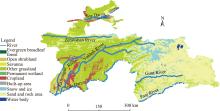
Fig. 1.
Overview of the study area. Note that the figure is based on the standard map (GS(2016)2956) of the Map Service System (http://bzdt.ch.mnr.gov.cn/) marked by the Ministry of Natural Resources of the People’s Republic of China, and the boundary of the standard map has not been modified."

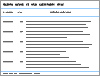
Table 1
Overview of Tajikistan’s water resources."
| Resource category | Quantity/scale | Development status | Strategic significance |
|---|---|---|---|
| Glacier resource | A glacier area of 7.62×10³ km2 with 13,542 glaciers | Monitoring and protection | Source of the main rivers and the climatic regulators of Central Asia |
| River system | A total of 947 rivers (>10.0 km) with an annual runoff of 52.20×10⁹ m3 | Hydropower development rate at 3.00%-4.00% | Hydroelectric power, agricultural irrigation, and ecological maintenance |
| Lake and reservoir | More than 1300 lakes, with Lake Sarez having a holding capacity of 16.00×10⁹ m3 | Low utilization and potential risk | Flood storage and a potential source of disaster (seismic risk) |
| Groundwater resource | The total reserves of 18.70×10⁹ m3 and the annual exploitation of 2.80×10⁹ m3 | Underdeveloped status | Supplementary water sources for drinking and agricultural irrigation |
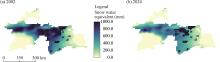
Fig. 2.
Spatial distribution of snow water equivalent in Tajikistan in 2002 (a) and 2024 (b)."
Table 2
Comparison of major water resource management projects in Tajikistan during 2020-2025."
| Project | Implementing agency | Implementation area | Primary intervention | Performance metric |
|---|---|---|---|---|
| Tajikistan RESILAND | World Bank/Tajikistan Environmental Protection Committee | Ayni and Penjikent regions | Water infrastructure, rangeland management, and livelihood diversification | Increasing the irrigated area and agricultural productivity |
| KOICA’s Agricultural Modernization Project | KOICA | Rudaki and Hisor regions | Modernization of irrigation facilities and promotion of greenhouse technology | Benefiting 30,000 residents and building a 0.02 km2 horticultural park |
| Groundwater Management Project | Swiss Agency for Development and Cooperation | Agricultural region in the northwestern Tajikistan | Monitoring groundwater, updating borehole inventory, and building institutional capacity | Addressing the overexploitation of groundwater and enhancing the capacity for regulation and management |
| BeiDou monitoring system (Lake Sarez) | China-Tajikistan cooperation | Pamir Mountains | Monitoring dam deformation and assessing hydrological dynamics | Enhancing early warning capabilities for disasters |
| [1] | Bekchanov M., Ringler C., Bhaduri A., et al., 2015. How would the Rogun Dam affect water and energy scarcity in Central Asia? Water International Webinar. 40(5-6), 856-876. |
| [2] |
Bhattacharya A., Bolch T., Mukherjee K., et al., 2021. High Mountain Asian glacier response to climate revealed by multi-temporal satellite observations since the 1960s. Nature Communications. 12, 4133, doi: 10.1038/s41467-021-24473-9.
pmid: 34226559 |
| [3] | Braun L.N., Hagg W., Severskiy I.V, et al., 2009. Assessment of Snow, Glacier and Water Resources in Asia. Paris: United Nations Education and Science Organization. |
| [4] | Brun F., Lambrecht A., Mayer C., et al., 2025. Multi-temporal elevation changes of Fedchenko Glacier, Tajikistan, from 1928 to 2021. Journal of Glaciology. 71, e45, doi: 10.1017/jog.2024.101. |
| [5] |
Chen Y.N., Li Z., Fang G.H., et al., 2018. Large hydrological processes changes in the transboundary rivers of Central Asia. Journal of Geophysical Research: Atmospheres. 123(10), 5059-5069.
doi: 10.1029/2017JD028184 |
| [6] |
Chevallier P., Pouyaud B., Mojaïsky M., et al., 2014. River flow regime and snow cover of the Pamir Alay (Central Asia) in a changing climate. Hydrological Sciences Journal. 59 (8), 1491-1506.
doi: 10.1080/02626667.2013.838004 |
| [7] | Dushanbe Water Process, 2023. Facts and Figures about Water in Tajikistan. [2025-06-13]. https://dushanbewaterprocess.org/facts-and-figures-about-water-in-tajikistan/ |
| [8] | Government of the Republic of Tajikistan,2022.Fourth National Communication of the Republic of Tajikistan under the United Nations Framework Convention on Climate Change. United Nations Framework Convention on Climate Change. [2025-06-13]. https://unfccc.int/sites/default/files/resource/4NC_TJK_eng_0.pdf. |
| [9] | Guo L.D., Wu Y.T., Huang F., et al., 2024. An approach to complex transboundary water management in Central Asia: Evolutionary cooperation in transboundary basins under the water-energy-food-ecosystem nexus. Journal of Environmental Management. 351, 119940, doi: 10.1016/j.jenvman.2023.119940. |
| [10] | Gupta A.D., Pandey P., Feijóo A., et al., 2020. Smart water technology for efficient water resource management: A review. Energies. 13(23), 6268, doi: 10.3390/en13236268. |
| [11] | Haag I., Kassam K.A., Senftl T., et al., 2021. Measurements meet human observations: integrating distinctive ways of knowing in the Pamir Mountains of Tajikistan to assess local climate change. Climatic Change. 165(1), 5, doi: 10.1007/s10584-021-02988-3. |
| [12] |
Huss M., Hock R., 2018. Global-scale hydrological response to future glacier mass loss. Nature Climate Change. 8(2), 135-140.
doi: 10.1038/s41558-017-0049-x |
| [13] | ICWC(International Centre for Water Cooperation), 2025. Analysis of the Water Management Situation in the Syr Darya and Amu Darya River Basins for the Non-Growing Season 2024-2025. [2025-06-13]. https://sic.icwc-aral.uz/pdf/analytical_report_2024_en.pdf. |
| [14] |
Immerzeel W.W., Lutz A.F., Andrade M., et al., 2020. Importance and vulnerability of the world’s water towers. Nature. 577, 364-369.
doi: 10.1038/s41586-019-1822-y |
| [15] | Jägermeyr J., Gerten D., Schaphoff S., et al., 2016. Integrated crop water management might sustainably halve the global food gap. Environmental Research Letters. 11(2), 025002, doi: 10.1088/1748-9326/11/2/025002. |
| [16] | Jouberton A., Shaw T.E., Miles E., et al., 2025. Snowfall decrease in recent years undermines glacier health and meltwater resources in the Northwestern Pamirs. Communications Earth & Environment. 6(1), 691, doi: 10.1038/s43247-025-01386-5. |
| [17] | Kayumov A., 2016. Glaciers Resources of Tajikistan in Condition of the Climate Change. Dushanbe: State Agency for Hydrometeorology of Committee for Environmental Protection under the Government of the Republic of Tajikistan. |
| [18] |
Lambrecht A., Mayer C., Bohleber P., et al., 2020. High altitude accumulation and preserved climate information in the western Pamir: Observations from the Fedchenko Glacier accumulation basin. Journal of Glaciology. 66(256), 219-230.
doi: 10.1017/jog.2019.97 |
| [19] | Li Y.P., Chen Y.N., Sun F., et al., 2025. Warming triggers snowfall fraction loss thresholds in High-Mountain Asia. npj Climate and Atmospheric Science. 8(1), 52, doi: 10.1038/s41612-025-00644-7. |
| [20] |
Li Z., Chen Y.N., Li Y.P., et al., 2020. Declining snowfall fraction in the alpine regions, Central Asia. Scientific Reports. 10(1), 3476, doi: 10.1038/s41598-020-60588-5.
pmid: 32103068 |
| [21] |
Liu Q., Tian L.D., Wang J.L., et al., 2015. A study of longitudinal and altitudinal variations in surface water stable isotopes in West Pamir, Tajikistan. Atmospheric Research. 153, 10-18.
doi: 10.1016/j.atmosres.2014.07.029 |
| [22] |
Mattea E., Berthier E., Dehecq A., et al., 2025. Five decades of Abramov Glacier dynamics reconstructed with multi-sensor optical remote sensing. The Cryosphere. 19(1), 219-247.
doi: 10.5194/tc-19-219-2025 |
| [23] | Normatov I., Normatov P., 2020. Climate change impact on hydrological characteristics and water availability of the Mountain Pamir Rivers. Proceedings of the International Association of Hydrological Sciences. 383, 31-38 |
| [24] |
Normatov I.S., Azimov D., Sharofzoda F., 2023. Spatial distribution of precipitation and its contribution to the formation of the transboundary Zeravshan River runoff (Tajikistan). Russian Meteorology and Hydrology. 48(8), 682-686.
doi: 10.3103/S1068373923080058 |
| [25] |
Olsson O., Sorg A., Roessner S., et al., 2010. Identification of the effective water availability from streamflows in the Zerafshan River basin, Central Asia. Journal of Hydrology. 390(3-4), 190-197.
doi: 10.1016/j.jhydrol.2010.06.042 |
| [26] | Pan X.H., Wang W.S., Liu T., et al., 2023. Modeling the effects of improved irrigation methods in a groundwater system: A case study from the Amu Darya Delta, Uzbekistan. Journal of Hydrology. 625, 129987, doi: 10.1016/j.jhydrol.2023.129987. |
| [27] | Pohl E., Gloaguen R., Andermann C., et al., 2017. Glacier melt buffers river runoff in the Pamir Mountains. Water Resources Research. 53(9), 7601-7616. |
| [28] |
Pritchard H.D., 2017. Asia’s shrinking glaciers protect large populations from drought stress. Nature. 545, 169-174.
doi: 10.1038/nature22062 |
| [29] | SIC ICWC (Scientific-Information Center of the Interstate Coordination Water Commission of the Central Asia), 2023. Water Yearbook:Central Asia and around the Globe 2023. [2025-06-13]. http://www.cawater-info.net/yearbook/index_e.htm. |
| [30] | Sustainable Development Solutions Network, 2025. Sustainable Development Report 2025. Paris: Sustainable Development Solutions Network. |
| [31] | Wang X.X., Chen Y.N., Li Z., et al., 2020. Development and utilization of water resources and assessment of water security in Central Asia. Agricultural Water Management. 240, 106297, doi: 10.1016/j.agwat.2020.106297. |
| [32] |
Wang X.X., Chen Y.N., Li Z., et al., 2021. Water resources management and dynamic changes in water politics in the transboundary river basins of Central Asia. Hydrology and Earth System Sciences. 25(6), 3281-3299.
doi: 10.5194/hess-25-3281-2021 |
| [33] | Wang X.X., Chen Y.N., Fang G.H., et al., 2022. The growing water crisis in Central Asia and the driving forces behind it. Journal of Cleaner Production. 378, 134574, doi: 10.1016/j.jclepro.2022.134574. |
| [34] | Wang X.X., Cui B., Chen Y.N., et al., 2025. Dynamic processes of water conflicts and their coupling with water crises in Asia’s transboundary river basins. Ecological Indicators. 172, 113325, doi: 10.1016/j.ecolind.2025.113325. |
| [35] | Water Resources Administration of the Syredarya Basin Zone, 2021. Water Resources. [2025-06-13]. https://syrdaryo.mewr.tj/en/water-resources. |
| [36] | Wu H.W., Wu J.L., Li J., et al., 2020. Spatial variations of hydrochemistry and stable isotopes in mountainous river water from the Central Asian headwaters of the Tajikistan Pamirs. CATENA. 193. 104639, doi: 10.1016/j.catena.2020.104639. |
| [37] | Xu Z., Niu Y.M., Liang Y.Z., et al., 2020. The integrated hydropower sustainability assessment in Tajikistan: A case study of Rogun hydropower plant. Advances in Civil Engineering. 2020(1), 8894072, doi: 10.1155/2020/8894072. |
| [38] |
Zhang Q.B., Kang S.C., 2017. Glacier snowline altitude variations in the Pamirs, Tajikistan, 1998-2013: Insights from remote sensing images. Remote Sensing Letters. 8(12), 1220-1229.
doi: 10.1080/2150704X.2017.1375611 |
| [39] | Zhang X.Q., Chen Y.N., Fang G.H., et al., 2023. Increasing multiscale variability in extreme precipitation under global warming in the Tienshan Mountains, Central Asia. Journal of Hydrology. 626, 130158, doi: 10.1016/j.jhydrol.2023.130158. |
| [40] | Zhu Z.Y., Feng M.Q., Chen Y.N., et al., 2025. Absolute environmental sustainability assessment of the arid Central Asia by downscaling planetary boundaries. Earth’s Future. 13(6), e2025EF006129, doi: 10.1029/2025EF006129. |
| [41] | Zou H., Wang F., Zeng Z.Y., et al., 2025. Next-generation water-saving strategies for greenhouses using a nexus approach with modern technologies. Nature Communications. 16, 2091, doi: 10.1038/s41467-025-57388-3. |
| [1] | Kobiljon Khushvakht KHUSHVAKHTZODA, Ilkhom Burkhonovich MAKHSUMOV, Muzaffar Boynazarovich KHOLNAZAROV, Irina Mikhailovna KIRPICHNIKOVA. Impact of green energy development on climate change mitigation [J]. Regional Sustainability, 2026, 7(1): 100292-. |
| [2] | Hikmat HISORIEV, LI Yaoming, HUANG Wenjun, FAN Lianlian, Mekhrovar OKHONNIYOZOV, MA Xuexi. Grassland ecosystems of Tajikistan: Plant species diversity, ecological restoration, and sustainable management [J]. Regional Sustainability, 2026, 7(1): 100293-. |
| [3] | ZHOU Yixin, MA Suliya, LI Wenjun, Parvina KURBONOVA, Mariyo BOBOEV, LI Yufan, Hikmat HISORIEV, MA Keping, YANG Weikang, ZHANG Yuanming. Vascular plant diversity and distribution pattern in Tajikistan: A global hotspot of diversity [J]. Regional Sustainability, 2026, 7(1): 100294-. |
| [4] | Ranna HAZIHAN, DU Hongru, HE Chuanchuan, Kobiljon Khushvakht KHUSHVAKHTZODA, Bobozoda KOMIL. Coupling dynamics of SDGs in Tajikistan from 2001 to 2023 [J]. Regional Sustainability, 2026, 7(1): 100295-. |
| [5] | XU Chunhai, LI Zhongqin, HE Zhonghua, WANG Feiteng, MU Jianxin, CHEN Yaning, Sheralizoda NAZRIALO, Farhod NASRULLOEV, Aminjon GULAHMADZODA. Current status and recent changes of glaciers in Tajikistan [J]. Regional Sustainability, 2026, 7(1): 100296-. |
| [6] | LI Chunlan, YU Yang, SUN Lingxiao, HE Jing, LU Yuanbo, GUO Zengkun, FANG Gonghuan, Alexandr ULMAN, Vitaliy SALNIKOV, Ireneusz MALIK, Małgorzata WISTUBA. Spatiotemporal heterogeneity of runoff in Tajikistan and its driving mechanisms under climate change [J]. Regional Sustainability, 2026, 7(1): 100297-. |
| [7] | LI Yupeng, CHEN Yaning, WANG Fei, ZHANG Xiang, ZHANG Qifei, SUN Fan, FANG Gonghuan, Safarkhon SHAROFIDDINOV, Jafar NIYAZOV. Risks of snow drought and impacts on streamflow in Tajikistan [J]. Regional Sustainability, 2026, 7(1): 100298-. |
| [8] | JIA Wenjun, CHEN Ningsheng, XUE Yang, WANG Zhihan, WEN Tao, GUO Ru, Safaralizoda NOSIR, Aminjon GULAKHMADOV. Spatial differentiation and risk zonation of debris flow hazards in Tajikistan [J]. Regional Sustainability, 2026, 7(1): 100299-. |
| [9] | Nasrulloev FARHOD, CHEN Yaning, Sheralizoda NAZRIALO, Gulahmadov NEKRUZ, Shobairi SEYED OMID REZA, Murodov MURODKHUJA. Hydrological change trends of the Surkhob and Khingov river basins in the Vakhsh River of Tajikistan under climate change [J]. Regional Sustainability, 2026, 7(1): 100300-. |
| [10] | Mahalingam Santhosh KUMAR, Narasimabhrathi Venkatesa PALANICHAMY, K. M. SHIVAKUMAR, Mani CHANDRAKUMAR, Muthuswamy KALPANA, Dhandapani MURUGANANTHI. Impact of climate change on global economy: A comprehensive review [J]. Regional Sustainability, 2025, 6(6): 100274-. |
| [11] | Yadeta BEDASA, Adeba GEMECHU, Amsalu BEDEMO. Combined adoption decisions of climate-smart agriculture and their impacts on maize yield in western Ethiopia [J]. Regional Sustainability, 2025, 6(6): 100280-. |
| [12] | Md Tauhid Ur RAHMAN, Adnan KHAIRULLAH. Integrating farmers’ perceptions and empirical climate data to assess agricultural productivity and food security in coastal Bangladesh [J]. Regional Sustainability, 2025, 6(5): 100259-. |
| [13] | Piyali KUMAR. Examining the effects of climatic and non-climatic factors on sectoral growth: Evidence from different country income groups [J]. Regional Sustainability, 2025, 6(5): 100261-. |
| [14] | Saira SHAFIQ, Muhammad ZIA UL HAQ, Syed Abbas RAZA NAQVI, Wardha SARFARAZ, Hina ALI, Muhammad Majid ISLAM, Gul Zaib HASSAN, Muhammad NAWAZ, Tasawer ABBAS. Integrating neglected and underutilized crops (NUCs) in South Asian cropping systems and diets: Challenges and prospects [J]. Regional Sustainability, 2025, 6(4): 100242-. |
| [15] | Md Maruf BILLAH, Mohammad Mahmudur RAHMAN, Santiago MAHIMAIRAJA, Alvin LAL, Asadi SRINIVASULU, Ravi NAIDU. Enhancing climate-smart coastal farming system through agriculture extension and advisory services towards the avenues of farm sustainability [J]. Regional Sustainability, 2025, 6(4): 100243-. |
| Viewed | ||||||
|
Full text |
|
|||||
|
Abstract |
|
|||||
 REGSUS Wechat
 新公网安备 65010402001202号