
Regional Sustainability ›› 2026, Vol. 7 ›› Issue (5): 100385.doi: 10.1016/j.regsus.2026.100385
• Research article • Next Articles
CHEN Sihana, DING Weitonga, GUO Munana, QU Aiyub, YANG Guangc, WANG Fanga, SHAO Chaofenga,*( )
)
Received:2025-07-01
Revised:2026-01-24
Accepted:2026-09-19
Published:2026-09-30
Online:2026-10-12
Contact:
SHAO Chaofeng
E-mail:shaocf@nankai.edu.cn
About author:First author contact:The first and second two authors contributed equally to this work.
CHEN Sihan, DING Weitong, GUO Munan, QU Aiyu, YANG Guang, WANG Fang, SHAO Chaofeng. Assessment of regional sustainable development progress and influencing factors differences across the Belt and Road Initiative (BRI) countries[J]. Regional Sustainability, 2026, 7(5): 100385.
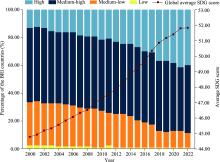
Fig. 1.
Percentages of the Belt and Road Initiative (BRI) countries across four Sustainable Development Goal (SDG) score categories and the change trend of average SDG score during 2000-2022."
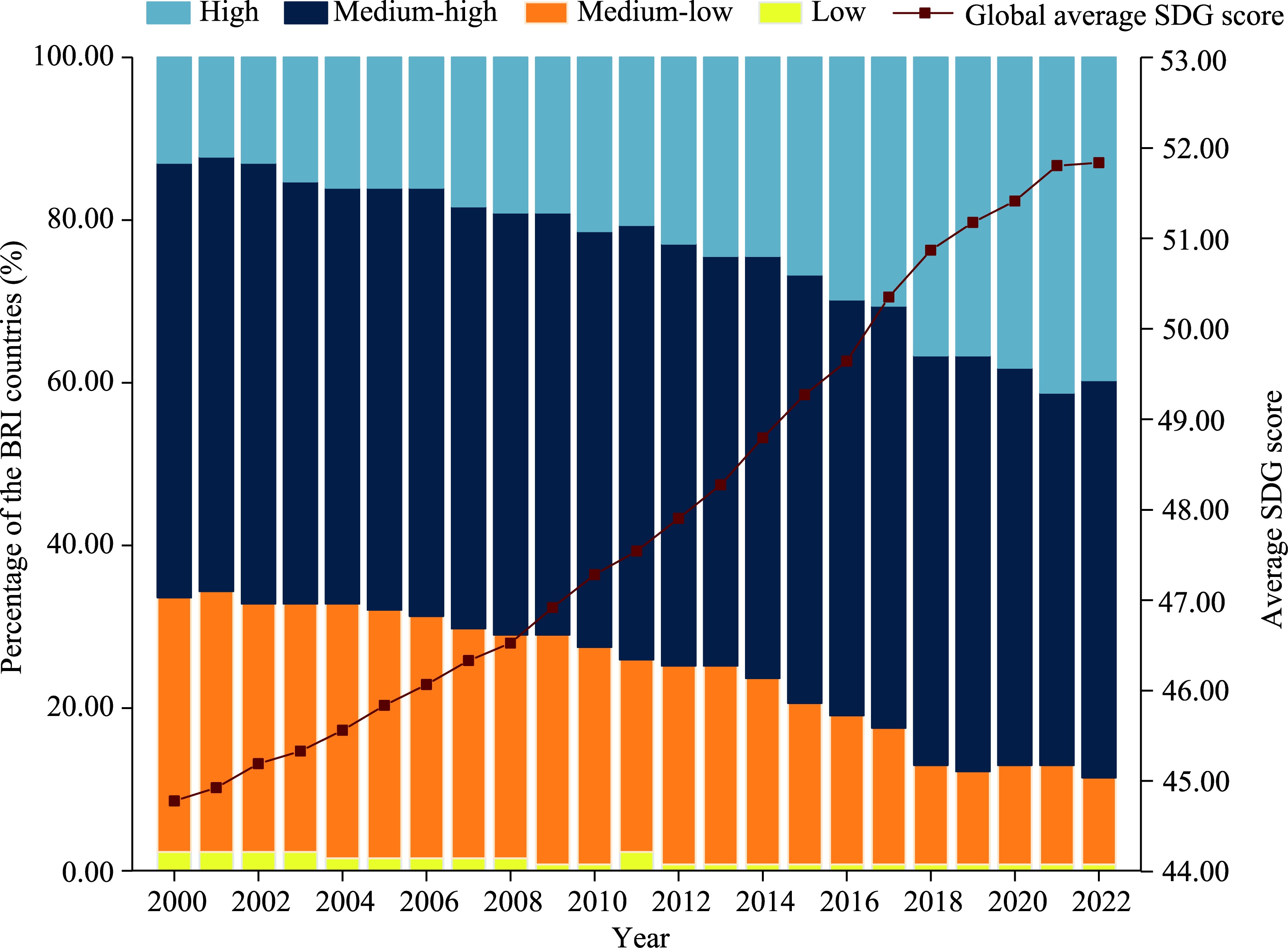
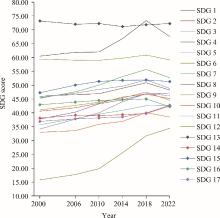
Fig. 2.
Change trend of SDG scores of 17 SDGs in the 131 BRI countries during 2000-2022."
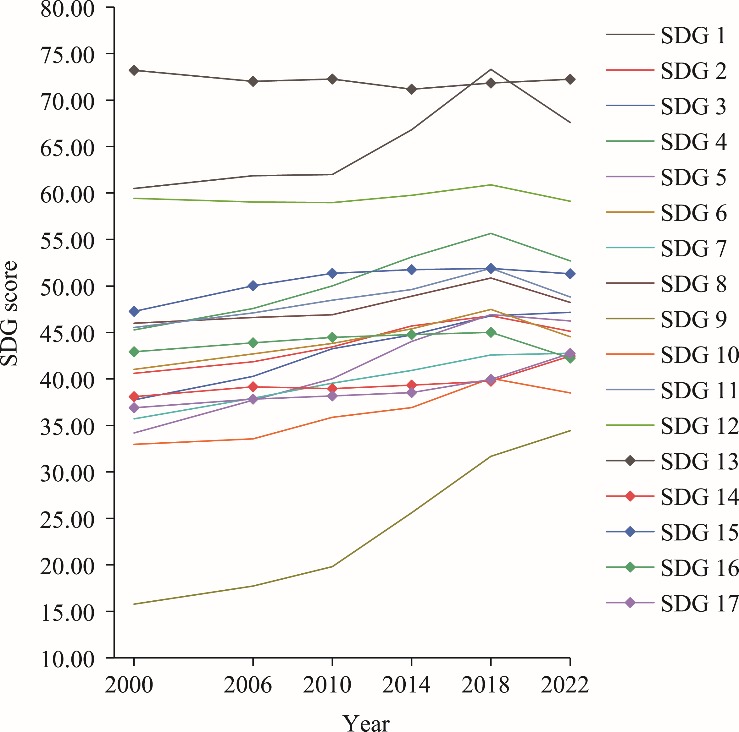
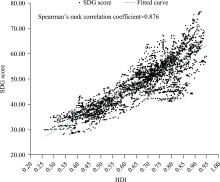
Fig. 3.
Spearman’s rank correlation analysis between human development index (HDI) and SDG scores and during 2000-2022."
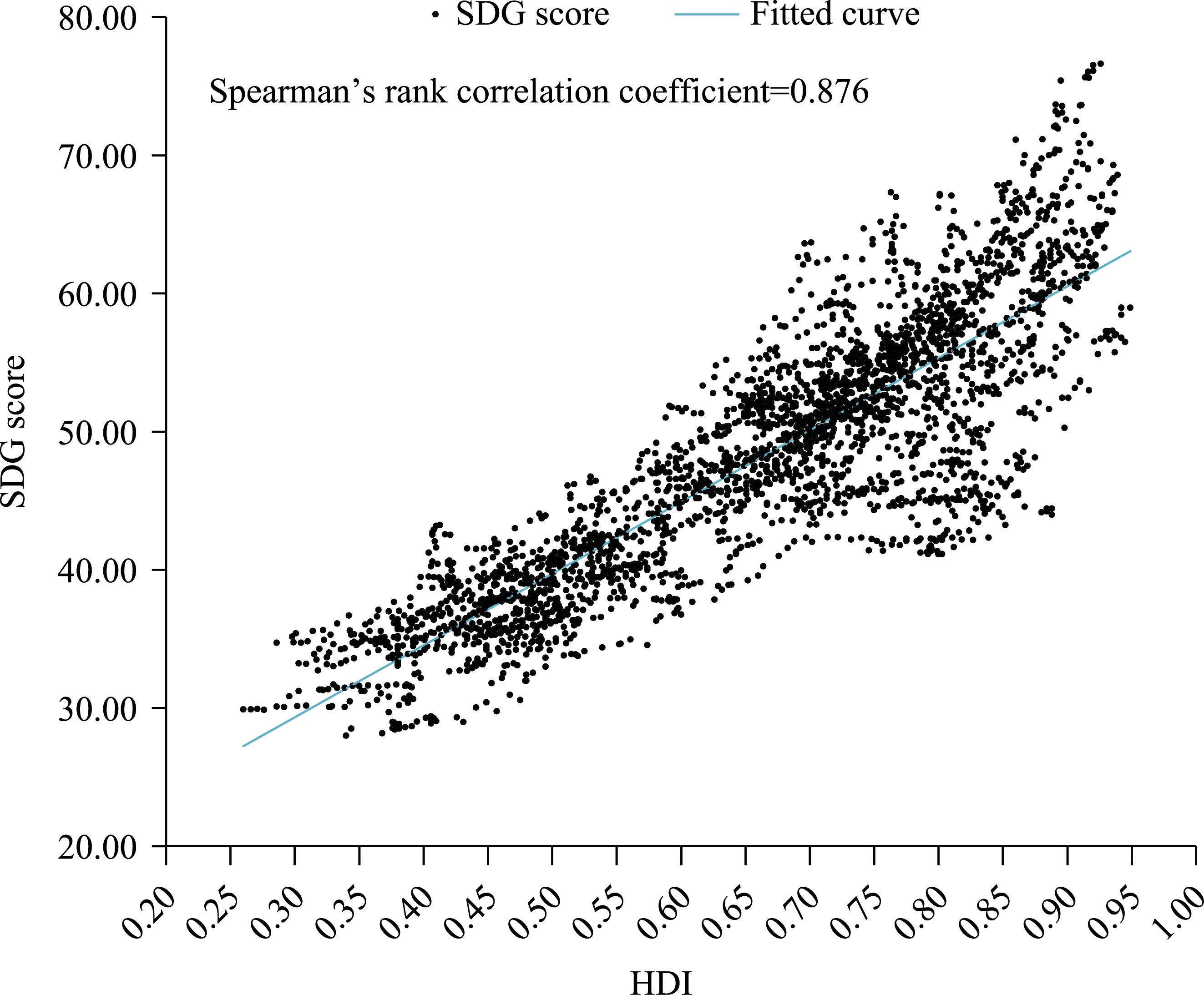
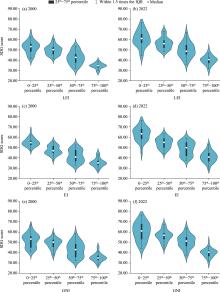
Fig. 4.
SDG scores for life expectancy index (LEI) in 2000 (a) and 2022 (b), for education index (EI) in 2000 (c) and 2022 (d), and for gross national income (GNI) in 2000 (e) and 2022 (f). IQR, interquartile range."

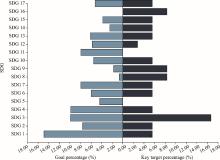
Fig. 5.
Percentages of goals and key targets across 17 SDGs in the 131 BRI countries."
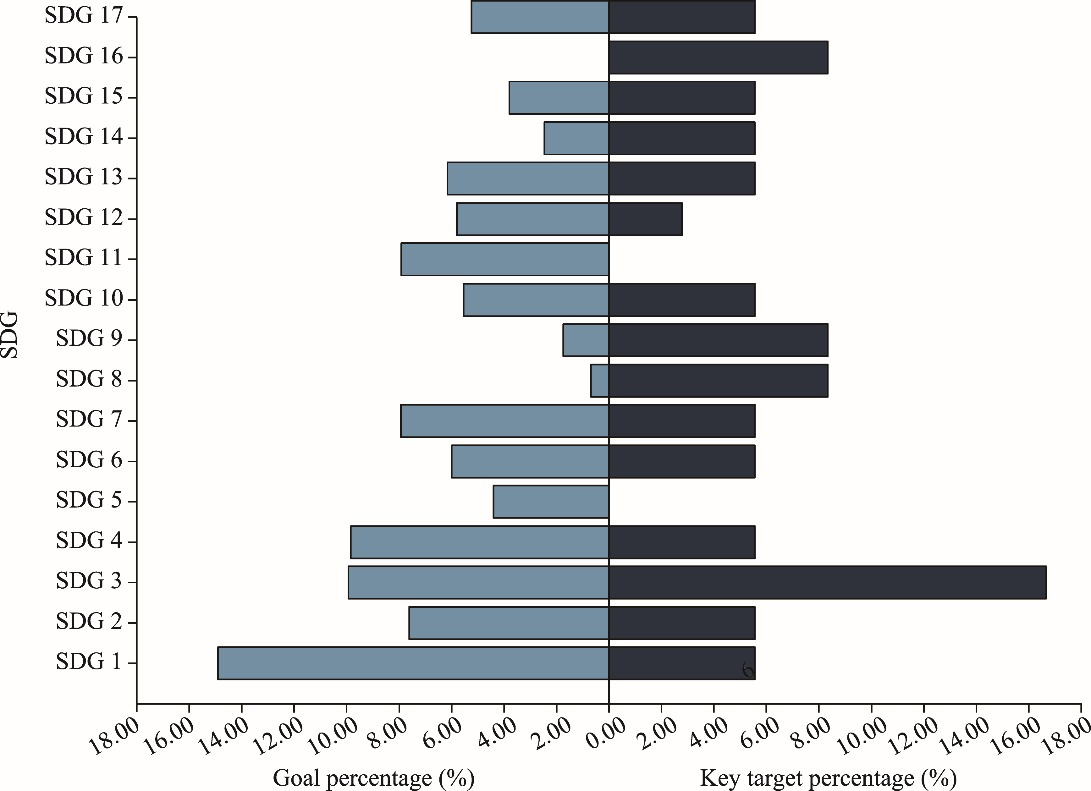
Fig. 6.
Comparison of SDG Index values and SDG score for 17 SDGs and the percentage of change magnitude in BRI countries in 2022."
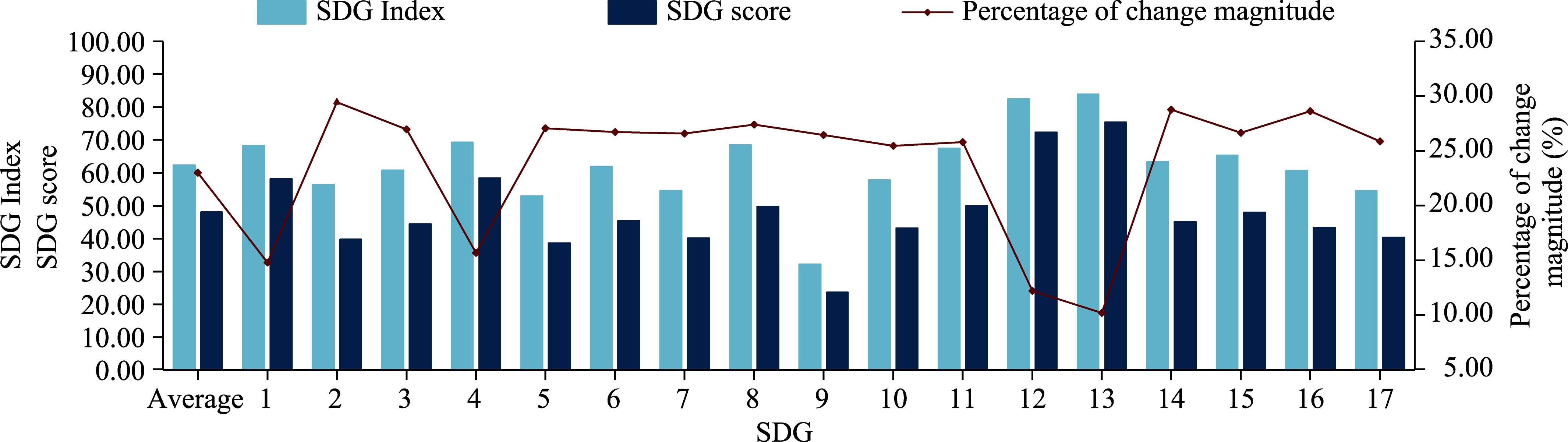
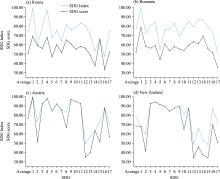
Fig. 7.
Comparison of SDG Index values and SDG scores for 17 SDGs in Russia (a), Romania (b), Austria (c), and New Zealand (d) in 2022."
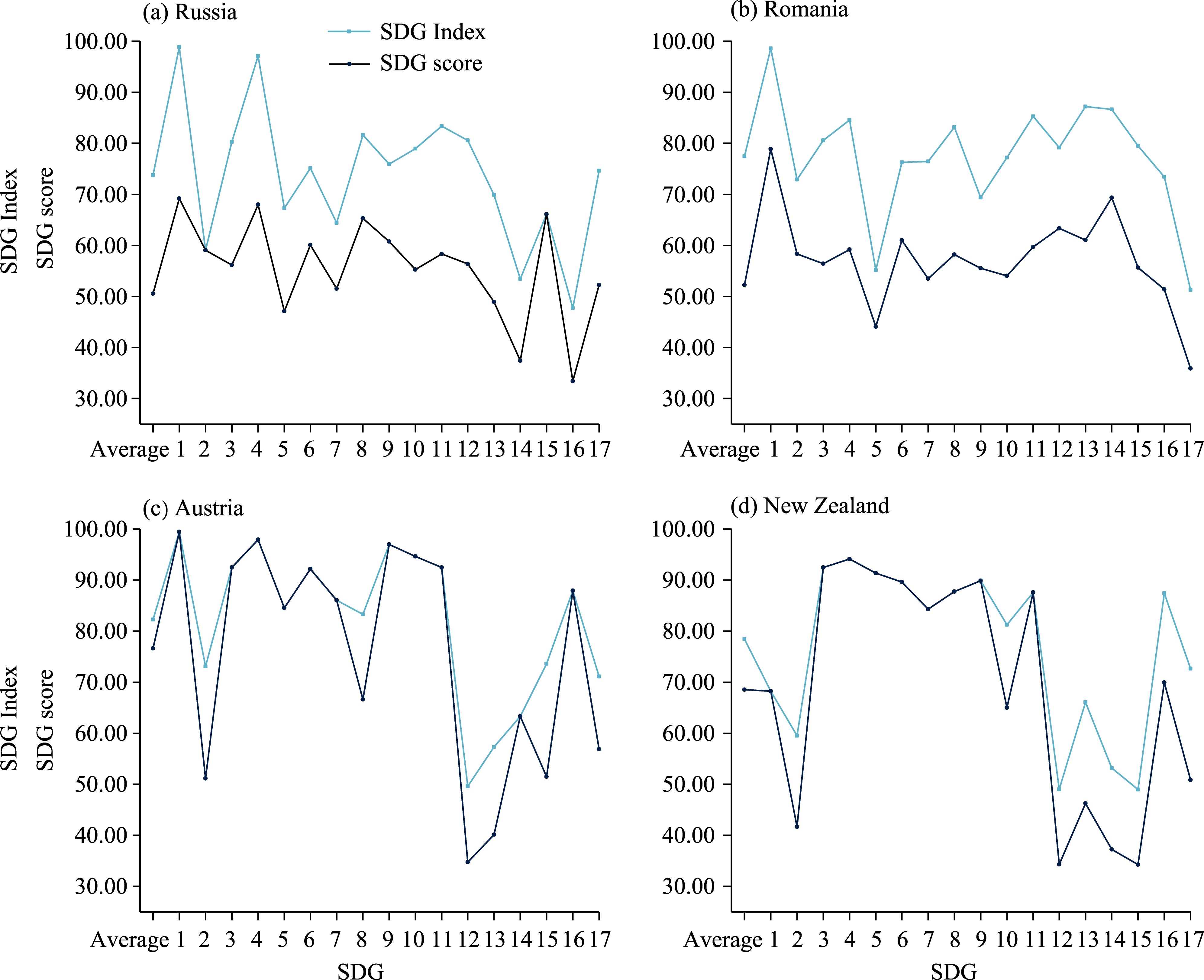
Table S1
List of the 131 Belt and Road Initiative (BRI) countries selected for this study."
| Period for joining the BRI | Country |
|---|---|
| 2014-2018 | Armenia, Belarus, Bhutan, China, Cote d’Ivoire, Djibouti, Kazakhstan, Kyrgyzstan, Cambodia, Sri Lanka, Maldives, Mongolia, Nepal, North Macedonia, Pakistan, Philippines, Qatar, Singapore, Thailand, Tajikistan, and Turkmenistan |
| 2018-2022 | Afghanistan, Angola, Albania, United Arab Emirates, Austria, Azerbaijan, Burundi, Bangladesh, Bulgaria, Bahrain, Bosnia and Herzegovina, Bolivia, Brunei Darussalam, Botswana, Central African, Chile, Cameroon, Congo, Cabo Verde, Cuba, Czechia, Dominica, Algeria, Ecuador, Egypt, Estonia, Ethiopia, Fiji, Gabon, Georgia, Ghana, Guinea, Gambia, Greece, Guyana, Croatia, Hungary, India, Iran, Iraq, Kenya, Korea, Kuwait, Laos, Lebanon, Lithuania, Latvia, Morocco, Moldova, Madagascar, Malta, Myanmar, Montenegro, Mozambique, Mauritania, Malaysia, Namibia, Nigeria, New Zealand, Oman, Panama, Papua New Guinea, Poland, Israel, Romania, Russia, Rwanda, Saudi Arabia, Sudan, Senegal, Sierra Leone, El Salvador, Somalia, Serbia, Slovakia, Slovenia, Chad, Togo, Trinidad and Tobago, Tunisia, Turkey, Tanzania, Uganda, Ukraine, Uruguay, Uzbekistan, Venezuela, Vietnam, South Africa, Zambia, and Zimbabwe |
| 2022 | Benin, Barbados, Congo, Comoros, Costa Rica, Cyprus, Indonesia, Italy, Jamaica, Jordan, Liberia, Lesotho, Luxembourg, Mali, Niger, Peru, South Sudan, Suriname, and Yemen |
Table S2
Statistical summary of SDG scores for the 131 BRI countries."
| Socioeconomic classification indicator | Group | Sample size | Q1 | Q3 | IQR | Observed score range |
|---|---|---|---|---|---|---|
| LEI | H-LEI | 33 | 56.94 | 69.06 | 12.12 | 44.13-76.60 |
| HM-LEI | 33 | 53.50 | 66.72 | 13.22 | 48.47-67.97 | |
| LM-LEI | 33 | 45.64 | 53.11 | 7.47 | 36.29-67.29 | |
| L-LEI | 32 | 36.36 | 43.16 | 6.80 | 28.75-51.30 | |
| EI | H-EI | 33 | 58.50 | 69.54 | 11.04 | 44.42-76.60 |
| HM-EI | 33 | 53.84 | 60.41 | 6.57 | 44.30-67.06 | |
| LM-EI | 33 | 46.76 | 53.75 | 6.99 | 39.63-63.65 | |
| L-EI | 32 | 37.99 | 45.05 | 7.06 | 28.75-51.30 | |
| GNI | H-GNI | 33 | 56.94 | 69.06 | 12.12 | 44.13-76.60 |
| HM-GNI | 33 | 53.03 | 60.33 | 7.30 | 44.30-67.29 | |
| LM-GNI | 33 | 47.24 | 54.73 | 7.49 | 36.29-63.65 | |
| L-GNI | 32 | 36.36 | 43.16 | 6.80 | 28.75-51.30 |
Table S3
GNI-based income classification of the 131 BRI countries."
| Level | Number of countries | Country |
|---|---|---|
| H-GNI | 28 | Austria, Czechia, Estonia, Poland, Slovenia, Croatia, New Zealand, Slovak, Hungary, Luxembourg, Latvia, Italy, Greece, Korea, Malta, Lithuania, Israel, Singapore, United Arab Emirates, Cyprus, Barbados, Saudi Arabia, Brunei Darussalam, Trinidad and Tobago, Oman, Qatar, Bahrain, and Kuwait |
| UM-GNI | 34 | Belarus, Chile, Uruguay, Cuba, Costa Rica, Serbia, Fiji, Romania, Bulgaria, Albania, Russia, Thailand, Bosnia and Herzegovina, Montenegro, China, Azerbaijan, Peru, Maldives, Kazakhstan, Dominica, North Macedonia, Turkey, Ecuador, Algeria, Jamaica, Malaysia, Turkmenistan, Namibia, Suriname, Panama, South Africa, Gabon, Venezuela, and Botswana |
| LM-GNI | 36 | Moldova, Vietnam, Armenia, Ukraine, Georgia, Tunisia, Bhutan, El Salvador, Jordan, Morocco, Uzbekistan, Indonesia, Sri Lanka, Guyana, Egypt, Arab, Bolivia, Cabo Verde, Mongolia, Philippines, Iran, India, Iraq, Ghana, Laos, Cote d’Ivoire, Pakistan, Mauritania, Lesotho, Cameroon, Zambia, Nigeria, Papua New Guinea, Congo, Djibouti, Angola, and Sudan |
| L-GNI | 33 | Kyrgyzstan, Tajikistan, Bangladesh, Lebanon, Nepal, Cambodia, Myanmar, Senegal, Rwanda, Kenya, Gambia, Mali, Guinea, Tanzania, Zimbabwe, Sierra Leone, Togo, Uganda, Benin, Burundi, Ethiopia, Mozambique, Comoros, Madagascar, Liberia, Congo, Somalia, Niger, Yemen, Afghanistan, Chad, Central African, and South Sudan |
| [1] |
Adams O., Mensah E.A., Mensah C.A., et al., 2022. Spatial analysis of synergies and trade-offs between the Sustainable Development Goals (SDGs) in Africa. Geography and Sustainability. 3(3), 220-231.
doi: 10.1016/j.geosus.2022.07.003 |
| [2] | Adebola A., Adekoya Y., Sarah N., 2024. Bridging the infrastructure gap: Assessing the impact of critical infrastructure investments on economic growth in the United States and emerging markets. International Journal for Multidisciplinary Research. 6(5), 28772, doi: 10.36948/ijfmr.2024.v06i05.28772. |
| [3] | Allen C., Metternicht G., Wiedmann T., et al., 2019. Greater gains for Australia by tackling all SDGs but the last steps will be the most challenging. Nature Sustainability. 2, 1041-1050. |
| [4] | Ascensão F., Fahrig L., Clevenger A.P., et al., 2018. Environmental challenges for the Belt and Road Initiative. Nature Sustainability. 1, 206-209. |
| [5] | Aslam N., Yang W.P., Saeed R., et al., 2024. Energy transition as a solution for energy security risk: Empirical evidence from BRI countries. Energy. 290, 130090, doi: 10.1016/j.energy.2023.130090. |
| [6] | Ayele B.Y., Megento T.L., Habetemariam K.Y., 2021. Governance of green infrastructure planning in Addis Ababa, Ethiopia. Land Use Policy. 111, 105777, doi: 10.1016/j.landusepol.2021.105777. |
| [7] | Bates S., Hastie T., Tibshirani R., 2024. Cross-validation: What does it estimate and how well does it do it? Journal of the American Statistical Association. 119, 1434-1445. |
| [8] | Benedek J., Ivan K., Török I., et al., 2021. Indicator-based assessment of local and regional progress toward the Sustainable Development Goals (SDGs): An integrated approach from Romania. Sustainable Development. 29, 860-875. |
| [9] | Carlsen L., Bruggemann R., 2022. The 17 United Nations’ Sustainable Development Goals: a status by 2020. International Journal of Sustainable Development & World Ecology. 29(3), 219-229. |
| [10] | Chen J.D., Xian Q., Zhou J.X., et al., 2020a. Impact of income inequality on CO2 emissions in G 20 countries. Journal of Environmental Management. 271, 110987, doi: 10.1016/j.jenvman.2020.110987. |
| [11] | Chen X.P., Liu Q.Y., Fang K., et al., 2020b. Tracking national sustainability of critical natural capital and the socioeconomic drivers in the context of the Belt and Road Initiative. Ecological Indicators. 114, 106315, doi: 10.1016/j.ecolind.2020.106315. |
| [12] | Costanza R., Daly L., Fioramonti L., et al., 2016. Modelling and measuring sustainable wellbeing in connection with the UN Sustainable Development Goals. Ecological Economics. 130, 350-355. |
| [13] | Dalampira E.S., Nastis S.A., 2020. Mapping Sustainable Development Goals: A network analysis framework. Sustainable Development. 28, 46-55. |
| [14] | de Bengy Puyvallée, A., Harman S., Rushton S., et al., 2025. Global health partnerships for a post- 2030 Agenda. The Lancet. 405(10477), 514-516. |
| [15] | Dempsey N., Bramley G., Power S., et al., 2011. The social dimension of sustainable development: Defining urban social sustainability. Sustainable Development. 19, 289-300. |
| [16] | Eyuboglu K., Uzar U., 2025. Democracy and financial development: Drivers or detractors of environmental sustainability in G 20 countries. Sustainable Development. 33(5), 7617-7628. |
| [17] |
Fang K., Zhang Q.F., Yu H.J., et al., 2018. Sustainability of the use of natural capital in a city: Measuring the size and depth of urban ecological and water footprints. Science of The Total Environment. 631-632, 476-484.
doi: 10.1016/j.scitotenv.2018.02.299 |
| [18] | Fang K., Wang S.Q., He J.J., et al., 2019. Mapping the environmental footprints of nations partnering the Belt and Road Initiative. Resources, Conservation and Recycling. 164, 105068, doi: 10.1016/j.resconrec.2020.105068. |
| [19] | Fang K., Xu A.Q., Wang S.Q., et al., 2023. Progress towards Sustainable Development Goals in the Belt and Road Initiative countries. Journal of Cleaner Production. 424, 138808, doi: 10.1016/j.jclepro.2023.138808. |
| [20] |
Feng C.C., Ye G.Q., Zeng J.N., et al., 2023. Sustainably developing global blue carbon for climate change mitigation and economic benefits through international cooperation. Nature Communications. 14, 6144, doi: 10.1038/s41467-023-41870-x.
pmid: 37783692 |
| [21] | Fleming S., 2020. The World Bank’s 2020 Country Classifications Explained. [2025-05-23]. https://www.weforum.org/stories/2020/08/world-bank-2020-classifications-low-high-income-countries/. |
| [22] | Friedman J., York H., Graetz N., et al., 2020. Measuring and forecasting progress towards the education-related SDG targets. Nature. 580, 636-639. |
| [23] | Gao Y.J., Huang Y.H., 2025. The impact of the Belt and Road Initiative on the tourism economic development of cities along the route: An empirical analysis based on the difference-in-differences model. East China Economic Management. 39, 31-40 (in Chinese). |
| [24] |
Halisçelik E., Soytas M.A., 2019. Sustainable development from millennium 2015 to Sustainable Development Goals 2030. Sustainable Development. 27(4), 545-572.
doi: 10.1002/sd.v27.4 |
| [25] | Hinsley A., Milner-Gulland E.J., Cooney R., et al., 2020. Building sustainability into the Belt and Road Initiative’s traditional Chinese medicine trade. Nature Sustainability. 3, 96-100. |
| [26] | Huan Y.Z., Ji L.J., Su Y.M., et al., 2026. Global governance priorities derived from SDG spatiotemporal dynamics and causal interactions. Gondwana Research. 151, 242-253. |
| [27] | Issa L., El-Fadel M., 2025. Comparative analysis of SDGs implementation: Testing a novel assessment framework approach. Environmental Impact Assessment Review. 110, 107675, doi: 10.1016/j.eiar.2024.107675. |
| [28] |
Jain P., Jain P., 2020. Are the Sustainable Development Goals really sustainable? A policy perspective. Sustainable Development. 28(6), 1642-1651.
doi: 10.1002/sd.v28.6 |
| [29] | Kørnøv L., Lyhne I., Davila J.G., 2020. Linking the UN SDGs and environmental assessment: Towards a conceptual framework. Environmental Impact Assessment Review. 85, 106463, doi: 10.1016/j.eiar.2020.106463. |
| [30] |
Leal Filho W., Wall T., Barbir J., et al., 2022. Relevance of international partnerships in the implementation of the UN Sustainable Development Goals. Nature Communications. 13, 613, doi: 10.1038/s41467-022-28230-x.
pmid: 35105880 |
| [31] | Li B.X., Zhang H., Wang G.J., 2022. The development effects of the Belt and Road Initiative: A perspective on the export product quality of countries along the route. World Economic Research. 8, 103-117 (in Chinese). |
| [32] |
Li C.G., Wan Y.K., Xu Z.C., et al., 2023. Impacts and pathways of the Belt and Road Initiative on Sustainable Development Goals of the involved countries. Sustainable Development. 32(4), 2976-2989.
doi: 10.1002/sd.v32.4 |
| [33] | Liu K., Raisolsadat A., Wang X.Q., et al., 2024a. Quantitative assessment of The Group of Seven’s collaboration in Sustainable Development Goals. Nature Communications. 15, 7274, doi: 10.1038/s41467-024-51663-5. |
| [34] | Liu Y.L., Du J.Q., Wang Y.F., et al., 2024b. Overlooked uneven progress across Sustainable Development Goals at the global scale: Challenges and opportunities. The Innovation. 5(2), 100573, doi: 10.1016/j.xinn.2024.100573. |
| [35] | Ma F.M., Wang H.M., Tzachor A., et al., 2025. The disparities and development trajectories of nations in achieving the Sustainable Development Goals. Nature Communications. 16, 1107, doi: 10.1038/s41467-025-56076-6. |
| [36] | Pang Q.H., Chen Z.X., 2025. Targeting SDG 7 in G20 countries: A comparative study of clean and dirty energy performance. Energy. 335, 137871, doi: 10.1016/j.energy.2025.137871. |
| [37] | Qazi A., Angell L.C., Daghfous A., et al., 2023. Network-based risk assessment of country-level Sustainable Development Goals. Environmental Impact Assessment Review. 99, 107014, doi: 10.1016/j.eiar.2022.107014. |
| [38] | Qi Y.T., Shi X.P., Chen Y.N., et al., 2024. Country-level evenness measure in assessing progress towards Sustainable Development Goals (SDGs). Humanities and Social Sciences Communications. 11, 1117, doi: 10.1057/s41599-024-03572-7. |
| [39] | Sachan A., Pradhan A.K., Mohindra V., et al., 2025. Investigating the role of natural resources in BRICS nations: A path towards sustainable development. Energy Nexus. 17, 100345, doi: 10.1016/j.nexus.2024.100345. |
| [40] | Sachs J.D., Lafortune G., Fuller G., 2023. Sustainable Development Report 2023:Implementing the SDG Stimulus. Sustainable Development Solutions Network (SDSN), Paris. [2025-05-23]. https://sdgtransformationcenter.org/reports/sustainable-development-report-2023. |
| [41] | Sachs J.D., Lafortune G., Fuller G., 2024. The SDGs and the UN Summit of the Future. Sustainable Development Report 2024. [2025-05-23]. https://sdgtransformationcenter.org/reports/sustainable-development-report-2024. |
| [42] | Schmidt-Traub G., Kroll C., Teksoz K., et al., 2017. National baselines for the Sustainable Development Goals assessed in the SDG Index and Dashboards. Nature Geoscience. 10, 547-555. |
| [43] | Senadjki A., Awal I.M., Au Yong H.N., et al., 2022. The Belt and Road Initiative (BRI): A mechanism to achieve the ninth Sustainable Development Goal (SDG). Journal of Cleaner Production. 372, 133590, doi: 10.1016/j.jclepro.2022.133590. |
| [44] | Sengupta S., Singh D., Roy S., 2024. Unveiling discrepancies in the SDG Index: An artificial intelligence based approach to detecting overestimation and advancing alternative measurement frameworks. Lex Localis. 22(S4), 53-65. |
| [45] | Shah W.U.H., Wang B., Yasmeen R., 2023. Evaluating the role of banking efficiency, institutions and financial development for sustainable development: Implications for Belt and Road Initiative (BRI). PLoS ONE. 18(10), e0290780, doi: 10.1371/journal.pone.0290780. |
| [46] | Shaikh A.A., He T.K., Deng F.Y., et al., 2023. Altitude-dependent gaseous emissions from freight trucks along the China-Pakistan Economic Corridor in Pakistan. Environmental Science and Ecotechnology. 14, 100226, doi: 10.1016/j.ese.2022.100226. |
| [47] | Shao C.F., Chen S.H., Gao J.L., et al., 2021. Design of China’s sustainable development evaluation index system based on the SDGs. Population, Resources and Environment in China. 31(4), 1-12 (in Chinese). |
| [48] | Song Y., Gao J., Zhang M., 2023. Study on the impact of energy poverty on income inequality at different stages of economic development: Evidence from 77 countries around the world. Energy. 282, 128816, doi: 10.1016/j.energy.2023.128816. |
| [49] | Weitz N., Persson Å., Nilsson M., et al., 2015. Sustainable Development Goals for Sweden: Insights on Setting a National Agenda. [2025-05-23]. https://www.sei.org/mediamanager/documents/Publications/SEI-WP-2015-10-SDG-Sweden.pdf. |
| [50] | Xu M., Daigger G.T., Xi C.W., et al., 2021. U.S.-China collaboration is vital to global plans for a healthy environment and sustainable development. Environmental Science & Technology. 55, 9622-9626. |
| [51] | Xu Z.C., Chau S.N., Chen X.Z., et al., 2020. Assessing progress towards sustainable development over space and time. Nature. 577, 74-78. |
| [52] | Yu C.Y., Shen W.C., Zhang Z.F., 2025. Assessing progress toward sustainable development in China and its impact on human well-being. Environmental Impact Assessment Review. 110, 107729, doi: 10.1016/j.eiar.2024.107729. |
| [53] | Zehri C., Bendahmane M.E.A., Kadja A., et al., 2024. Mutual influence of quality education and ICT skills in promoting economic growth. Journal of Infrastructure Policy and Development. 8(8), 4567, doi: 10.24294/jipd.v8i8.4567. |
| [54] | Zeng Y.W., Maxwell S., Runting R.K., et al., 2020. Environmental destruction not avoided with the Sustainable Development Goals. Nature Sustainability. 3, 795-798. |
| [55] | Zhang Y.X., Wu Z.J., 2022. Environmental performance and human development for sustainability: Towards to a new Environmental Human Index. Science of The Total Environment. 838, 156491, doi: 10.1016/j.scitotenv.2022.156491. |
| [56] |
Zhou H.B., Gao L.J., Shi L.Y., et al., 2024. Identifying influencing factors and characterizing key issues in urban sustainable development capacity through machine learning. Chinese Journal of Population, Resources and Environment. 22(3), 291-304.
doi: 10.1016/j.cjpre.2024.09.008 |
| [1] | LI Man, ZHAO Lin, HE Hao, YU Huijie, DAI Siyuan, Rathnayaka Mudiyanselage Dinesh Madhushanka KARUNARATNAA, Abu Reza Muhammad Towfiqul ISLAM, WU Dongli, LI Qi, HU Zhenghua. Linking land use and cover change to Sustainable Development Goals and carbon storage: A case study in the Yellow River Basin, China [J]. Regional Sustainability, 2026, 7(5): 100390-. |
| [2] | NIU Zhiyuan, WEN Tao, TAN Feifei. Uncovering multiple roles of green innovation in urban sustainable development efficiency in China [J]. Regional Sustainability, 2026, 7(4): 100369-. |
| [3] | Anindita SARKAR. From breadbasket to sustainability challenge: A rice-wheat system of Punjab, India [J]. Regional Sustainability, 2026, 7(4): 100367-. |
| [4] | WEN Youyue, CHEN Zhichao, CAI Saoman, YANG Jian. Optimizing land cover planning for carbon neutrality: Policy insights from scenario-based vegetation carbon sink assessment in the Guangdong-Hong Kong-Macao Greater Bay Area, China [J]. Regional Sustainability, 2026, 7(4): 100368-. |
| [5] | Kobiljon Khushvakht KHUSHVAKHTZODA, Ilkhom Burkhonovich MAKHSUMOV, Muzaffar Boynazarovich KHOLNAZAROV, Irina Mikhailovna KIRPICHNIKOVA. Impact of green energy development on climate change mitigation [J]. Regional Sustainability, 2026, 7(1): 100292-. |
| [6] | Ranna HAZIHAN, DU Hongru, HE Chuanchuan, Kobiljon Khushvakht KHUSHVAKHTZODA, Bobozoda KOMIL. Coupling dynamics of SDGs in Tajikistan from 2001 to 2023 [J]. Regional Sustainability, 2026, 7(1): 100295-. |
| [7] | Nasrulloev FARHOD, CHEN Yaning, Sheralizoda NAZRIALO, Gulahmadov NEKRUZ, Shobairi SEYED OMID REZA, Murodov MURODKHUJA. Hydrological change trends of the Surkhob and Khingov river basins in the Vakhsh River of Tajikistan under climate change [J]. Regional Sustainability, 2026, 7(1): 100300-. |
| [8] | A. B. M. Mainul BARI, Md Mahfujur RAHMAN, Asif RAIHAN, Umar Muhammad MODIBBO, Ashish TRIVEDI, Nuhu AMIN, Amirhossein TAGHIPOUR. Exploring the challenges to circular supply chain (CSC) implementation in the chemical-intensive manufacturing industries of emerging economies: Implications toward sustainability [J]. Regional Sustainability, 2025, 6(6): 100278-. |
| [9] | Ari RAHMAN, Evi Siti SOFIYAH, Imelda Masni Juniaty SIANIPAR, Cut Maisarah ZULFA, Sapta SUHARDONO, Chun Hung LEE, I Wayan Koko SURYAWAN. Promoting responsible visitor behavior through green tourism initiatives: Willingness to pay for support scenarios in Labuan Bajo and Komodo National Park, Indonesia [J]. Regional Sustainability, 2025, 6(6): 100279-. |
| [10] | Kazi Atiah TAIYEBI, Natalie Ann Cooper WELDEN, Md Sarwar HOSSAIN. Social-ecological indicators and framework for assessing the sustainability of shrimp farming in coastal Bangladesh [J]. Regional Sustainability, 2025, 6(5): 100260-. |
| [11] | GUO Hongwei, HAN Ji. Insights into material use and economic decoupling in China’s infrastructure for sustainable development [J]. Regional Sustainability, 2025, 6(5): 100262-. |
| [12] | Funda KAYA, Badsha MIA, Most. Asikha AKTAR, Md. Shaddam HOSSAIN, Md Mahedi HASSAN, Muhammad Abdur RAHAMAN, Liton Chandra VOUMIK. Impact of environmental taxes, hydroelectricity consumption, economic globalization, and gross domestic product (GDP) on the load capacity factor in the selected European Union (EU) member countries [J]. Regional Sustainability, 2025, 6(2): 100210-. |
| [13] | Abdul MALIK, Muhammad Ichsan ALI, Abdul Rasyid JALIL, Abdul MANNAN, Rahma MUSYAWARAH. Promoting sustainable mangrove tourism through payments for ecosystem services: Insights from Tongke-Tongke Village, South Sulawesi, Indonesia [J]. Regional Sustainability, 2025, 6(2): 100213-. |
| [14] | Z. R. M. Abdullah KAISER, Apu DEB. Sustainable smart city and Sustainable Development Goals (SDGs): A review [J]. Regional Sustainability, 2025, 6(1): 100193-. |
| [15] | Nazim Forid ISLAM, Bhoirob GOGOI, Rimon SAIKIA, Balal YOUSAF, Mahesh NARAYAN, Hemen SARMA. Encouraging circular economy and sustainable environmental practices by addressing waste management and biomass energy production [J]. Regional Sustainability, 2024, 5(4): 100174-. |
| Viewed | ||||||
|
Full text |
|
|||||
|
Abstract |
|
|||||
 REGSUS Wechat
 新公网安备 65010402001202号