
Regional Sustainability ›› 2026, Vol. 7 ›› Issue (2): 100330.doi: 10.1016/j.regsus.2026.100330
• Research article • Previous Articles Next Articles
WEI Susua,b,c,d,e, ZHANG Yuanyuana,b,c,d, TAO Yea,b,c,d,*( ), ZHANG Yuea,b,c,d, DAI Linga,b,c,d, Mekhrovar OKHONNIYOZOVf,g, MA Xuexia,b,g, LI Yaominga,b,g, ZHANG Yuanminga,b,c,d
Received:2025-09-04
Revised:2025-11-21
Accepted:2026-02-07
Published:2026-04-30
Online:2026-03-17
Contact:
* E-mail address: taoye@ms.xjb.ac.cn (TAO Ye).
WEI Susu, ZHANG Yuanyuan, TAO Ye, ZHANG Yue, DAI Ling, Mekhrovar OKHONNIYOZOV, MA Xuexi, LI Yaoming, ZHANG Yuanming. Elevational patterns of plant species and phylogenetic diversity in the eastern Pamir Plateau[J]. Regional Sustainability, 2026, 7(2): 100330.
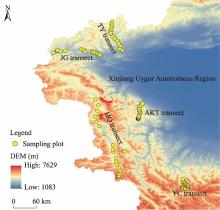
Fig. 1.
Overview of the study area and locations of sampling plots. HQ transect, Hongqilafu transect; JG transect, Jigeng transect; TY transect, Tuoyun transect; AKT transect, Akto transect; YC transect, Yecheng transect; DEM, digital elevation model."
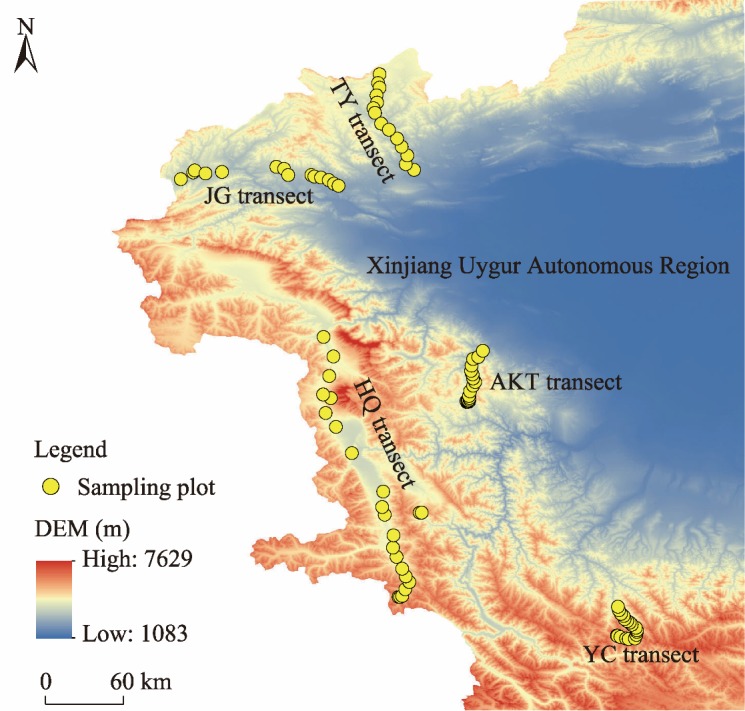

Table 1
Latitude, longitude, and elevation range of the five transects surveyed in this study."
| Transect | Latitude and longitude range | Elevation range (m) | Number of sampling plots |
|---|---|---|---|
| Hongqilafu (HQ) | 36°50′45′′N-38°39′10′′N, 74°58′51′′E-75°39′62′′E | 3290-4560 | 92 |
| Jigen (JG) | 39°42′08′′N-39°50′00′′N, 73°58′50′′E-75°04′27′′E | 2100-2916 | 56 |
| Tuoyun (TY) | 39°48′44′′N-40°28′38′′N, 75°19′02′′E-75°36′02′′E | 2023-3383 | 60 |
| Akto (AKT) | 38°11′55′′N-38°33′27′′N, 75°57′54′′E-76°02′46′′E | 1989-3786 | 72 |
| Yecheng (YC) | 36°33′12′′N-36°46′48′′N, 76°04′41′′E-77°08′52′′E | 3011-4876 | 76 |
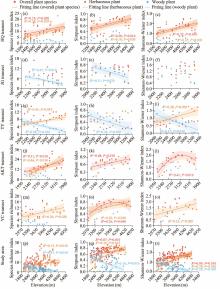
Fig. 2.
Species richness index, Simpson index, and Shannon-Wiener index in HQ transect (a-c), JG transect (d-f), TY transect (g-i), AKT transect (j-l), YC transect (m-o), and the study area (p-r). The shaded areas represent the 95.00% confidence intervals, reflecting the range of uncertainty in the estimated values."
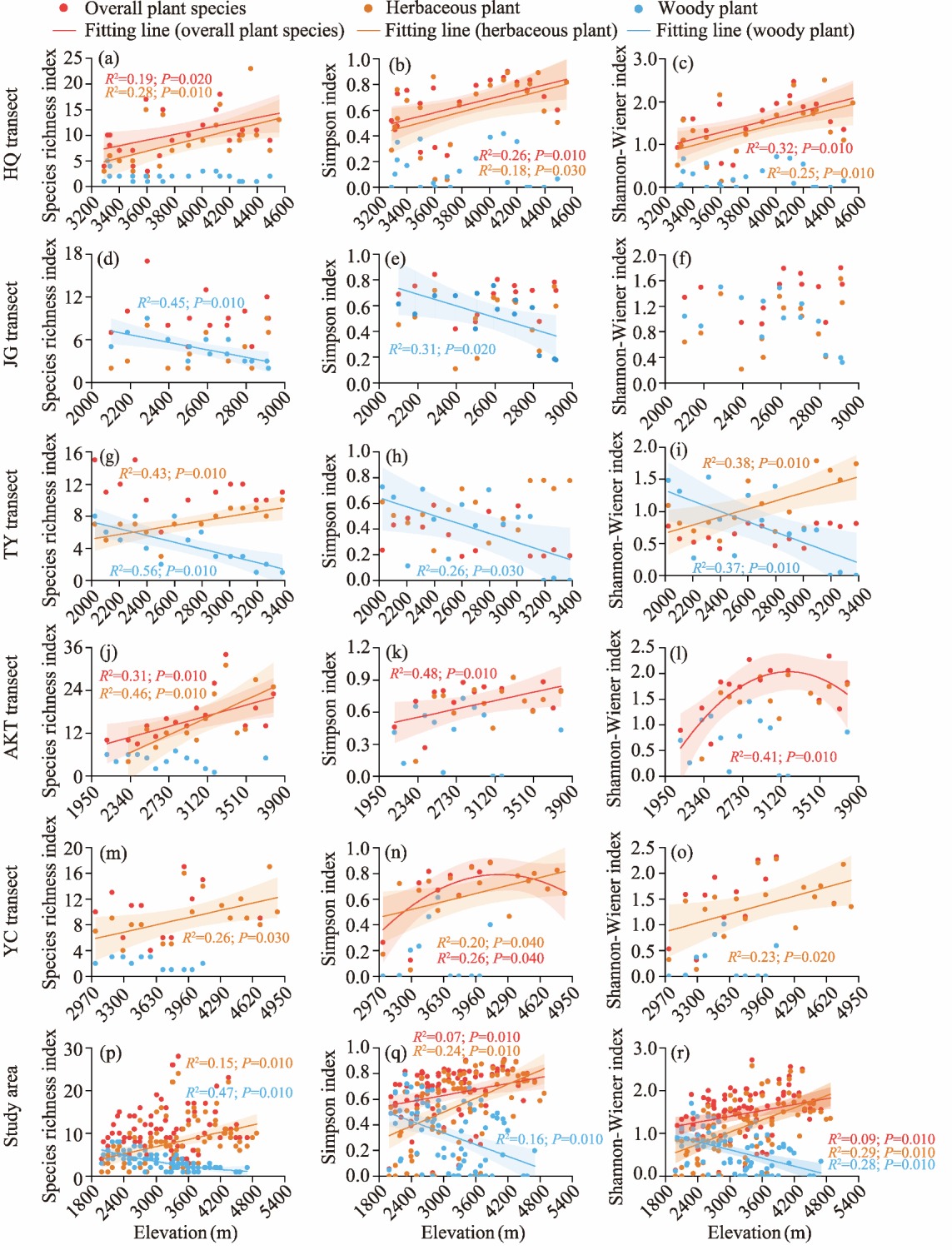
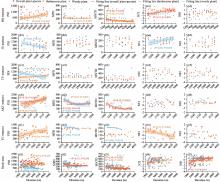
Fig. 3.
Phylogenetic diversity index (PDI), mean pairwise distance (MPD), mean nearest taxon distance (MNTD), nearest taxon index (NTI), and net relatedness index (NRI) in HQ transect (a1-a5), JG transect (b1-b5), TY transect (c1-c5), AKT transect (d1-d5), YC transect (e1-e5), and the study area (f1-f5). The shaded areas represent the 95.00% confidence intervals, reflecting the range of uncertainty in the estimated values."
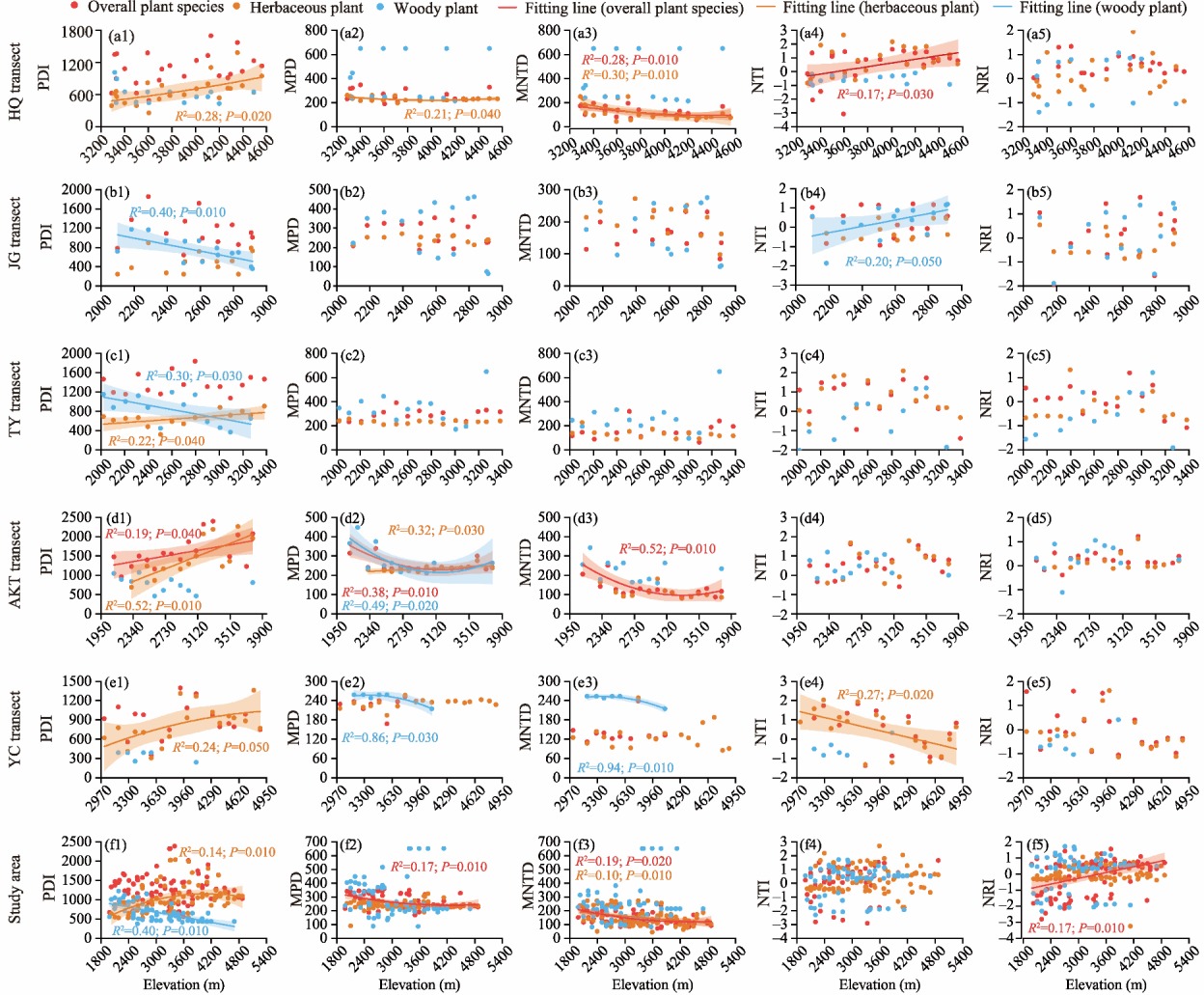
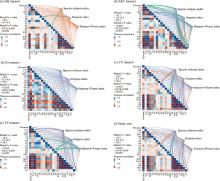
Fig. 4.
Correlation analysis of plant species diversity with environmental factors in HQ transect (a), JG transect (b), TY transect (c), AKT transect (d), YC transect (e), and the study area (f). Lon, longitude; Lat, latitude; SOC, soil organic carbon; TN, total nitrogen; TP, total phosphorus; TK, total potassium; AN, available nitrogen; AP, available phosphorus; AK, available potassium; pH, soil pH; EC, electrical conductivity; SWC, soil water content at 10 cm depth; ST, soil temperature; MAT, mean annual temperature; MAP, mean annual precipitation; AI, aridity index; WS, wind speed; PET, mean annual potential evapotranspiration; VC, vegetation cover. *, **, and *** indicate statistical significance at P<0.050, P<0.010, and P<0.001 levels, respectively."

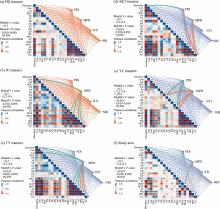
Fig. 5.
Correlation analysis of plant phylogenetic diversity with environmental factors in HQ transect (a), JG transect (b), TY transect (c), AKT transect (d), YC transect (e), and the study area (f). *, **, and *** indicate statistical significance at P<0.050, P<0.010, and P<0.001 levels, respectively."
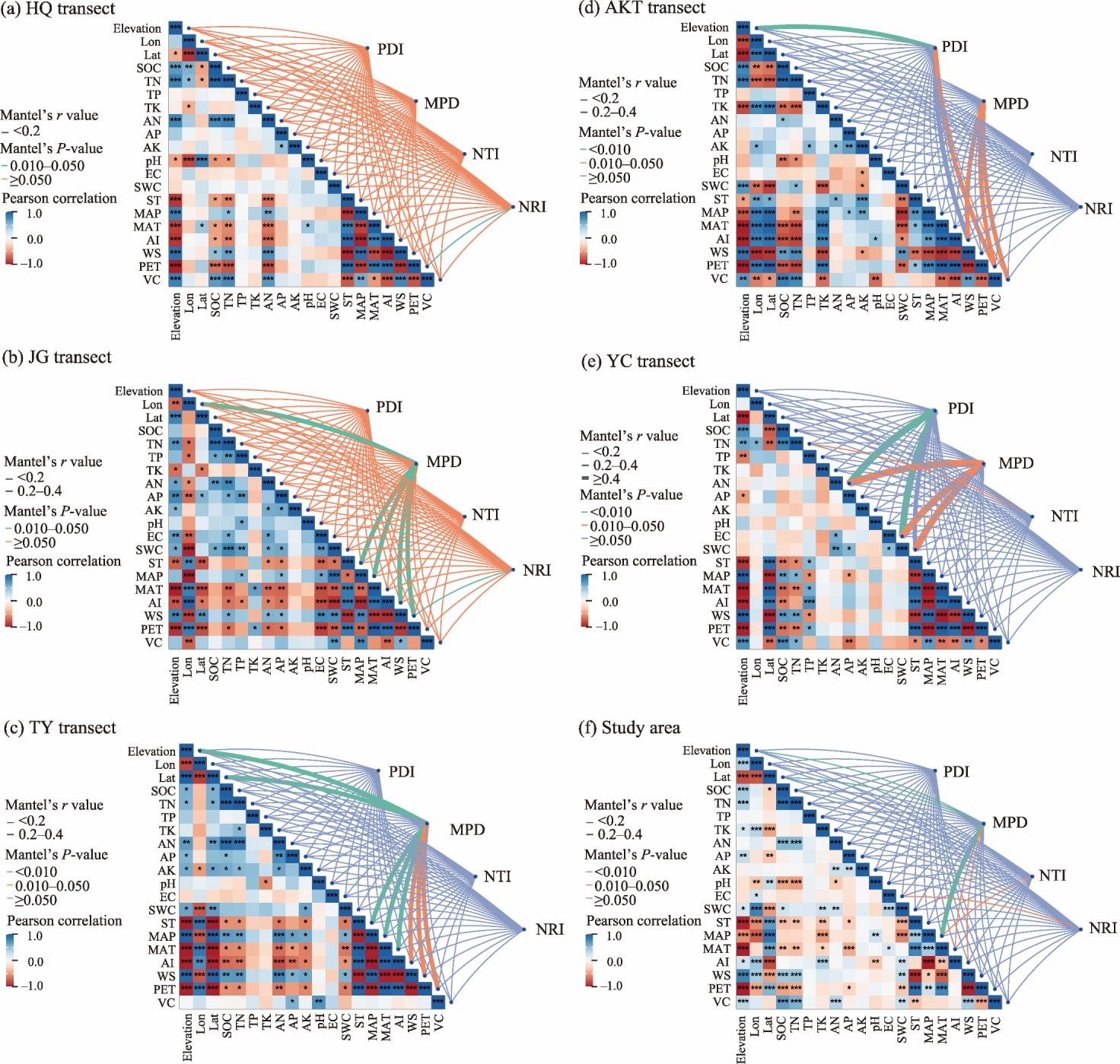
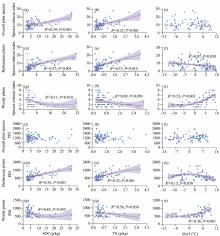
Fig. 6.
Variation characteristics of plant species richness index and PDI along environmental gradients. (a-c), relationship of overall plant species richness index with SOC, TN, and MAT, respectively; (d-f), relationship of herbaceous plant species richness index with SOC, TN, and MAT, respectively; (g-i), relationship of woody plant species richness index with SOC, TN, and MAT, respectively; (j-l), relationship of overall plant species PDI with SOC, TN, and MAT, respectively; (m-o), relationship of herbaceous plant PDI with SOC, TN, and MAT, respectively; (p-r), relationship of woody plant PDI with SOC, TN, and MAT, respectively. The shaded areas represent the 95.00% confidence intervals, reflecting the range of uncertainty in the estimated values."

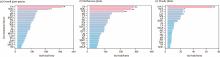
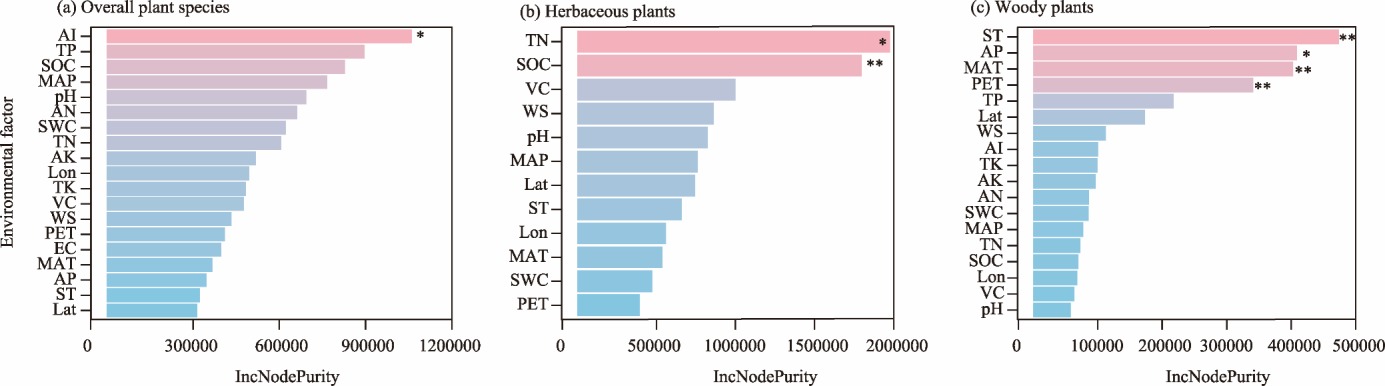
Fig. 7.
Analysis results of plant species richness index with environmental factors from random forest model. (a), overall plant species; (b), herbaceous plants; (c), woody plants. IncNodePurity values represent the relative importance of environmental factors in predicting plant species richness index. * and ** indicate statistical significance at P<0.050 and P<0.010 levels, respectively."
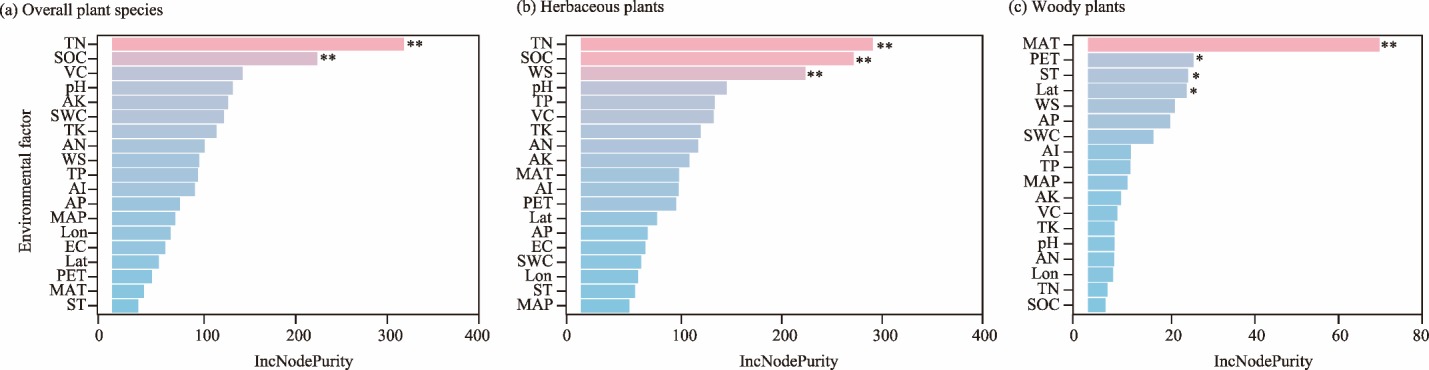
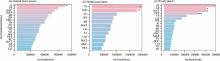
Fig. 8.
Analysis results of PDI with environmental factors from random forest model. (a), overall plant species; (b), herbaceous plants; (c), woody plants. IncNodePurity values represent the relative importance of environmental factors in predicting plant PDI. * and ** indicate statistical significance at P<0.050 and P<0.010 levels, respectively."
| [1] | Ahmad M., Uniyal S.K., Batish D.R., et al., 2020. Patterns of plant communities along vertical gradient in Dhauladhar Mountains in Lesser Himalayas in North-Western India. Science of The Total Environment. 716, 136919, doi: 10.1016/j.scitotenv.2020.136919. |
| [2] | An Z.X., 1999. Flora Xinjiangensis. Urumqi: Xinjiang People’s Publishing House (in Chinese). |
| [3] | Bai Y.X., She W.W., Zhang Y.Q., et al., 2019. N enrichment, increased precipitation, and the effect of shrubs collectively shape the plant community in a desert ecosystem in northern China. Science of The Total Environment. 716, 135379, doi: 10.1016/j.scitotenv.2019.135379. |
| [4] | Bao S.D., 2000. Soil and Agricultural Chemistry Analysis (3rd edition). Beijing: China Agriculture Press (in Chinese). |
| [5] |
Bello F., Lavorel S., Lavergne S., et al., 2013. Hierarchical effects of environmental filters on the functional structure of plant communities: A case study in the French Alps. Ecography. 36(3), 393-402.
doi: 10.1111/ecog.2013.36.issue-3 |
| [6] |
Bhattarai K.R., Vetaas O.R., et al., 2003. Variation in plant species richness of different life forms along a subtropical elevation gradient in the Himalayas, east Nepal. Global Ecology and Biogeography. 12(4), 327-340.
doi: 10.1046/j.1466-822X.2003.00044.x |
| [7] |
Blok D., Klaassen U., Schaepman S., et al., 2011. What are the main climate drivers for shrub growth in Northeastern Siberian tundra? Biogeosciences. 8(5), 1169-1179.
doi: 10.5194/bg-8-1169-2011 |
| [8] |
Cao Y., Deng B.Y., Wang Y.J., et al., 2025. Habitat fragmentation and biodiversity response: Controversy, attribution, and prospects. Chinese Journal of Applied Ecology. 36(2), 625-636 (in Chinese).
doi: 10.13287/j.1001-9332.202502.011 |
| [9] | Cavender-Bares J., Keen A., Miles B., et al., 2006. Phylogenetic structure of Floridian plant communities depends on taxonomic and spatial scale. Ecology. 87(7), S109-S122. |
| [10] | Che J., Ye M., He Q.Z., et al., 2025. Elevation gradient effects on grassland species diversity and phylogenetic in the two-river source forest region of the Altai Mountains, Xinjiang, China. Frontiers in Plant Science. 16, 1487582, doi: 10.3389/fpls.2025.1487582. |
| [11] | Che Z., Wang Z.X., Dong W., et al., 2022. Analysis and evaluation of vegetation diversity under spruce forest in West Tianshan Nature Reserve. Agricultural Science & Technology Equipment. 2, 17-19. |
| [12] | Chun J.H., Lee C.B., 2017. Disentangling the local-scale drivers of taxonomic, phylogenetic, and functional diversity in woody plant assemblages along elevational gradient in South Korea. PLoS ONE. 12(10), e0185763, doi: 10.1371/journal.pone.0185763. |
| [13] | Chun J.H., Lee C.B., 2018. Partitioning the regional and local drivers of phylogenetic and functional diversity along temperate elevational gradient on an East Asian peninsula. Scientific Reports. 8(1), 2853, doi: 10.1038/s41598-018-21266-4. |
| [14] | de Souza F.C., Dexter K.G., Phillips O.L., et al., 2019. Evolutionary diversity is associated with wood productivity in Amazonian forests. Nature Ecology & Evolution. 3, 1754-1761. |
| [15] | de Vries J.P.R., van Loon E., Borges P.A.V., 2021. A small-scale analysis of elevational species richness and beta diversity patterns of arthropods on an oceanic island (Terceira, Azores). Insects. 12(10), 903, doi: 10.3390/insects12100936. |
| [16] | Dial R.J., Berg E.E., Timm K., et al., 2015. Changes in the alpine forest‐tundra ecotone commensurate with recent warming in southcentral Alaska: Evidence from orthophotos and field plots. Journal of Geophysical Research: Biogeosciences. 112(G4), G04015, doi: 10.1029/2007JG000453. |
| [17] | Donoghue M., 2008. A phylogenetic perspective on the distribution of plant diversity. Proceedings of the National Academy of Sciences of the United States of America. 105(S1), 11549-11555. |
| [18] |
Faith D., 1992. Conservation evaluation and phylogenetic diversity. Biological Conservation. 61(1), 1-10.
doi: 10.1016/0006-3207(92)91201-3 |
| [19] |
Galván-Cisneros C., Villa P., Coelho A., et al., 2023. Altitude as environmental filtering influencing phylogenetic diversity and species richness of plants in tropical mountains. Journal of Mountain Science. 20(2), 285-298.
doi: 10.1007/s11629-022-7687-9 |
| [20] | Giménez E., Melendo M., Valle F., et al., 2004. Endemic flora biodiversity in the south of the Iberian Peninsula: altitudinal distribution, life forms and dispersal modes. Biodiversity & Conservation. 13(14), 2641-2660. |
| [21] |
Götzenberger L., de Bello F., Bråthen K.A., et al., 2012. Ecological assembly rules in plant communities—approaches, patterns and prospects. Biological Reviews. 87(1), 111-127.
doi: 10.1111/brv.2012.87.issue-1 |
| [22] |
Hawkins B.A., Field R., Cornell H.V., et al., 2003. Energy, water, and broad-scale geographic patterns of species richness. Ecology. 84(12), 3105-3117.
doi: 10.1890/03-8006 |
| [23] | Hou C., Liu Y.T., Chai C.M., et al., 2025. Spatiotemporal variation and driving factors of vegetation in the East Pamirs Plateau. Science Technology and Engineering. 25(15), 6252-6260 (in Chinese). |
| [24] | Hu A., Wang J.J., Sun H., et al., 2020. Mountain biodiversity and ecosystem functions: Interplay between geology and contemporary environments. The ISME Journal. 14, 931-944. |
| [25] | Huang S.Y., Shiono T., Fujinuma J., et al., 2024. Dispersal limitations and ecological adaptations shape phylogenetic diversity patterns of angiosperm woody plant communities along latitudinal and elevational gradient in East Asian islands. Global Ecology and Conservation. 54, doi: 10.1016/j.gecco.2024.e03049. |
| [26] | Huber P., Metz S., Unrein F., et al., 2020. Environmental heterogeneity determines the ecological processes that govern bacterial metacommunity assembly in a floodplain river system. The ISME Journal. 14, 2951-2966. |
| [27] | Jiang L.M., Hu D., Wang H.F., et al., 2022. Discriminating ecological processes affecting different dimensions of α- and β-diversity in desert plant communities. Ecology and Evolution. 12(3), e8710, doi: 10.1002/ece3.8710. |
| [28] | Jin Y.L., Wang X.R., 2025. Correction: Diversity of lithophytic moss species in karst regions in response to elevation gradient. PLoS ONE. 20(1), e0317934, doi: 10.1371/journal.pone.0317934. |
| [29] |
Keddy P.A., 1992. Assembly and response rules: two goals for predictive community ecology. Journal of Vegetation Science. 3(2), 157-164.
doi: 10.2307/3235676 |
| [30] | Kembel S.K., Hubbell S.P., 2006. The phylogenetic structure of a neotropical forest tree community. Ecology. 87(7 Suppl.), S86-S99. |
| [31] | Ladle R.J., Whittaker R.J., 2011. Conservation Biogeography. Oxford: Blackwell Publishing, 45-92. |
| [32] | Lawler J.J., Oakes L.E., Ettinger A.K., et al., 2013. Climate Change:Anticipating and Adapting to the Impacts on Terrestrial Species. Encyclopedia of Biodiversity. Amsterdam: Elsevier, 100-114. |
| [33] |
Lee C.B., Chun J.H., Cho H.J., 2013. Elevational patterns and determinants of plant diversity in the Baekdudaegan Mountains, South Korea: Species vs. functional diversity. Chinese Science Bulletin. 58(31), 3747-3759.
doi: 10.1007/s11434-013-5957-1 |
| [34] | Li M.J., He Z.S., Jiang L., et al., 2021. Distribution pattern and driving factors of species diversity and phylogenetic diversity along altitudinal gradient on the south slope of Daiyun Mountain. Acta Ecologica Sinica. 41(3), 1148-1157 (in Chinese). |
| [35] | Liang J.C., Ding Z.F., Li G.W., et al., 2020. Species richness patterns of vascular plants and their drivers along an elevational gradient in the central Himalayas. Global Ecology and Conservation. 24, e01279, doi: 10.1016/j.gecco.2020.e01279. |
| [36] |
Liu B., 2017. Vertical patterns in plant diversity and their relations with environmental factors on the southern slope of the Tianshan Mountains (middle section) in Xinjiang (China). Journal of Mountain Science. 14(4), 742-757.
doi: 10.1007/s11629-016-4110-4 |
| [37] | Luo Y.S., Zhou M.L., Jin S.S., et al., 2023. Changes in phylogenetic structure and species composition of woody plant communities across an elevational gradient in the southern Taihang Mountains, China. Global Ecology and Conservation. 42, e02412, doi: 10.1016/j.gecco.2023.e02412. |
| [38] | Lyu Z.L., Liu B., Chang F., et al., 2023. Species diversity and phylogenetic diversity in Bayinbrook alpine grasslands: Elevation gradient distribution patterns and drivers. Acta Prataculturae Sinica. 32(7), 12-22 (in Chinese). |
| [39] | Ma L.L., Seibold S., Cadotte M.W., et al., 2024. Niche convergence and biogeographic history shape elevational tree community assembly in a subtropical mountain forest. Science of The Total Environment. 935, 173343, doi: 10.1016/j.scitotenv.2024.173343. |
| [40] | Magurran A.E., 2021. Measuring biological diversity. Current Biology. 31(19), R1174-R1177. |
| [41] | Mi J., Ou J., Liu H., et al., 2022. The loss of plant species diversity dominated by temperature promotes local productivity in the steppe of eastern Inner Mongolia. Ecological Indicators. 139, 108953, doi: 10.1016/j.ecolind.2022.108953. |
| [42] | Mishler B.D., Knerr N., Gonzalez-Orozco C.E., et al., 2014. Phylogenetic measures of biodiversity and neo- and paleo-endemism in Australian Acacia. Nature Communications. 5, 4473, doi: 10.1038/ncomms5473. |
| [43] |
Moles A.T., Perkins S.E., Laffan S.W., et al., 2014. Which is a better predictor of plant traits: temperature or precipitation? Journal of Vegetation Science. 25(5), 1167-1180.
doi: 10.1111/jvs.2014.25.issue-5 |
| [44] |
Momberg M., Hedding D.W., Luoto M., et al., 2021. Exposing wind stress as a driver of fine-scale variation in plant communities. Journal of Ecology. 109(5), 2121-2136.
doi: 10.1111/jec.v109.5 |
| [45] | Musciano M.D., Calvia G., Ruggero A., et al., 2024. Elevational patterns of plant species richness and phylogenetic diversity in a Mediterranean island. Perspectives in Plant Ecology, Evolution and Systematics. 65, 125815, doi: 10.1016/j.ppees.2024.125815. |
| [46] |
Namgail T., Rawat G.S., Mishra C., et al., 2012. Biomass and diversity of dry alpine plant communities along altitudinal gradient in the Himalayas. Journal of Plant Research. 125(1), 93-101.
doi: 10.1007/s10265-011-0430-1 |
| [47] | Niu Y.J., Yang S.W., Zhou J.W., et al., 2019. Vegetation distribution along mountain environmental gradient predicts shifts in plant community response to climate change in alpine meadow on the Tibetan Plateau. Science of The Total Environment. 650, 505-514. |
| [48] |
Oommen M., Shanker K., 2005. Elevation species richness patterns emerge from multiple local mechanisms in Himalayan woody plants. Ecology. 86(11), 3039-3047.
doi: 10.1890/04-1837 |
| [49] | Padalia H., Rai I.D., Pangtey D., et al., 2023. Fine-scale classification and mapping of subalpine-alpine vegetation and their environmental correlates in the Himalayan global biodiversity hotspot. Biodiversity and Conservation. 13, 4387-4423. |
| [50] | Peters M.K., Hemp A., Appelhans T., et al., 2016. Predictors of elevational biodiversity gradient change from single taxa to the multi-taxa community level. Nature Communications. 7, 13736, doi: 10.1038/ncomms13736. |
| [51] |
Purschke O., Schmid B.C., Sykes M.T., et al., 2013. Contrasting changes in taxonomic, phylogenetic and functional diversity during a long-term succession: insights into assembly processes. Journal of Ecology. 101(4), 857-866.
doi: 10.1111/jec.2013.101.issue-4 |
| [52] |
Qian H., Zhang J., Jiang M.C., 2023. Global patterns of taxonomic and phylogenetic diversity of flowering plants: Biodiversity hotspots and coldspots. Plant Diversity. 45(3), 265-271.
doi: 10.1016/j.pld.2023.01.009 |
| [53] | Qin H., 2019. Patterns and assembly mechanisms of plant community diversity in the Shanxi Plateau. MSc Thesis. Shanxi: Shanxi University (in Chinese). |
| [54] |
Rahbek C., Borregaard M.K., Colwell R.K., et al., 2019. Humboldt’s enigma: What causes global patterns of mountain biodiversity? Science. 365(6458), 1108-1113.
doi: 10.1126/science.aax0149 |
| [55] |
Scherrer D., Körner C., 2011. Topographically controlled thermal-habitat differentiation buffers alpine plant diversity against climate warming. Journal of Biogeography. 38(2), 406-416.
doi: 10.1111/jbi.2011.38.issue-2 |
| [56] | Schroeder L., Robles V., Jara-Arancio P., et al., 2024. Drivers of plant diversity, community composition, functional traits, and soil processes along an alpine gradient in the central Chilean Andes. Ecology and Evolution. 14(2), e10888, doi: 10.1002/ece3.10888. |
| [57] |
Sharma N., Behera M.D., Das A.P, et al., 2019. Plant richness pattern in an elevation gradient in the Eastern Himalaya. Biodiversity and Conservation. 28(4), 2085-2104.
doi: 10.1007/s10531-019-01699-7 |
| [58] | Shi H.B., Shi Q.D., Li M.Z., et al., 2022. Distribution patterns and driving factors of species diversity and phylogenetic diversity in oasis communities of desert hinterland. Journal of Xinjiang University (Natural Science Edition in Chinese and English). 39(4), 385-392 (in Chinese). |
| [59] |
Shinohara N., Nakadai R., Suzuki Y., et al., 2023. Spatiotemporal dimensions of community assembly. Population Ecology. 65(1), 5-16.
doi: 10.1002/pope.v65.1 |
| [60] |
Šímová I., Violle C., Svenning J.C., et al., 2018. Spatial patterns and climate relationships of major plant traits in the New World differ between woody and herbaceous species. Journal of Biogeography. 45(4), 895-916.
doi: 10.1111/jbi.2018.45.issue-4 |
| [61] |
Sturm M., Rachine C., Tape K., 2001. Increasing shrub abundance in the Arctic. Nature. 411(6837), 546-547.
doi: 10.1038/35079180 |
| [62] | Subedi C.K., Rokaya M.B., Münzbergová Z., et al., 2020. Vascular plant diversity along an elevational gradient in the Central Himalayas, western Nepal. Folia Geobotanica. 55, 127-140. |
| [63] | Swenson N.G., Erickson D.L., Mi X.C., et al., 2012. Phylogenetic and functional alpha and beta diversity in temperate and tropical tree communities. Ecology. 93(8), S112-S125. |
| [64] |
Tang Z.Y., Fang J.Y., Zhang L., 2004. Patterns of woody plant species diversity along environmental gradients on Mt. Taibai, Qinling Mountains. Biodiversity Science. 12(1), 115-122 (in Chinese).
doi: 10.17520/biods.2004014 |
| [65] |
Taylor B., Chapron G., Kopnina H., et al., 2020. The need for ecocentrism in biodiversity conservation. Conservation Biology. 34(5), 1089-1096.
doi: 10.1111/cobi.13541 pmid: 32424955 |
| [66] | Thakur S., Negi V.S., Dhyani R., et al., 2022. Influence of environmental factors on tree species diversity and composition in the Indian western Himalaya. Forest Ecology and Management. 503, 119746, doi: 10.1016/j.foreco.2021.119746. |
| [67] | Tu W.Q., Lu W.X., Gu J.Q., et al., 2024. The species diversity and phylogenetic structure patterns of desert plant communities in the Turpan-Hami region, Xinjiang. Global Ecology and Conservation. 55, e03239, doi: 10.1016/j.gecco.2024.e03239. |
| [68] | Wang C.P., 2024. Research on the diversity of seed plants and community stability at different altitudinal gradient along the Yigong Zangbo River. MSc Thesis. Lhasa: Tibet University (in Chinese). |
| [69] | Wang C.T., Long R.J., Wang Q.L., et al., 2008. Response of plant diversity and productivity to soil resources changing under grazing disturbance on an alpine meadow. Acta Ecologica Sinica. 28(9), 4144-4152 (in Chinese). |
| [70] | Wang D.B., Ji S.Y., Cheng F.P., 2001. A review on the species diversity of plant community. Journal of Tropical and Subtropical Botany. 20(4), 55-60 (in Chinese). |
| [71] |
Wang Q.G., Li Y.Q., Zou D.T., et al., 2021. Phylogenetic niche conservatism and variations in species diversity-climate relationships. Ecography. 44(12), 1856-1868.
doi: 10.1111/ecog.v44.i12 |
| [72] |
Wang Z.H., Tang Z.Y., Fang J.Y., 2007. Altitudinal patterns of seed plant richness in the Gaoligong Mountains, south-east Tibet. China. Diversity and Distributions. 13(6), 845-854.
doi: 10.1111/ddi.2007.13.issue-6 |
| [73] | Webb C.O., Ackerly D.D., McPeek M.A., et al., 2002. Phylogenies and community ecology. Annual Review of Ecology, Evolution and Systematics. 33, 475-505. |
| [74] |
Webb C.O., 2000. Exploring the phylogenetic structure of ecological communities: An example for rain forest trees. The American Naturalist. 156(2), 145-155.
doi: 10.1086/303378 pmid: 10856198 |
| [75] | Wen P.Y., Jin G.Z., 2019. Effects of topography on species diversity in a typical mixed broadleaved-Korean pine forest. Acta Ecologica Sinica. 39(3), 945-956 (in Chinese). |
| [76] |
Wilson J.B., Sykes M.T., 1988. Some tests for niche limitation by examination of species diversity in the Dunedin area, New Zealand. New Zealand Journal of Botany. 26(2), 237-244.
doi: 10.1080/0028825X.1988.10410115 |
| [77] | Xia Z.D., 1992. Flora of China. Beijing: Science Press (in Chinese). |
| [78] | Yadav D., Pandey M., 2024. Chapter 23 - Altitudinal gradient and Himalayan vegetation in changing climate: A short overview. Developments in Environmental Science. 16, 539-557. |
| [79] | Yakimov B.N., Gerasimova A.S., Zhang S., et al., 2020. Phylogenetic α- and β-diversity elevational gradient reveal consistent patterns of temperate forest community structure. Acta Oecologica. 109, 103657, doi: 10.1016/j.actao.2020.103657. |
| [80] |
Yan S., Xia F., Wei W., et al., 2025. Differences along an erosion gradient in alpine meadow plant community diversity and factors influencing diversity. Acta Prataculturae Sinica. 34(6), 1-13 (in Chinese).
doi: 10.11686/cyxb2024264 |
| [81] | Yang S.P., Yan P., 2007. Analysis on floristic phytogeography of family seed plants in the Pamirs of China. Journal of Shihezi University. 25(5), 581-584 (in Chinese). |
| [82] | Yang S.P., Jiang J., Yan P., 2018. Eco-geographic distribution of rare and endangered plants and endemism in the Pamirs Region of China. Journal of Arid Land Resources and Environment. 32(1), 115-120 (in Chinese). |
| [83] | Yao S.R., Akram M.A., Hu W.G., et al., 2021. Effects of water and energy on plant diversity along the aridity gradient across dryland in China. Plants. 10(4), 636, doi: 10.3390/plants10040636. |
| [84] |
Yue J., Li R., 2020. Phylogenetic relatedness of woody angiosperm assemblages and its environmental determinants along a subtropical elevational gradient in China. Plant Diversity. 43(2), 111-116.
doi: 10.1016/j.pld.2020.08.003 |
| [85] | Zanne A.E., Tank D.C., Cornwell W.K., et al., 2014. Three keys to the radiation of angiosperms into freezing environments. Nature. 506, 89-92. |
| [86] | Zeng Y., He T., Zhang K., et al., 2023. Progress of the Panama Meeting of the Convention on International Trade in Endangered Species of Wild Fauna and Flora. Biodiversity Science. 31(2), 22687, doi: 10.17520/biods.2022687 (in Chinese). |
| [87] | Zhang T., Wang J.L., Li M.Y., 2024. Characteristics of bacterial community structure in alpine soil of East Pamir Plateau. Chinese Journal of Microecology. 36(10), 1131-1141 (in Chinese). |
| [88] | Zhang W.X., Huang D.Z., Wang R.Q., et al., 2016. Altitudinal patterns of species diversity and phylogenetic diversity across temperate mountain forests of northern China. PLoS ONE. 11(7), e0159995, doi: 10.1371/journal.pone.0159995. |
| [89] |
Zhang X., Kuang T.H., Dong W.L., et al., 2023. Genomic convergence underlying high-altitude adaptation in alpine plants. Journal of Integrative Plant Biology. 65(7), 1620-1635.
doi: 10.1111/jipb.13485 |
| [90] | Zhang Y., Xie Y.Z., Ma H.B., et al., 2021. The influence of climate warming and humidity on plant diversity and soil bacteria and fungi diversity in desert grassland. Plants. 10(12), 2580, doi: 10.3390/plants10122580. |
| [91] | Zhang Y.Y., 2023. Variation characteristics of plant community diversity along the elevational gradient in the western Tianshan Mountains. MSc Thesis. Anqing: Anqing Normal University (in Chinese). |
| [92] |
Zhou Y.D., Chen S.C., Hu G.W., et al., 2018. Species richness and phylogenetic diversity of seed plants across vegetation zones of Mount Kenya, East Africa. Ecology and Evolution. 8(17), 8930-8939.
doi: 10.1002/ece3.4428 pmid: 30271556 |
| [93] |
Zhou Y., Li B.W., Lv J.Y., et al., 2025. The vertical distribution pattern of alpine vegetation in the Rongbu River Basin of Mount Qomolangma. Scientia Sinica Vitae. 55(7), 1500-1515 (in Chinese).
doi: 10.1360/SSV-2024-0232 |
| [94] |
Zu K.L., Luo A., Shrestha N., et al., 2019. Altitudinal biodiversity patterns of seed plants along Gongga Mountain in the southeastern Qinghai-Tibetan Plateau. Ecology and Evolution. 9(17), 9586-9596.
doi: 10.1002/ece3.v9.17 |
| [1] | ZHOU Yixin, MA Suliya, LI Wenjun, Parvina KURBONOVA, Mariyo BOBOEV, LI Yufan, Hikmat HISORIEV, MA Keping, YANG Weikang, ZHANG Yuanming. Vascular plant diversity and distribution pattern in Tajikistan: A global hotspot of diversity [J]. Regional Sustainability, 2026, 7(1): 100294-. |
| Viewed | ||||||
|
Full text |
|
|||||
|
Abstract |
|
|||||
 REGSUS Wechat
 新公网安备 65010402001202号